
When it comes to your baby’s crib, safety is your top priority, but conflicting advice and cute, cozy-looking bumpers can make the choice feel overwhelming. You may have heard that bumpers protect your baby from bumping their head on crib rails, but you’ve also seen warnings about suffocation and strangulation risks. As of 2026, guidance from leading health and safety organizations has shifted dramatically, making it more important than ever to separate marketing claims from evidence-based facts. This guide breaks down the real risks of crib bumpers, current regulatory rules, expert recommendations, and safe alternatives to help you make an informed choice for your baby’s sleep space.
The Documented Risks of Crib Bumpers (2026 Guidance)
Crib bumpers — the padded or fabric liners that attach to the inside of crib rails — were once a standard nursery item, but decades of injury data have revealed serious, well-documented risks that outweigh any perceived benefits. You can also read our guide on what is a safe alternative to crib bumpers.
Suffocation and Strangulation Hazards
For infants under 12 months old, soft bumpers pose a critical suffocation risk. Babies frequently roll or shift their faces against soft surfaces during sleep, and if their nose or mouth is pressed against a bumper, they may not have the motor skills to move away. Loose ties or loose fabric from traditional padded bumpers also create strangulation risks. Over 30 years of data from the U.S. Consumer Product Safety Commission (CPSC) links crib bumpers to dozens of infant deaths and hundreds of non-fatal suffocation and strangulation injuries.
Breathing Obstruction and Carbon Dioxide Rebreathing
Even breathable mesh bumpers can trap carbon dioxide around a baby's face if they roll into the liner face-down. Infants under 4-6 months old cannot consistently roll from front to back, so a trapped baby may rebreath stale air, leading to oxygen deprivation and respiratory distress. This risk is highest for newborns who have limited head control. You can also read our guide on do they still make crib bumper pads.
Falls and Entrapment
Once babies develop the strength to pull to stand (usually between 5 and 8 months old), padded and mesh bumpers can act as a step, allowing them to climb out of the crib and fall, leading to head injuries and fractures. Bumpers that are not fitted tightly to the crib rails also create gaps where a baby's head or limb can get trapped, causing panic and injury.
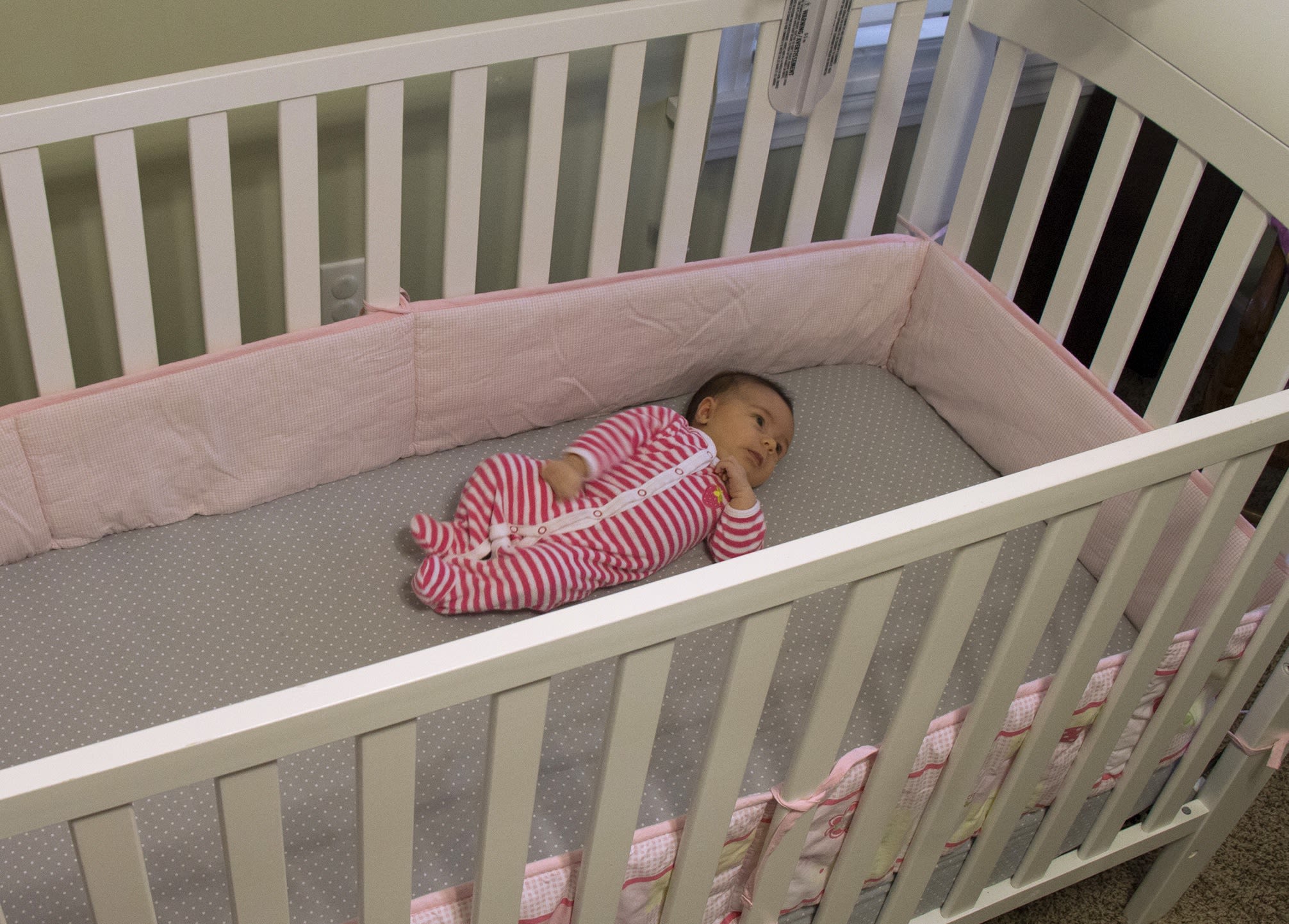
 Traditional padded crib bumpers like these are banned for sale in the U.S. as of 2024 due to suffocation and entrapment risks.
Credit: www.todaysparent.com
Traditional padded crib bumpers like these are banned for sale in the U.S. as of 2024 due to suffocation and entrapment risks.
Credit: www.todaysparent.com
Current Regulatory Rules for Crib Bumpers (2026)
Government agencies worldwide have implemented strict rules for crib bumpers in response to injury data, though regulations vary by region. You can also read our guide on best gentle electric newborn nail trimmer.
U.S. Federal and State Rules
As of 2024, the CPSC issued a final federal ban on the sale of traditional padded crib bumpers in the United States. The rule also mandates that any breathable mesh crib liners sold must pass independent ventilation testing, have no gaps larger than 2 inches between the liner and crib slats, and have fastenings that cannot be pulled loose by a baby. Prior to the federal ban, Maryland, New York, and Illinois had already implemented state-level bans on padded bumpers.
International Safety Standards
Health Canada and the UK's Office for Product Safety and Standards have similar restrictions, prohibiting the sale of soft padded bumpers and only allowing ventilated mesh models that meet ISO 8124 safety standards for crib accessories. The European Union's CE marking for crib liners requires proof of suffocation risk testing before products can be sold in member states. You can also read our guide on what is the difference between crib liners and crib bumpers.
Certification Marks to Look For
If you choose to purchase a mesh crib liner, look for the Juvenile Products Manufacturers Association (JPMA) certification seal, which indicates the product has passed independent testing for structural safety, ventilation, and gap limits. Note that certification does not mean a product is risk-free, only that it meets minimum safety requirements.
Types of Crib Bumpers and Their Actual Safety Profiles
Not all crib bumpers are created equal, and understanding the differences between designs is critical to making an informed choice. As of 2026, only one type of bumper is still legally sold in most Western countries. You can also read our guide on are mesh crib liners illegal.
Padded Crib Bumpers (Banned in the U.S.)
Traditional padded bumpers are made of thick, soft fabric, often with ties or Velcro to attach to crib rails. These products are now banned for sale in the U.S. due to their high risk of suffocation, strangulation, and entrapment. Even if you have an older padded bumper in your home, safety organizations recommend disposing of it immediately, as it poses an unacceptable risk to infants.
Breathable Mesh Crib Bumpers
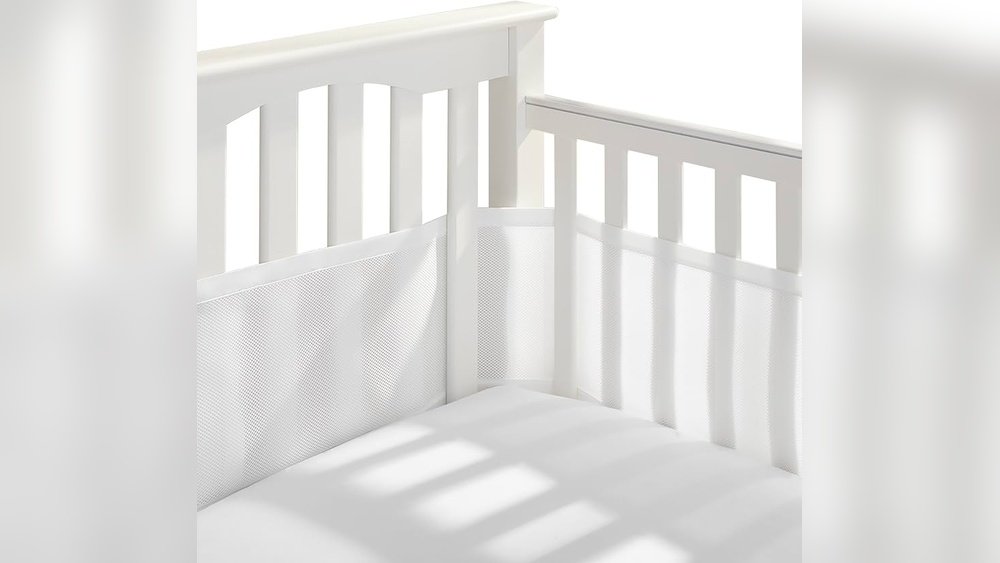
Mesh bumpers are constructed from perforated, breathable fabric that allows air to pass through, reducing (but not eliminating) suffocation risk. They are the only type of crib liner still legally sold in the U.S., Canada, and EU countries. However, the American Academy of Pediatrics (AAP) does not recommend mesh bumpers for infants under 6 months old, as they still pose a risk of entrapment and rebreathing. If you choose to use a mesh bumper, it must be fitted tightly with no gaps between the liner and crib slats, and removed as soon as your baby can pull to stand. You can also read our guide on how to protect baby from hitting head in crib.
Alternative Crib Liner Designs
Some manufacturers sell partial crib liners, such as corner-only cushions or thin slat covers, that use less fabric than full bumpers. These designs have a lower suffocation risk than traditional padded bumpers, but they are not subject to the same strict testing as full mesh liners. If you choose an alternative design, verify that it meets JPMA safety standards and fits your crib perfectly with no loose edges.
 Certified breathable mesh bumpers are the only type still legally sold in most Western countries, but are not recommended for infants under 6 months per AAP guidance.
Credit: www.cnn.com
Certified breathable mesh bumpers are the only type still legally sold in most Western countries, but are not recommended for infants under 6 months per AAP guidance.
Credit: www.cnn.com
What Leading Health and Safety Experts Recommend
Conflicting marketing claims can make it hard to cut through the noise, but guidance from leading pediatric and safety organizations is consistent and evidence-based. You can also read our guide on what can a month old have in their crib.
American Academy of Pediatrics (AAP) Official Stance
In its 2025 updated safe sleep guidelines, the AAP explicitly recommends against all crib bumpers, including mesh models, for infants under 12 months old. The organization states there is no evidence that bumpers prevent meaningful injury, and even low-risk products can lead to accidental suffocation if a baby rolls into them. The AAP's gold standard for safe infant sleep is a completely bare crib with a firm mattress, a fitted sheet, and a wearable sleep sack or blanket.
CPSC Practical Guidance
The CPSC emphasizes that even certified mesh bumpers are not a necessary or recommended product for infant sleep. For parents who choose to use a mesh liner for older babies, the CPSC advises removing it as soon as the child shows signs of being able to pull to stand, to eliminate the risk of climbing and falls. A common mistake parents make is assuming a "breathable" label means zero risk — the CPSC warns that no bumper is completely risk-free. You can also read our guide on how to keep baby cool in stroller.
Real-World Pediatric Observations
In practice, pediatricians regularly report cases of preventable injuries linked to crib bumpers, including falls from cribs when older babies use bumpers as a step, and minor suffocation incidents when infants roll into mesh liners. Many pediatricians note that parents often leave mesh bumpers in the crib far longer than recommended, increasing risk over time.
Safe, Evidence-Based Alternatives to Crib Bumpers
You don’t need a bumper to keep your baby safe and comfortable in their crib. These alternatives meet all safety guidelines and eliminate the risks associated with bumpers:
- A bare crib: The #1 recommended option by all major safety organizations. Modern cribs built after 2012 have slat spacing of 2 3/8 inches or less (required by federal law) that prevents a baby's head from getting stuck between rails, eliminating the need for bumpers to prevent entrapment or bumps. If you’re unsure what items are actually safe to include in your baby’s sleep space, our guide to safe crib items breaks down approved and prohibited products.
- Wearable sleep sacks: Keep babies warm without loose blankets, eliminating suffocation risks from loose fabric. They come in different TOG ratings for different temperatures, so you can adjust warmth without overheating. For guidance on appropriate layering for your baby’s sleep without overheating, check our seasonal dressing tips.
- Safe crib placement: Position the crib at least 2 feet away from windows, blinds, furniture, and walls to eliminate hazards from nearby objects, removing the need for bumpers to block access. If you need to adjust your baby’s sleep routine after moving their crib, our guide to adjusting early sleep routines offers tips for minimizing disruption.
- Approved small loveys (for 12+ month olds): If you want to add a soft item for an older baby, opt for a single small, firm lovey that is at least 12 inches across, per AAP guidelines, to reduce suffocation risk. When choosing a lovey or crib sheets, opt for plain, tightly woven fabrics without loose patterns that could snag; low-risk fabric pattern options outline safe, baby-friendly designs.
- Appropriate sleepwear: Dress your baby in well-fitting, breathable cotton sleepwear to avoid overheating, a known SIDS risk factor. Avoid loose socks, hats, or blankets in the crib, as these can pose suffocation hazards. For guidance on choosing appropriate, non-restrictive sleepwear for your baby, refer to our layering guidance to ensure you’re not adding excess layers.
 Even certified mesh bumpers must be fitted tightly with no gaps between the liner and crib slats to prevent head entrapment.
Credit: www.halosleep.com
Even certified mesh bumpers must be fitted tightly with no gaps between the liner and crib slats to prevent head entrapment.
Credit: www.halosleep.com
Frequently Asked Questions
Are any crib bumpers safe for newborns?
No. As of 2026, no crib bumper is considered safe for newborns (0-6 months) by the AAP, CPSC, or leading pediatric organizations. Newborns lack the motor skills to move their heads away from soft obstructions, making even breathable mesh bumpers a suffocation risk. The only safe crib setup for newborns is a bare, firm mattress with a fitted sheet and a wearable sleep sack. You can also read our guide on are bumper pads safe to use in cribs.
What is the safest alternative to a crib bumper?
A completely bare crib is the safest option, per all major safety guidelines. Modern cribs built after 2012 have slat spacing of 2 3/8 inches or less (required by federal law) that prevents a baby's head from getting stuck between rails, eliminating the need for bumpers to prevent bumps or entrapment. If you want extra comfort for an older baby, a JPMA-certified breathable mesh liner can be used, but only if fitted perfectly with no gaps, and removed as soon as the baby can pull to stand.
Can mesh crib bumpers prevent head injuries safely?
There is no evidence that mesh crib bumpers prevent meaningful head injuries in infants. Minor bumps from crib rails are not harmful, and the small risk of suffocation or entrapment from any bumper far outweighs any unproven benefit. The AAP explicitly states that mesh bumpers do not reduce injury risk and should not be used for infant sleep. You can also read our guide on what diapers are non toxic.
Why do some stores still sell crib bumpers if they are unsafe?
While padded crib bumpers are banned for sale in the U.S. as of 2024, some older stock or non-compliant products may still be available from third-party sellers. Mesh bumpers are still legal to sell, but safety organizations warn that their marketing as "breathable" can mislead parents into thinking they are risk-free, which is not the case. Always check for JPMA certification and follow current AAP guidance before purchasing any crib liner.
Conclusion
As of 2026, there is no such thing as a 100% safe crib bumper for infants under 12 months old, per consensus from the AAP, CPSC, and global child safety organizations. While breathable mesh bumpers carry lower risk than traditional padded models, they still pose a suffocation, entrapment, or fall risk if used incorrectly or left in the crib for too long. The only truly safe crib setup for babies of all ages is a bare, firm mattress with a fitted sheet and a wearable sleep sack, with no soft liners, bumpers, blankets, or toys. If you do choose to use a certified mesh bumper for an older baby, always follow installation guidelines, remove it as soon as they can pull to stand, and never use it for newborns. Your baby's safety is the top priority — skip the bumper entirely for the lowest possible risk. For more evidence-based guidance on creating a safe, comfortable sleep space for your baby, explore our full library of infant sleep and safety resources.

Emma Grace is a devoted mother and passionate content writer at BestBabyCart.com. With firsthand parenting experience and a love for research, she creates helpful guides and honest reviews to support parents in choosing the best for their babies. Her goal is to make parenthood easier, one article at a time.