
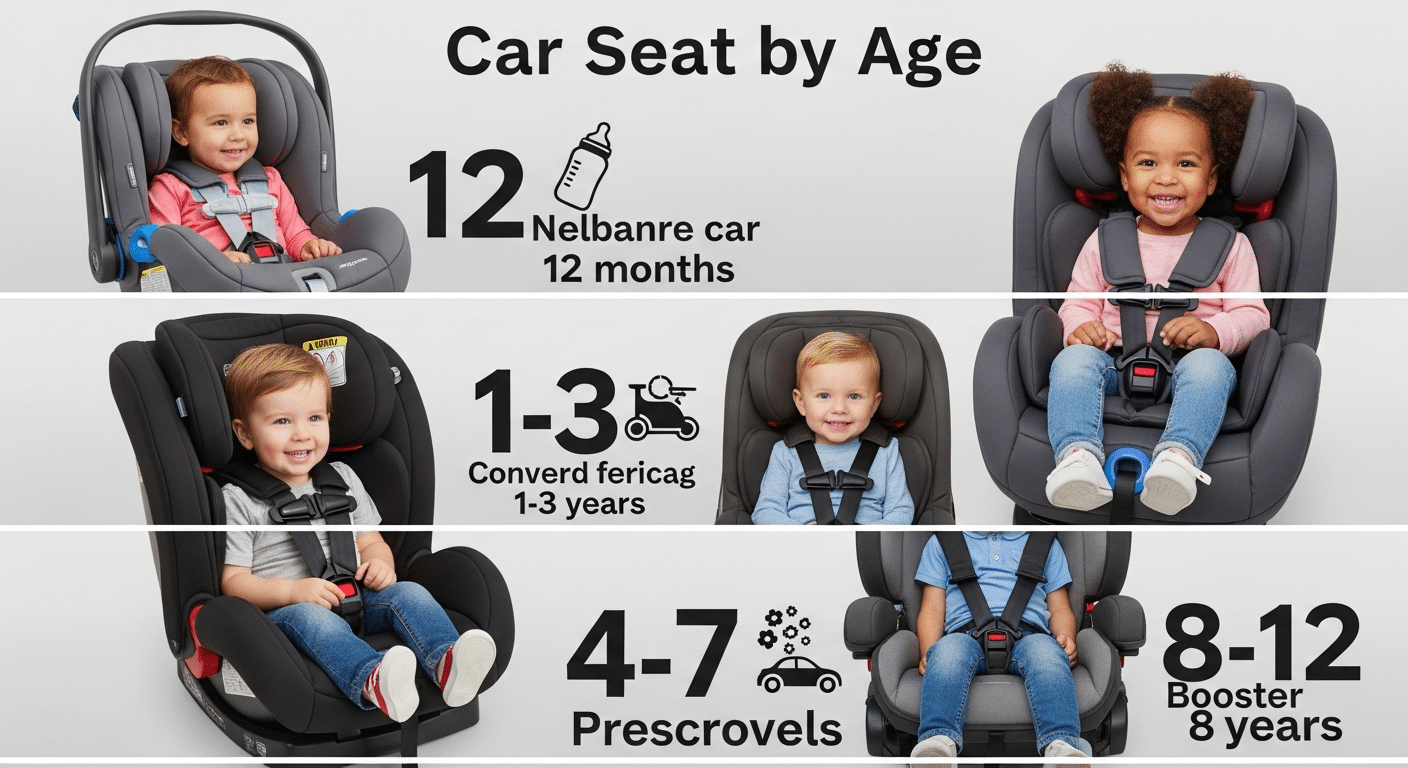
Choosing the right car seat by age for your child feels overwhelming for most parents. Conflicting advice from family, outdated guidelines from older generations, and confusing technical labeling make it hard to know if you’re making the safest choice. But proper car seat use is the single most impactful decision you can make to protect your child in a crash: according to the National Highway Traffic Safety Administration (NHTSA), properly installed car seats reduce fatal injury risk by 71% for infants and 54% for toddlers. This 2026-updated guide cuts through the noise to give you clear, actionable, age- and size-aligned guidance to keep your child safe on every trip, no guesswork required.
Why Car Seat Selection By Age (And Size) Is Non-Negotiable For Safety
Many parents fixate on age as the primary factor for car seat transitions, but weight, height, and developmental maturity are the only non-negotiable criteria for safety. Age is a rough starting point, not a hard rule: a small 3-year-old may still be within the rear-facing height limit of their seat, while a tall 2-year-old may have outgrown it. In my 8 years working as a certified child passenger safety technician, I’ve seen far too many parents rush transitions to match peers or convenience, only to learn their child is at drastically higher risk of serious injury as a result. This guide aligns with the latest 2026 guidelines from the NHTSA and American Academy of Pediatrics (AAP) to help you make evidence-based choices for every stage. You can also read our guide on black friday car seat deals.
2026 Car Seat Safety Standards & What To Look For When Buying
All car seats sold in the U.S. must meet NHTSA’s Federal Motor Vehicle Safety Standard 213, the baseline for crash protection testing. Look for the official NHTSA certification label printed on the seat’s plastic shell before purchasing — never buy a seat without this label, even if it is sold at a steep discount. All vehicles built after 2002 come with a LATCH (Lower Anchors and Tethers for Children) system, which uses dedicated built-in anchors instead of a seat belt to install car seats more consistently and securely. State car seat laws set minimum safety requirements, but these are often less strict than manufacturer weight/height limits or NHTSA recommendations: always follow the stricter of the two. All car seats also have a fixed expiration date, printed on a label on the seat’s base: most expire 6 years after the date of manufacture, as plastic and webbing degrade over time from sun, temperature changes, and wear. Never use an expired seat, even if it looks brand new. Before buying a used seat, enter its model number and manufacture date into the NHTSA recall lookup tool to confirm it has no outstanding safety defects, and verify it has never been in a moderate or severe crash. You can also read our guide on marble shower foot rest.
Car Seat By Age: Stage-by-Stage Safety Breakdown
Every car seat stage is designed to protect a child’s unique body shape and developmental needs. Follow these stage-by-stage guidelines, always prioritizing your seat’s specific weight and height limits over general age ranges.
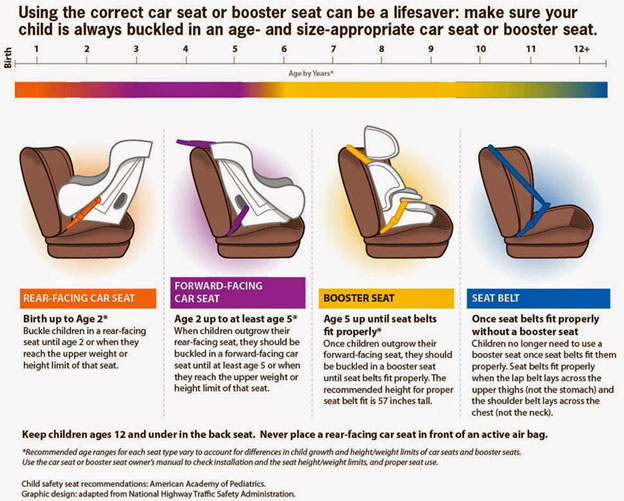
Stage 1: Rear-Facing Seats (Birth to 3–4+ Years, Depending On Size)
Rear-facing seats are the safest option for infants and toddlers, as they cradle the child’s head, neck, and spine in a crash, distributing force across the whole body instead of concentrating it on the neck. NHTSA data shows rear-facing seats reduce fatal injury risk for infants by 71% compared to forward-facing seats. You can also read our guide on best car booster seat for short adults enhance comfort and view effortlessly.
- Infant-only car seats: Designed for newborns up to 30–35 lbs, these seats come with a carry handle, pull-down sun canopy, and often click into a stroller base for a seamless travel system. Most include an anti-rebound bar or load leg to prevent the seat from tipping backward in a crash. If you use a travel system, you can move a sleeping baby from car to stroller without unbuckling, which is ideal for quick errands. For guidance on folding your stroller for storage or travel, we have a step-by-step UPPAbaby Vista fold guide that works with most popular travel system models.
- Convertible car seats: A cost-effective option that can be used rear-facing from birth up to 40–50 lbs (many 2026 models allow rear-facing use until age 3 or 4, far beyond the outdated 2-year minimum guideline). Look for models with higher rear-facing weight limits to extend use as long as possible. Many include removable infant inserts for extra head and body support for newborns.
- Installation and fit tips: Always install rear-facing seats at the correct recline angle (check the seat’s built-in level indicator) to keep the child’s airway open. Use either the LATCH system or the car’s seat belt (never both) and confirm the seat moves less than 1 inch side-to-side or front-to-back when you push at the base. The harness should be at or below the child’s shoulders, the chest clip at armpit level, and the harness snug enough that you cannot pinch any horizontal webbing at the child’s shoulder.
Bulky winter coats create dangerous gaps between the harness and your child’s chest — for guidance on dressing your baby warmly without compromising safety, check our tips on how many layers babies need year-round. For a visual walkthrough of proper rear-facing installation for common seat models, see our step-by-step rear-facing installation guide.
Stage 2: Forward-Facing Seats (2 to ~4+ Years, Until Harness Limits Are Met)
Once a child outgrows the rear-facing height or weight limit of their seat, they can transition to forward-facing with a 5-point harness. This position is far safer than a booster seat, as the harness distributes crash forces across the strongest parts of the child’s body.
- Most convertible seats allow forward-facing use up to 65–80 lbs, so many kids stay in this stage until age 4 or 5.
- A critical, often overlooked requirement: always use the seat’s top tether, anchored to a dedicated tether point in your vehicle (usually on the seat back, floor, or ceiling). NHTSA testing shows the tether reduces a child’s head movement in a crash by up to 6 inches, drastically reducing the risk of head and neck injuries.
- Fit checks: the harness should be at or above the child’s shoulders, the chest clip at armpit level, and the harness snug with no pinchable webbing. The seat should be installed tightly, with less than 1 inch of movement when pushed at the base.
Stage 3: Booster Seats (~4 to 8–12 Years, Until Seat Belt Fits Correctly)
Booster seats are not a "big kid" accessory — they are a critical safety tool that positions the vehicle’s seat belt to fit a child’s smaller frame correctly. A poorly fitting seat belt can cause serious internal injuries in a crash, even at low speeds. You can also read our guide on best dog car booster seat.
- High-back vs backless boosters: High-back boosters provide head and neck support, and are required in vehicles with low seat backs or no built-in headrests. Backless boosters are more portable and work in vehicles with adjustable headrests.
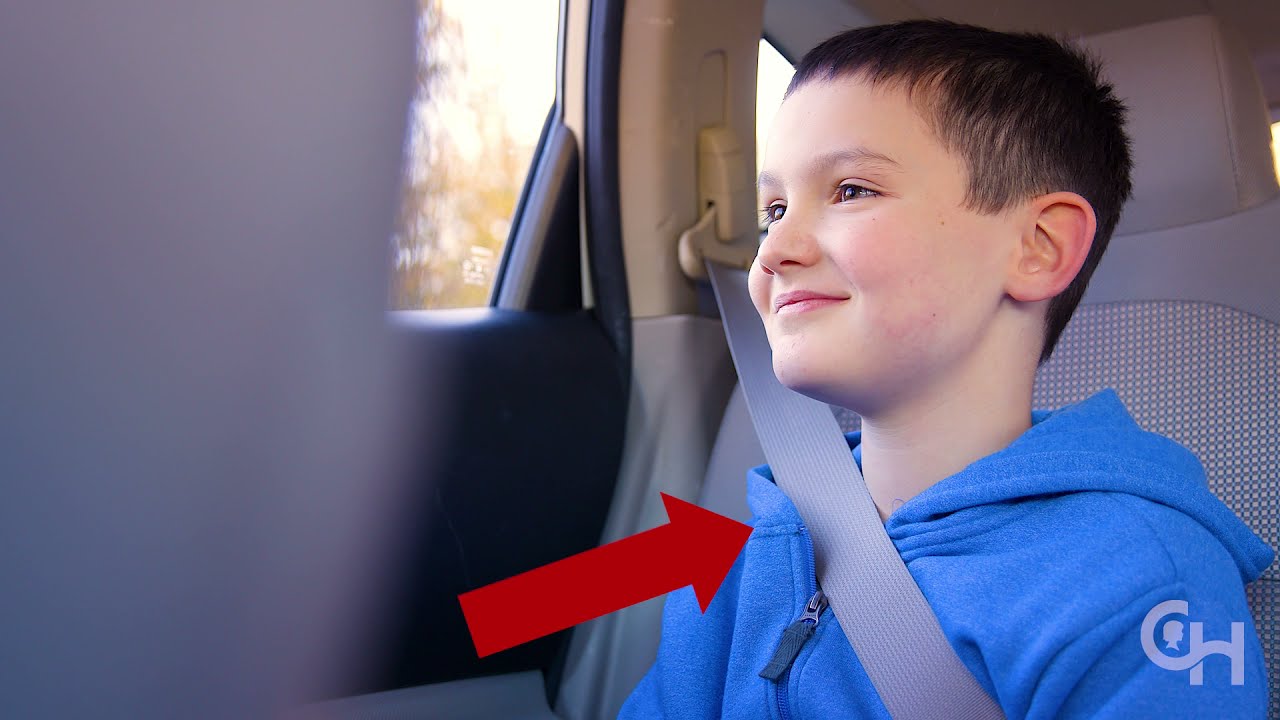
- Transition requirements: Never move to a booster just because your child hits age 4. They must first outgrow the forward-facing harness of their convertible seat, be mature enough to sit still against the seat back (no slouching, leaning over, or playing with the seat belt) for the entire trip, and pass the 5-point seat belt fit test:
- Back is flat against the vehicle seat
- Knees bend comfortably at the edge of the seat
- Shoulder belt crosses the middle of the chest and shoulder (not the neck or face)
- Lap belt sits low across the upper thighs (not the stomach)
- They can stay seated in this position for the full trip without slouching
- If your child fails any of these checks, keep them in their forward-facing harness seat longer. For a list of safety-tested booster seats that fit a wide range of vehicles, see our curated booster seat picks reviewed by certified child passenger safety technicians.
- When you’re ready to transition out of a booster, learn how to remove a booster seat safely without damaging your vehicle’s upholstery.
Stage 4: Seat Belt Only (8 to 12+ Years, Or Until The 5-Point Fit Test Is Passed)
Even if your state law allows seat belt use at age 8, most kids are not physically mature enough for a seat belt alone until age 10 to 12. The same 5-point fit test applies here — if the seat belt doesn’t fit correctly, keep using a booster. Kids under 13 should always ride in the back seat, as front airbags are designed for adult bodies and can cause serious injury or death to a child in a crash.
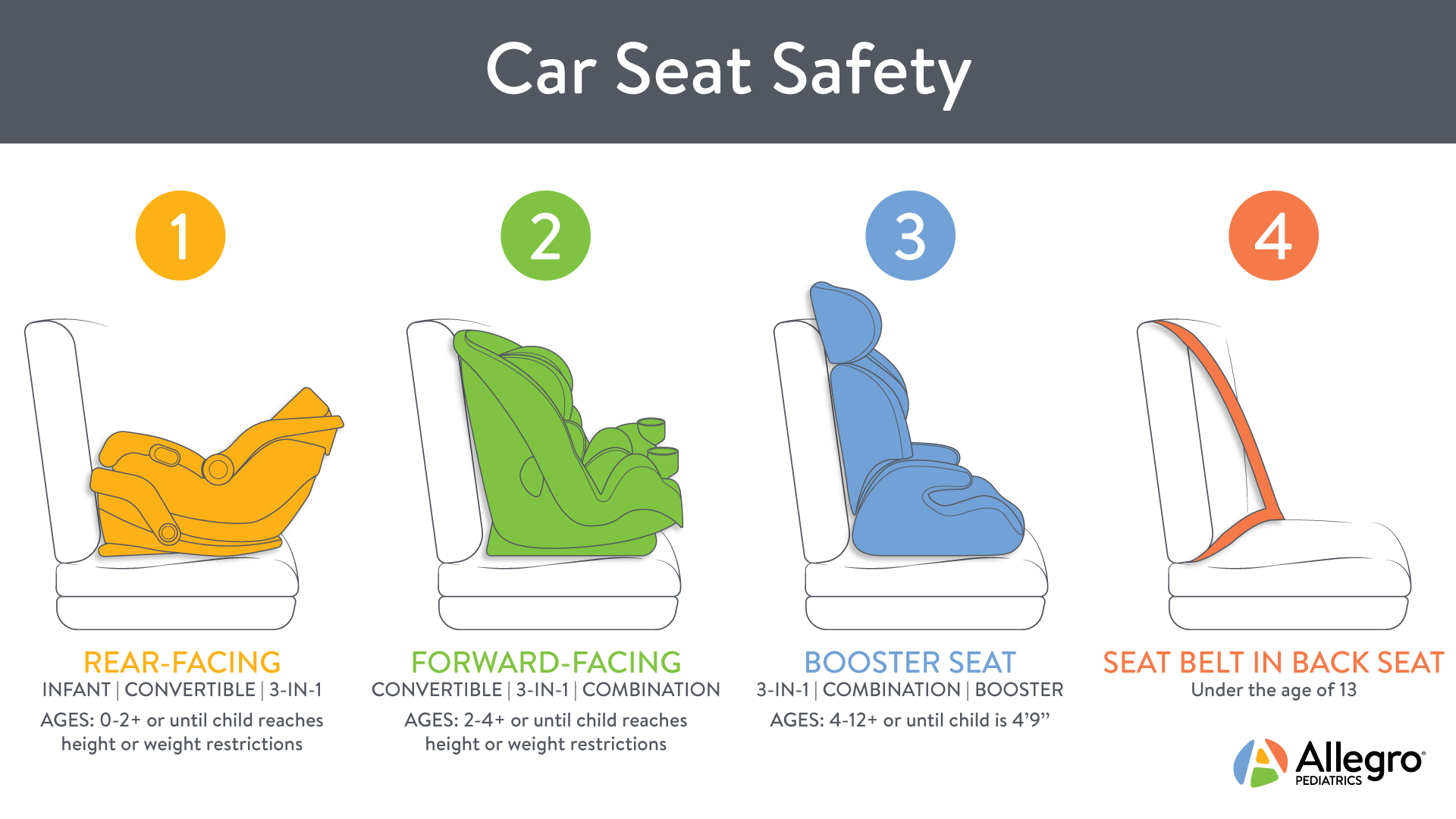 Proper rear-facing installation is the single most impactful safety choice for infants under 2
Credit: www.allegropediatrics.com
Proper rear-facing installation is the single most impactful safety choice for infants under 2
Credit: www.allegropediatrics.com
 Forward-facing seats with 5-point harnesses are required for toddlers who have outgrown rear-facing limits
Credit: www.copcp.com
Forward-facing seats with 5-point harnesses are required for toddlers who have outgrown rear-facing limits
Credit: www.copcp.com
Critical Car Seat Installation & Fit Checks That Prevent Most Injuries
Nearly 3 out of 4 car seats are installed or used incorrectly, per NHTSA’s 2026 child safety audit. Even a small installation error can drastically reduce the seat’s effectiveness in a crash. You can also read our guide on what age can babies face forward in car seat.
- Always use either the LATCH system or the car’s seat belt to install the seat, never both. Confirm the seat moves less than 1 inch side-to-side or front-to-back when you push at the base.
- For infants, check the recline angle indicator to ensure the seat is not too upright, which can block the child’s airway.
- You can get a free, professional car seat installation check at most local fire stations, police departments, and pediatric clinics. A certified technician will confirm your seat is installed correctly and show you how to adjust it as your child grows.
 This 10-minute video demonstrates proper rear-facing and forward-facing installation for most 2026 car seat models
Common Car Seat Mistakes Even Experienced Parents Make
Even parents who research extensively make avoidable errors that put their child at risk. Avoid these top mistakes:
- Rushing transitions based on age alone: As noted earlier, age is a minimum guideline, not a hard rule. A small 3-year-old may still be within the rear-facing height limit of their seat, while a tall 2-year-old may have outgrown it. Always follow your seat’s specific weight and height limits first, then age recommendations second.
- Using bulky outerwear during travel: Puffer coats, snowsuits, and thick blankets create dangerous space between the harness and your child’s chest. In a crash, the coat compresses, leaving the harness too loose to hold the child in place. Use the coat test: buckle your child in their coat, unzip the coat, and tighten the harness until only two fingers fit under the chest clip. If you can fit more than two fingers, the harness is too loose.
- Skipping the top tether for forward-facing seats: The tether is not optional — it anchors the top of the car seat to the vehicle, preventing the seat from pitching forward and injuring the child’s head or neck in a crash. Always use the tether, even if your state law doesn’t require it.
- Installing a booster seat too early: Kids need to be mature enough to sit still properly in a booster. If your child slouches, leans forward, or plays with the seat belt, they are not ready for a booster and are at higher risk of injury in a crash. Keep them in their forward-facing harness seat until they meet all maturity and fit requirements.
- Using expired or crashed seats: Car seats expire 6 years from the date of manufacture, as plastic and webbing degrade over time. Never use a seat that has been in a moderate or severe crash, even if there is no visible damage. Register your seat with the manufacturer to get automatic recall alerts.
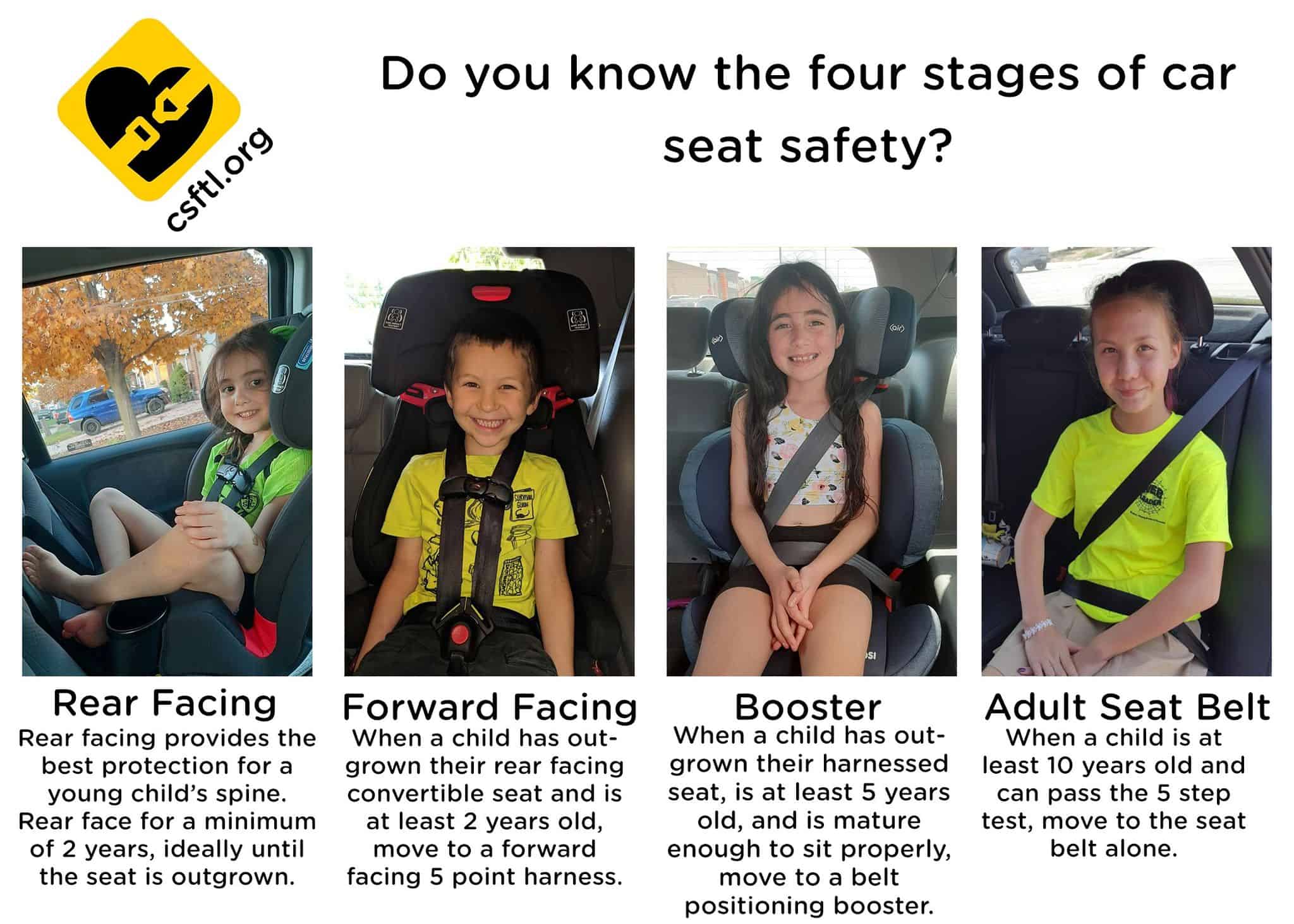 The four standard car seat stages align with a child’s age, weight, and height milestones
Credit: parkavenuetavern.com
The four standard car seat stages align with a child’s age, weight, and height milestones
Credit: parkavenuetavern.com
Car Seat Maintenance & Long-Term Care
Proper maintenance ensures your car seat remains effective for its full lifespan:
- Cleaning without damaging safety components: Use mild soap and lukewarm water to clean the seat’s shell and harness. Avoid harsh chemicals, bleach, or abrasive cleaners, as they can weaken webbing and plastic. Remove the seat cover per the manufacturer’s instructions — most are machine washable, but air dry them fully to prevent shrinkage. Never remove the harness for cleaning, as this can compromise its strength. If the cover is stained beyond repair or damaged, replace it with a manufacturer-approved part rather than using a third-party cover, which may interfere with harness function. If you need guidance on replacing a damaged cover, see our replace worn seat covers guide for common models.
- Monthly safety audits: Every month, check the following: 1) Harness webbing for fraying or wear, 2) Buckles click securely and release easily, 3) The seat moves less than 1 inch when installed, 4) The harness is adjusted correctly for your child’s current size, 5) The seat has not expired. If any part is damaged, stop using the seat immediately and contact the manufacturer for replacement parts.
Special Considerations For Travel & Everyday Use
- Traveling by car: If you’re renting a car, request a car seat from the rental company to ensure it’s not expired or damaged, or bring your own to avoid compatibility issues. Never install a rear-facing seat in the front passenger seat, as active airbags can cause serious injury in a crash.
- Flying with a car seat: Most infant and convertible car seats are FAA-approved for use on airplanes. Look for the FAA certification label on the seat, and install it using the plane’s lap belt (most planes do not have LATCH anchors). This is far safer than holding a child on your lap during turbulence or a crash.
- Never leave a child unattended in a car seat outside the vehicle: Car seats are designed for use in a moving vehicle only. Leaving a child in a car seat on the floor, a shopping cart, or a bed can lead to positional asphyxia, as the seat’s design can tip forward and block the child’s airway. Always take your child with you when you exit the vehicle.
Frequently Asked Questions
What age should my child stay rear-facing?
The AAP and NHTSA recommend keeping children rear-facing for as long as possible, until they hit the maximum weight or height limit for their seat. For most modern convertible seats, this means kids can safely stay rear-facing until age 3 or 4, far beyond the outdated 2-year minimum guideline. Age is a secondary factor to weight and height limits — never transition early just to match a peer’s age.
When should I switch my child to a booster seat?
Transition to a booster only when your child has outgrown the forward-facing harness of their convertible seat (usually 40–65 lbs, depending on the model), is mature enough to sit still against the seat back without slouching or leaning, and passes the 5-point seat belt fit test. For most kids, this happens between ages 4 and 7, but some may need to stay in a harness seat until age 5 or 6.
What age can my child use a forward-facing car seat?
Kids can transition to forward-facing with a 5-point harness once they exceed the rear-facing height or weight limit of their current seat, which is often between ages 2 and 4. Always use the top tether for forward-facing seats to reduce head movement in a crash by up to 6 inches, per NHTSA testing.
When is my child ready to use a seat belt without a booster?
Most kids are not ready for a seat belt alone until age 10 to 12, even if your state law allows seat belt use at age 8. Use the 5-point fit test: the shoulder belt must cross the middle of the chest and shoulder (not the neck or face), the lap belt must sit low across the upper thighs (not the stomach), the child’s back is flat against the seat, knees bend at the edge of the seat, and they can stay seated properly for the entire trip. Kids under 13 should always ride in the back seat.
Can I use a used car seat?
Only if you can verify its full history: it has never been in a moderate or severe crash, it has not expired, it has all original parts, labels, and the manufacturer’s manual, and it fits your child’s current weight and height limits. Never buy a used car seat from a thrift store, garage sale, or online marketplace if you cannot confirm this history, as hidden damage or missing parts can compromise safety.
Conclusion
Choosing the right car seat by age and size is one of the most important safety decisions you’ll make for your child. The core rules are simple: keep your child rear-facing for as long as their seat allows, use a 5-point harness until they outgrow their convertible seat, use a booster until the seat belt fits correctly, and always confirm proper installation and fit. Regular maintenance and professional safety checks will ensure your seat performs as intended in a crash. If you’re shopping for a new car seat for your 2026 vehicle, browse our vetted list of the safest 2026 car seat picks tested by certified child passenger safety technicians for real-world fit and crash protection. To confirm your current seat is installed correctly, search for a free car seat inspection event at your local fire station, hospital, or pediatric clinic — most offer these checks at no cost. Your child’s safety on the road is worth the extra time and research.

Emma Grace is a devoted mother and passionate content writer at BestBabyCart.com. With firsthand parenting experience and a love for research, she creates helpful guides and honest reviews to support parents in choosing the best for their babies. Her goal is to make parenthood easier, one article at a time.