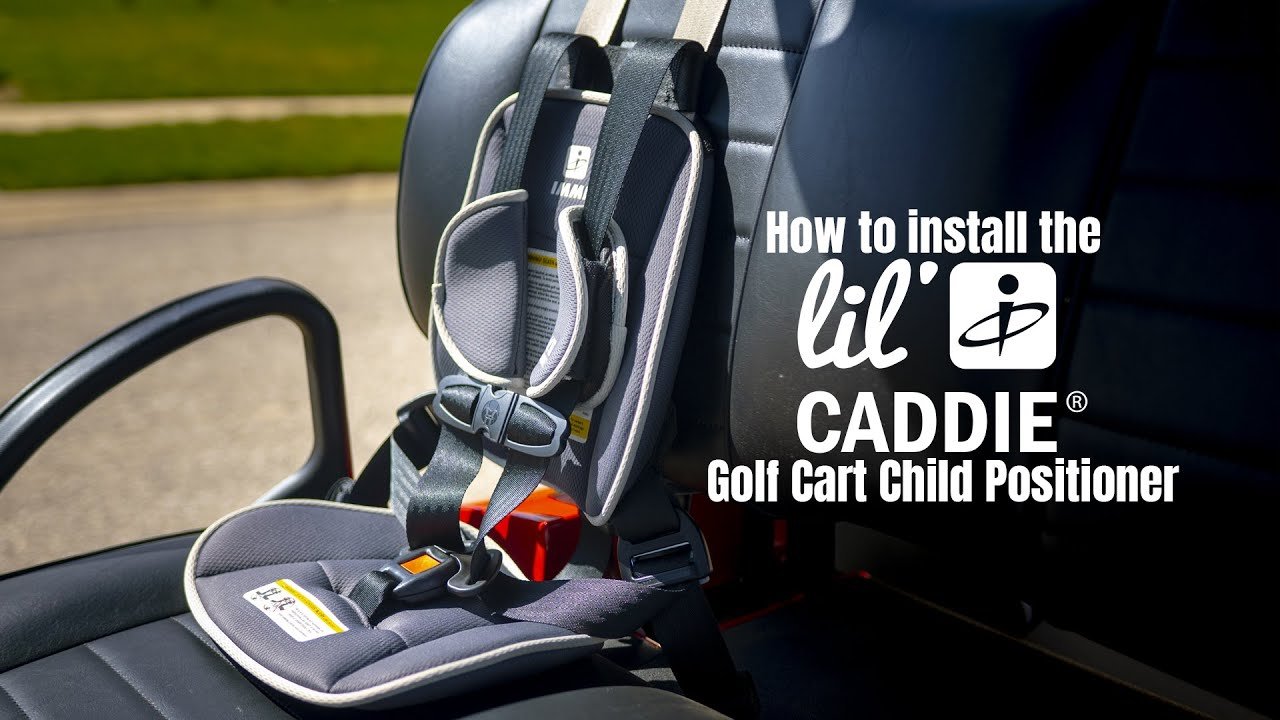
Taking your little one along for a ride around the neighborhood or the resort can turn a simple outing into a memorable family moment. But a standard golf cart is not a passenger vehicle, and there's no factory-installed LATCH system waiting to click into place. Learning how to put a car seat in a golf cart correctly requires preparation, the right hardware, and a commitment to re-checking everything before every single trip.
This guide will walk you through the entire process, covering the cart's limitations, how to choose a compatible seat, how to secure it properly, and how to keep it safe over time. For more on this, see our guide on how to put a car seat on a.
The Big Question: Is This Actually Safe (and Legal)?
This is the most important part to understand before you buy a single strap. Putting a car seat in a golf cart is not an officially certified use. Car seats are rigorously crash-tested for use in passenger cars, trucks, and SUVs, but absolutely not for low-speed, open-air vehicles like golf carts. The National Highway Traffic Safety Administration provides guidance and standards that apply to motor vehicles; a golf cart doesn't meet those crash dynamics.
Even for a "Lifted" ride at 5-10 mph, an unsecured seat and child present a serious risk. Golf carts have no airbags, minimal side protection, and their high center of gravity makes them more prone to tipping on sloped terrain. For more on this, see our guide on can you put a car seat in a.
So what's the best practice? The safest option is to use a dedicated golf-cart child seat product, which often straps to the cart's frame and bench. If you must use a standard car seat, it is essential to secure it carefully and use it only on flat, paved roads with no traffic.
The moment you're driving on public roads with posted limits, you've left the legal realm of golf cart operation in most places. You must also confirm that your cart's speed controller and brakes are in optimal condition, as you'll be carrying precious cargo. For more on this, see our guide on how to put car seat on grocery cart.
What You'll Need Before You Start
Gathering supplies before you begin is easier than fumbling mid-installation.
- The right car seat: For carts, a sturdy standard car seat with a smooth base works best.
- Compression straps or ratchet straps: These are separate from the car seat's own harness, used to fix the seat body to the cart frame.
- A foam pool noodle or rolled towel: This helps to angle the seat correctly if needed.
- A wrench set: Used to loosen and tighten bolts on the cart's seat backrest or frame.
- The manual for the car seat: Keep it nearby for weight and harness limits.
Step-by-Step Installation Guide
Step 1: Park the Cart and Turn It Off
This sounds obvious, but the car needs to be off to liftable child seats. Set the parking brake if your model has one, and place the cart on the most level ground you can find. A moving cart with a seat weigh on its own is dangerous.
Step 2: Remove the Golf Cart's Factory Seat Backrest (If Possible)
Many golf carts—especially Club Car, E-Z-GO, and Yamaha models—have a seat back that can be flipped forward or unbolted. This exposes the seat pan and gives you more surface to strap into. For more on this, see our guide on is it safe to put an infant car.
- Club Car DS: You will see a hinge pin at the base; lifting the backrest completely off is ideal.
- E-Z-GO RXV: The backrest is often attached with four screws into the body.
- Yamaha Drive: The rear flip seat often has a latch system that releases the whole assembly.
If you don't remove the backrest, you can usually still install the seat, but you might face having to lean it forward later. If the car seat’s base can’t sit flush against a practically vertical surface, unbolting the rear seat is the best approach.
Step 3: Mark the Center Position
Place the golf cart on level ground. The most stable place is the rear-facing seat oriented toward the back of the cart, so the child faces the direction of travel (with the rear seat being the 'back'). The middle of the rear windshield is usually safe, but ensure there is at least 2 inches of space between the car seat and the back of the front seat row—you don't want the child's knees hitting a frame if the front passenger moves. For more on this, see our guide on can you put seat covers on heated car.
Step 4: Place the Towel or Pool Noodle Over the Crossbar
Golf carts have a metal crossbar or a exposed in the center of the seatback. This is where the seatbelt won't work like in a car. By placing a rolled towel or pool noodle lengthwise across the cart's bench, you level out the base of your car seat or allow the shoulder belts to cross the crossbar without rubbing or digging.
Step 5: Secure the Cart's Seat Frame
This is critical. Since you don't have a standard seatbelt or LATCH, you are essentially using a cinching strap to secure the backrest. Take a plastic ratchet strap or cam buckle strap and slide it around the entire seatback.
From the bottom of the cart's frame, wrap the strap over the top of the car seat where the child sits.
- If over the legs: Apply straps so they cross the backbase of the car seat's or the base's belt path.
- If using a ratchet: Never pull the strap so tight that it bends the plastic base of the car seat. You want it snug, but you'll be able to move it less than 1 inch front to back.
Step 6: Use the Base's Used- Vehicle Belt Path
Take the car seat’s own seat belt you might have—the LATCH—and plunk it around the golf cart's crossbar and lock it. Most care base-side LATCH connectors can hook onto the golf cart's metal crossbar. You might need to remove the stitching to find it. If there is resistance, use that retractable ratchet now.
Slack in the front? Push down into the seat firmly while pulling the straps tight. The car seat should compress into the seat with just half an inch of wobble.
Step 7: Level the Base
Use your bubble level. Many car seats come with a built-in level indicator on the side. If the base pitches back (because the golf cart seat is horizontal), place a rolled towel or pool noodle at the front of the base (where the feet go) to get the angle right. An infant seat is too upright will raise the child's head; a toddler seat tilted too far will push the seat into another position—both compromise safety.
Step 8: Triple-Check the Harness
Once the seat is in, your child's own harness is the next priority. Ensure it is at or below the shoulder, just as in a car. Store the pull straps on the sides.
Step 9: Cap the Seat and Leave Extra Strap
Once your child is in the seat, moving to helps you secure.
A common mistake is tightening the anchor around all 4 points, and forgetting the seatbelt paths near the seatback. Always check that the belt forms a straight line between the collarbone and the shoulder.
Choosing the Right Car Seat for Cart Use
The type of seat you have matters more than the make.
- Infant bucket seats with a base fit well on a standard bench—the base is removable, which makes rigging easier.
- Convertible car seats in rear-facing mode usually struggle with the layout. You'll likely need the pool noodle approach to get enough angle since cloth benches are rarely at the perfect recline.
- Forward-facing is generally the easiest configuration.
Avoid hard-sided seats without a base. They are tough to rig because the straps must run across the actual bench.
Common Mistakes and How to Avoid Them
It's easy to think you have it clicked in, but there are a few times things go wrong.
Mistake 1: Bolting the seat to the cart with Bungee cords. Bungee stretches flexibly while moving. You need a solid duration that holds.
Mistake 2: Leaving the seat buckled when it’s not in use. UV rays and weather degrade the plastic. Remove the seat from the cartline and store it indoors.
Mistake 3: Resulting in broken base latch. Instead of using the cart's overhang, often, the available belt path has a hidden plastic-edge that you are supposed to attach—you must ensure those clips aren't pinched or weakened by the deck.
Maintenance and Safety Checks: Every Ride
It's not a one-and-done job. Here’s the essential drill before every trip:
- Wiggle test: grab the car seat at the belt path, and pull. If it shifts any more than 1 inch forward, release and start tightening again. This loose is a common issue because these straps aren't tensioned for the open-air vibes of a cart.
- Check hardware and rusty bolts: the cart’s hand bolts come loose after hitting bumps. Use a socket.
- Chisel on the seat’s own straps: Check for twists in the harness straps. A twisted strap distributes force less evenly and can allow extra space for a child.
- Sun exposure: Cart seats are in the sun. Ensure the plastic harness clips aren’t cracked or faded.
If the cart is kept outdoors, break as necessary.
A Quick Note on Riding With the Seat
Even with a perfect install, how you drive matters.
- Always keep the rear facing the travel direction.
- Never let the child ride in the parked central seat near the steering wheel area.
- Avoid unnecessary sharp turns that could tip the cart’s center of gravity.
- Make them use a woolly head cushion if they are a light seat.
Frequently Asked Questions
Q: Do I need the golf cart's own lap belt if it has one? A: If the cart has a lap belt, you can thread it through the car seat's belt path. But in most builds, the seat belt is a center lap belt that can be used as an alternative to long straps—though you may still need to it a bit to get the tightest fit.
Q: What about the latch system on infant car seats? A: LATCH connectors need solid steel bars. Golf cart frames offer these! You can hook them onto the horizontal crossbar. However, the seatbelt's fit to the cart frame is often the only safe ‘LATCH’ style point.
Q: How do I make it smell right? A: A pool noodle or foam pipe insulation cut to size works wonders for leveling, but avoid placing the noodle over the child’s head area. Always the minimize slopes reducing the seat's neck-line.
Q: Can I use the car seat in a golf cart on the road? A: No. These instructions improve the safety in private communities or on golf-course paths. It is not crash-test rated and cannot be guaranteed.
Securing a car seat in a golf cart is not a factory standard, but you can achieve a stable angle with some careful maneuvering and extra anchors. The biggest priority is to regularly reassess that the straps stay firm and the base stays steady
Regularly maintain the cart’s frame, tighten those straps before takeoff, and never let the child twist the chest harness off of their shoulders. Stay on smooth terrain, keep your speed slow, and always evaluate that the sure to cart the route. Buying a purposeful, dedicated golf-cart seat will give you more security than adapting an infant seat.
Ready to hit the road? Check your cart’s seat base for rust and replace that steering seat—then have a memorable ride!

Emma Grace is a devoted mother and passionate content writer at BestBabyCart.com. With firsthand parenting experience and a love for research, she creates helpful guides and honest reviews to support parents in choosing the best for their babies. Her goal is to make parenthood easier, one article at a time.