
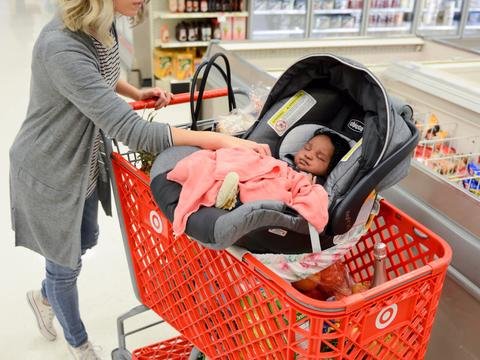
Navigating a busy grocery store with a newborn, a full shopping list, and a detachable infant car seat can feel like an impossible balancing act. You’ve likely seen other parents rest a car seat on the top rack of a shopping cart, baby inside, and wondered if it’s actually safe to do the same. The short answer, per 2026 guidance from leading pediatric and traffic safety organizations, is no: this practice poses serious, preventable risks of injury, even for quick 5-minute errand runs.
In this guide, we’ll break down the specific hazards of placing an infant car seat on a shopping cart, debunk the common myths that lead parents to take this risk, outline three vetted, low-hassle safer alternatives, and share emergency steps to follow only if you have no other option. All guidance is aligned with current recommendations from the American Academy of Pediatrics and the National Highway Traffic Safety Administration, so you can shop with confidence while keeping your little one secure. You can also read our guide on best strollers car seat carts top picks for easy travel.
The Short Answer: No, It Is Not Safe (And Here’s Why)
As of 2026, no major child safety organization approves the practice of placing a detachable infant car seat on a shopping cart, regardless of cart type or trip duration. Infant car seats are engineered and crash-tested exclusively for use in motor vehicles, where they are secured to a fixed, rated anchor system designed to absorb impact forces. Shopping carts, by contrast, are built to hold groceries, not the 20–35 pound combined weight of an infant car seat and baby, and their top racks lack the stability and weight rating to hold that load safely.
Even if the seat appears secure, the top-heavy weight distribution creates a constant tipping risk, and the cart’s built-in infant seat slot is only rated for lightweight, store-provided loaner seats that weigh 5–10 pounds, not vehicle-grade car seats. The American Academy of Pediatrics explicitly warns that this practice is a leading cause of preventable shopping-related infant injuries. This guidance is aligned with the National Highway Traffic Safety Administration, which also warns that no shopping cart is designed to safely hold an infant car seat. You can also read our guide on best convertible child safety car seats for ultimate comfort and protection.
Documented Risks of Placing an Infant Car Seat on a Shopping Cart
While many parents assume they can “be careful” to avoid accidents, the risks of this practice are not limited to obvious carelessness. Even experienced parents face unavoidable hazards:
- Tipping risk: The combined weight of the car seat and baby raises the cart’s center of gravity, making it easy to tip over from a small bump, an uneven store floor, or even a slight nudge from another shopper. Tipping can cause the cart to fall on top of the infant, leading to serious head trauma or crushing injuries.
- Fall risk: The cart’s top rack locking mechanism is not designed to hold the weight of a car seat, so the seat can slip loose with minimal force, even if you strap it in with the car seat’s built-in carry handle. Falls from as little as 2 feet can cause skull fractures, brain injuries, or broken bones in infants.
- Cart frame damage: Most standard grocery carts are not rated to hold more than 40–50 pounds of weight in the basket, and the top rack has an even lower rating. The weight of a car seat and baby can warp the cart’s metal frame over time, leading to sudden collapse even if the cart looks intact.
- Car seat structural compromise: Using a car seat outside of a vehicle can stress the seat’s shell and harness components, reducing its effectiveness in a future car crash. Most infant car seat manufacturers void their warranties if the seat is used for non-vehicle purposes, including placement on a shopping cart.
Pediatric safety organizations consistently report hundreds of preventable falls and tipping incidents involving infant car seats on shopping carts each year, with most injuries occurring from head trauma and impact-related bruising.
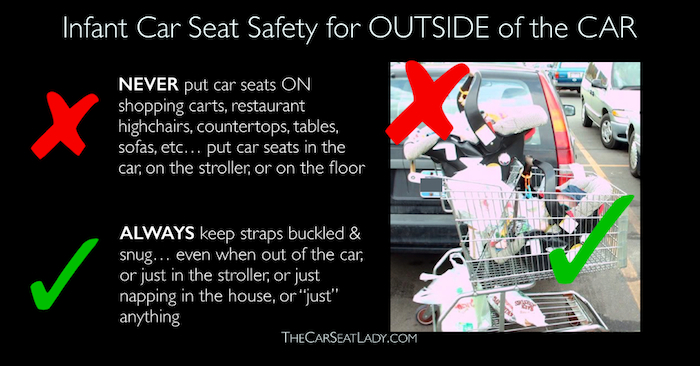 This is the exact placement safety organizations warn against, as it creates a serious tipping and fall hazard.
Credit: thecarseatlady.com
This is the exact placement safety organizations warn against, as it creates a serious tipping and fall hazard.
Credit: thecarseatlady.com
Why No Shopping Cart Type Is Safe for Infant Car Seats
You may have seen carts marketed as “infant car seat compatible,” but these claims almost always refer to lightweight, store-provided infant seats, not detachable, vehicle-rated car seats. No cart type as of 2026 is designed to safely hold a standard infant car seat:
- Standard metal grocery carts: The most common cart type has a top rack with a simple locking mechanism meant only for 5–10 pound loaner seats. It cannot hold the 20+ pound weight of a car seat and baby, and the seat can pop loose with a small jostle.
- Compact small-basket carts: Designed for quick trips, these have narrower, less stable top racks with no built-in locking mechanism for infant seats at all, making them even more prone to tipping.
- Specialty family-focused carts: Some stores offer carts with built-in car seat anchors, but these are not tested to meet motor vehicle safety standards. The anchors are only rated for casual, low-impact use, not the forces of a cart tipping or falling.
- Convertible/expandable carts: The adjustable top rack shifts weight distribution as you extend it, making the cart even more unstable when a heavy car seat is placed on top.
While many parents assume car seats are designed to fit on cart racks, our full breakdown of car seat and shopping cart compatibility outlines why physical fit does not equal safety, even if the seat appears to sit securely on the rack. You can also read our guide on best dog car booster seat.
Even a slightly loose seat can slip off the cart rack with minimal force, leading to serious fall injuries for infants.
Credit: www.autoweb.com
Safer, Tested Alternatives for Shopping with an Infant
You don’t have to choose between running errands and keeping your baby safe. These three alternatives are recommended by pediatric safety experts, require no risky cart balancing, and work for almost every shopping scenario:
- Wear your baby in a soft-structured carrier or wrap This is the #1 recommended alternative for short errand runs (under 1 hour) per the American Academy of Pediatrics. Lightweight, breathable carriers distribute your baby’s weight evenly across your shoulders and hips, keep them secure against your chest for constant supervision, and free up both hands to grab items from store shelves. For newborns, choose a carrier with built-in head and neck support to keep their airway clear. For quick trips to pick up a few items, this option requires no extra gear to carry, and fits perfectly into quick errand runs that fit your baby’s sleep schedule.
- Use a stroller with a compatible infant car seat adapter If you already own a stroller that clicks with your infant car seat, bring the full stroller setup instead of the car seat alone. Most strollers have a large, sturdy under-seat storage basket for groceries, and the car seat stays secured to the stroller frame, eliminating all risk of tipping or falling. If you don’t own a stroller, many major grocery and big-box stores offer free, sanitized loaner strollers at their entrances for parents shopping with infants—a little-known 2026 perk that makes this option accessible even for unplanned trips. If you’re in the market for a new stroller that works with your car seat, our top picks for travel-friendly stroller and car seat combos highlight lightweight, maneuverable options perfect for crowded store aisles. You can also read our guide on can you put a car seat in a shopping cart.
- Shop with a second adult For larger grocery runs or trips to busy stores, bring a partner, family member, or friend who can hold the baby (in a carrier or in arms) while you push the cart. This eliminates all risk of car seat placement entirely, lets you shop faster, and gives your baby one-on-one attention during the outing. This is also a great option if you have back pain that makes wearing a carrier uncomfortable for long periods.
Common Myths About Putting Car Seats on Shopping Carts (Debunked for 2026)
Many parents justify placing car seats on carts based on misconceptions that ignore current safety guidance. Let’s clear up the most common myths:
- Myth: “The cart’s built-in infant seat is designed for car seats.” Fact: These slots are only rated for store-provided loaner seats that weigh 5–10 pounds. They are not tested to hold the weight of a detachable vehicle car seat plus a baby, and their locking mechanisms can fail without warning under that load. You can also read our guide on what age do you face infant car seat forward.
- Myth: “If I strap the car seat to the cart with its built-in harness, it’s safe.” Fact: The car seat’s built-in harness is designed to secure the baby in a vehicle crash, not attach the seat to a shopping cart frame. Even with a tight strap, the cart’s top-heavy weight distribution makes it prone to tipping from small bumps or uneven surfaces.
- Myth: “I’ve done this for years with no accidents, so it’s fine.” Fact: Most cart tipping and fall incidents happen suddenly, from unpredictable events like a wobbly wheel, a shopper bumping into the cart, or a child running into the rack. There is no way to eliminate these random risks, even for experienced parents. You can also read our guide on best in child safety car seats for ultimate protection and comfort.
- Myth: “It’s okay for quick 5-minute convenience store runs.” Fact: A surprising number of injuries happen during short trips, when parents are rushing and less vigilant. There is no “safe” duration for this practice, per NHTSA guidance.
Emergency Use Only: Steps to Reduce Risk If You Have No Other Option
We strongly recommend using one of the alternatives above for every shopping trip, but we recognize there may be rare emergencies where you have no other option (e.g., you’re alone with a sick baby and need to pick up medication). If you must place a car seat on a cart, follow these 2026 guidelines to reduce risk as much as possible:
- Limit the trip to 2–3 items and 15 minutes maximum in the store. The longer you are out, the higher the risk of an accident.
- Inspect the cart carefully before use: check for bent frames, broken welds, wobbly wheels, or missing parts. Choose the oldest, sturdiest cart available, as older carts often have heavier, more stable frames.
- Place the car seat inside the main basket of the cart, not on the top rack. This lowers the center of gravity and reduces tipping risk significantly.
- If the cart has a built-in seatbelt across the top rack, loop it through the car seat’s carry handle (never through the baby’s harness straps) and buckle it tight. Test the seat by shaking it firmly: it should not move more than 1 inch in any direction.
- Never leave the baby unattended for even 10 seconds. Keep one hand on the cart at all times, even when bending to grab an item from a lower shelf.
- Do not stack heavy items in the basket above or next to the car seat, as this adds weight and increases tipping risk.
- When checking out, remove the car seat from the cart first before loading groceries into the basket to avoid jostling the seat.
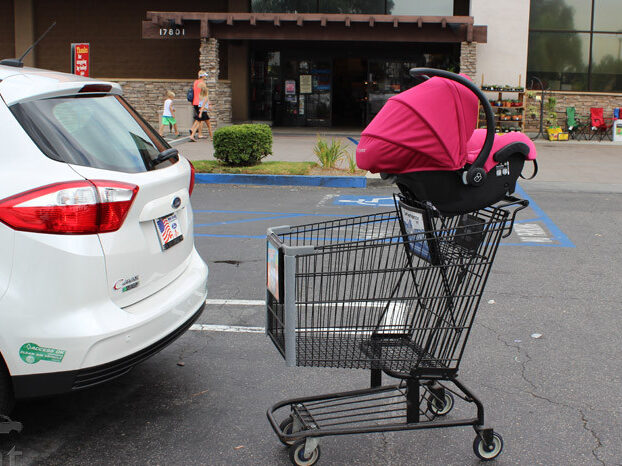 This is a common outcome of placing a heavy car seat on a cart top: sudden tipping from a small bump or uneven surface can cause severe injury.
Credit: carseatblog.com
This is a common outcome of placing a heavy car seat on a cart top: sudden tipping from a small bump or uneven surface can cause severe injury.
Credit: carseatblog.com
Expert Safety Standards for 2026: What Leading Organizations Recommend
Current guidance from the American Academy of Pediatrics, the National Highway Traffic Safety Administration, and the Juvenile Products Manufacturers Association is clear: infant car seats should never be placed on shopping carts, full stop. This guidance is based on years of injury data and crash testing that shows the practice poses an unacceptable risk of serious injury or death. You can also read our guide on best adult car seat carts top picks for easy travel.
Additionally, most infant car seat manufacturers explicitly prohibit using their seats outside of a vehicle in their user manuals, and using the seat on a shopping cart will void your warranty. If the seat is damaged in a fall or tipping incident, you will be responsible for the full cost of replacement, with no coverage from the manufacturer.
If you haven’t double-checked your car seat’s vehicle installation recently, our step-by-step infant car seat installation checks cover key checks to make before your next trip to ensure the seat is properly secured for car use. If you’re researching when to upgrade to a convertible seat as your baby grows, our guide to switching from an infant car seat outlines the weight and height milestones to watch for to keep your child safe as they get older. If you’re selecting a new infant car seat, our top-rated winter car seat cover picks include options with added impact-absorbing padding for extra peace of mind during car trips. You can also read our guide on best infant car seat covers for winter.
Frequently Asked Questions
How do you safely put a car seat on a cart?
The only safe way to use a car seat in a store is to carry it in your arms with the baby inside, or attach it to a stroller frame. Placing it on a shopping cart is never recommended by safety experts. If you have no other option for an emergency trip, follow the steps outlined above to reduce risk, but note this is not an approved practice.
Can car seats fit on shopping carts?
Most infant car seats will physically fit on the top rack of a standard grocery cart, but physical fit does not equal safety. The rack is not rated to hold the weight of the seat and baby, so even if it fits, it poses a serious tipping and fall risk. You can also read our guide on what diapers are non toxic.
What are the risks of improper car seat placement?
Risks include the cart tipping over and crushing the baby, the car seat falling off the rack and causing head trauma or broken bones, the cart frame warping or collapsing under the weight, and damage to the car seat’s structural integrity that reduces its effectiveness in a future car crash. You can also read our guide on how to put a car seat on a shopping cart.
Why should you avoid putting car seats on top of carts?
The top rack is not designed to hold the weight of a car seat and baby, creating a top-heavy cart that is easy to tip from small bumps or uneven surfaces. Additionally, the car seat’s built-in harness is not designed to secure it to a cart, so it can slip loose with minimal force. Most car seat manufacturers also prohibit this use, voiding your warranty if the seat is damaged. You can also read our guide on best lightweight stroller for toddler.
Are there any shopping carts that are safe for infant car seats?
No. As of 2026, no major shopping cart manufacturer designs carts specifically to hold infant car seats, as the risk of injury is too high. Any cart that claims to be “car seat compatible” is only referring to lightweight, store-provided infant seats, not detachable vehicle car seats. You can also read our guide on how to put car seat on grocery cart.
Conclusion
Placing an infant car seat on a shopping cart is never a safe practice, no matter how short your trip is or how careful you think you’re being. The risks of tipping, falls, and car seat damage are too high, and no major safety organization approves this behavior as of 2026. You can also read our guide on best car seat carts under.
Instead, opt for one of the vetted alternatives above: wear your baby in a carrier for quick trips, use a stroller with a car seat adapter for longer outings, or bring a second adult to help with shopping. These options eliminate the risk entirely while still letting you get your errands done with minimal hassle. You can also read our guide on can you put seat covers on heated car seats.
Your baby’s safety is always worth the small extra step of adjusting your shopping routine. For more tips on low-stress outings for you and your infant, check out our guide to planning trips that work with your baby’s sleep schedule. You can also read our guide on how to place car seat in shopping cart.

Emma Grace is a devoted mother and passionate content writer at BestBabyCart.com. With firsthand parenting experience and a love for research, she creates helpful guides and honest reviews to support parents in choosing the best for their babies. Her goal is to make parenthood easier, one article at a time.