

Your baby’s skin is 30% thinner than adult skin, making it far more vulnerable to irritation and chemical absorption from everyday products. While you carefully vet their food, clothing, and toys, diapers — the product touching their most sensitive skin 24/7 — often get overlooked, especially with vague marketing terms like “non-toxic” that are unregulated by the FDA. This guide cuts through greenwashing to give you concrete, actionable advice for choosing safe, gentle diapers that protect your baby’s skin without breaking the bank. We’ll cover hidden harmful chemicals to avoid, trusted certifications to look for, top brand recommendations for 2026, cost tradeoffs, and easy selection tips to give you peace of mind.
What Does "Non-Toxic" Actually Mean for Diapers?
The term “non-toxic” is not a regulated claim for diaper products, so brands can use it loosely to describe everything from diapers with no added fragrances to those made with 100% organic materials. For the purposes of this guide, a truly non-toxic diaper is one that is free from known skin irritants, endocrine disruptors, carcinogens, and harsh bleaching byproducts, and has been third-party tested for safety against infant skin. Many non-toxic diapers also prioritize reduced environmental impact, using renewable, biodegradable materials instead of fossil-fuel derived plastics, but skin safety is the core priority. It’s a common misconception that non-toxic diapers are less absorbent than conventional options: modern non-toxic diapers use the same superabsorbent polymer core as mainstream brands, with safer materials surrounding the core to reduce skin contact with potential irritants.
Hidden Harmful Chemicals to Avoid in Disposable Diapers
Most harmful chemicals in conventional diapers are not required to be listed on packaging, which is why certification is so critical. Below are the most common risky ingredients to watch for, and why they matter for your baby’s health:
- Phthalates: Added to elastic waistbands and leg cuffs to improve flexibility, phthalates are linked to endocrine disruption and developmental delays in infants, per CDC guidance on phthalate exposure risks for infants. They are rarely listed on ingredient labels, so look for phthalate-free certifications to avoid them.
- Synthetic Fragrances: Labeled as “parfum” or “fragrance” on packaging, these proprietary blends can hide dozens of hidden allergens, including volatile organic compounds (VOCs) that cause respiratory irritation. Fragrances are among the top 5 contact allergens identified by the American Academy of Dermatology for infants, and can trigger painful contact dermatitis.
- Dioxins: Byproducts of chlorine bleaching used to whiten diaper materials, dioxins are classified as possible human carcinogens by the EPA information on dioxin health effects. Even small, repeated exposures can build up in the body over time, so unbleached or chlorine-free diapers eliminate this risk entirely.
- Additional Red Flag Ingredients: Low-quality diapers may also contain VOCs like toluene and benzene that off-gas from the core and cause respiratory irritation; residual acrylamide from poorly purified superabsorbent gel, a probable carcinogen; and synthetic dyes that cause skin staining and irritation in sensitive babies.
Trusted Certifications and Labels That Verify Non-Toxic Claims
Unregulated terms like “natural,” “gentle,” or “eco-friendly” are meaningless without third-party verification. Look for these trusted certifications and labels to confirm a diaper’s safety claims:
Third-Party Certifications to Trust
- OEKO-TEX Standard 100: Tests products for over 300 harmful substances, with baby items held to the strictest Class I safety standards. The certification is updated annually to reflect new research on harmful chemicals, making it one of the most current safety markers available.
- GOTS (Global Organic Textile Standard): Requires a minimum of 70% organic fibers (organic cotton, bamboo) and bans all toxic chemicals in processing, including synthetic dyes and bleaches. It also verifies fair labor practices for production workers, making it a top pick for ethically minded parents.
- USDA Certified Biobased: Verifies that a set percentage of the diaper’s materials are made from renewable plant-based sources instead of fossil fuels, reducing both chemical exposure and environmental impact.
On-Pack Labels to Prioritize
- Chlorine-Free: Eliminates dioxin byproducts from the bleaching process.
- Fragrance-Free and Dye-Free: Confirms no added scents or synthetic colorants that can irritate skin.
- Hypoallergenic: While unregulated on its own, this label is reliable when paired with a third-party certification like OEKO-TEX.
Top Non-Toxic Disposable Diaper Brands for 2026
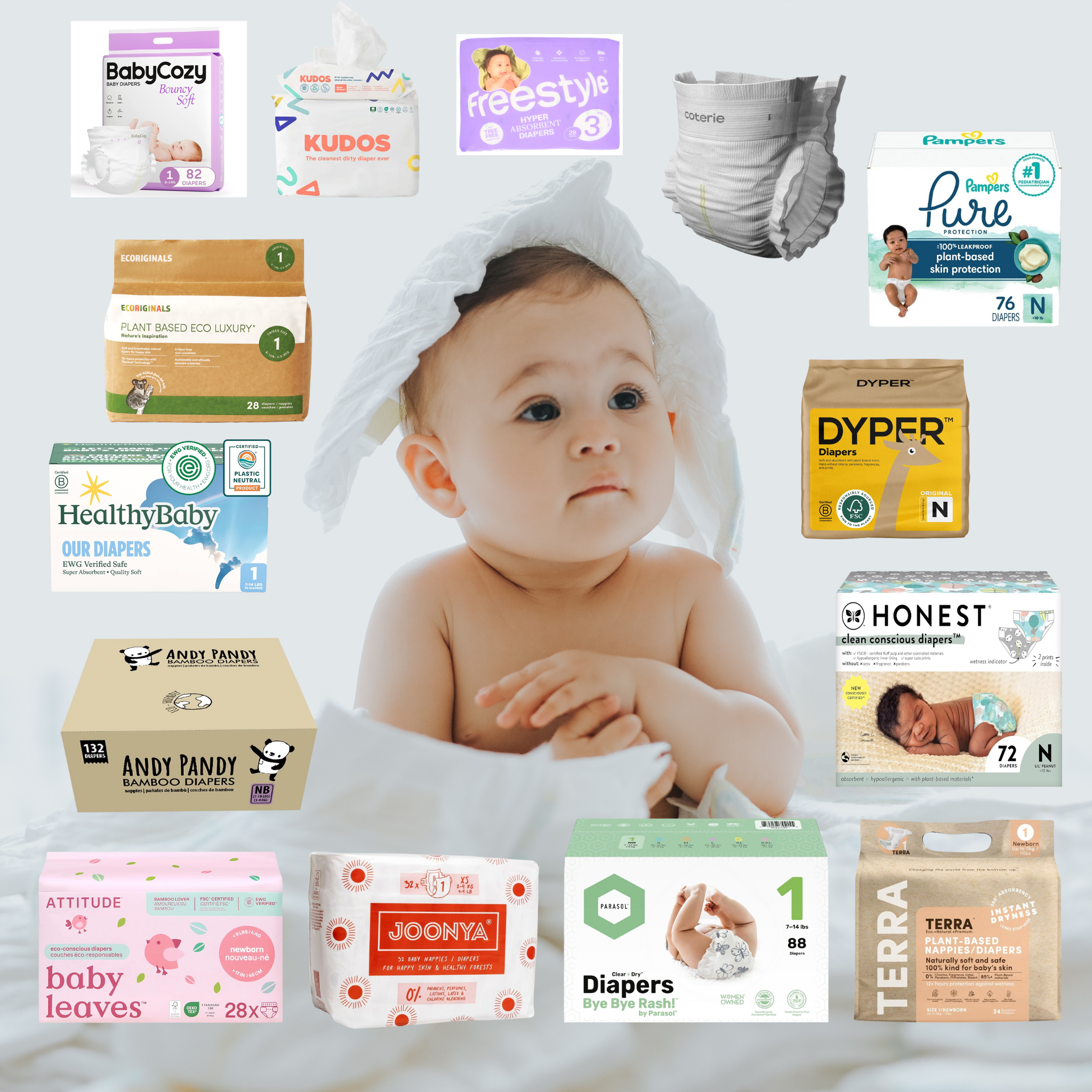
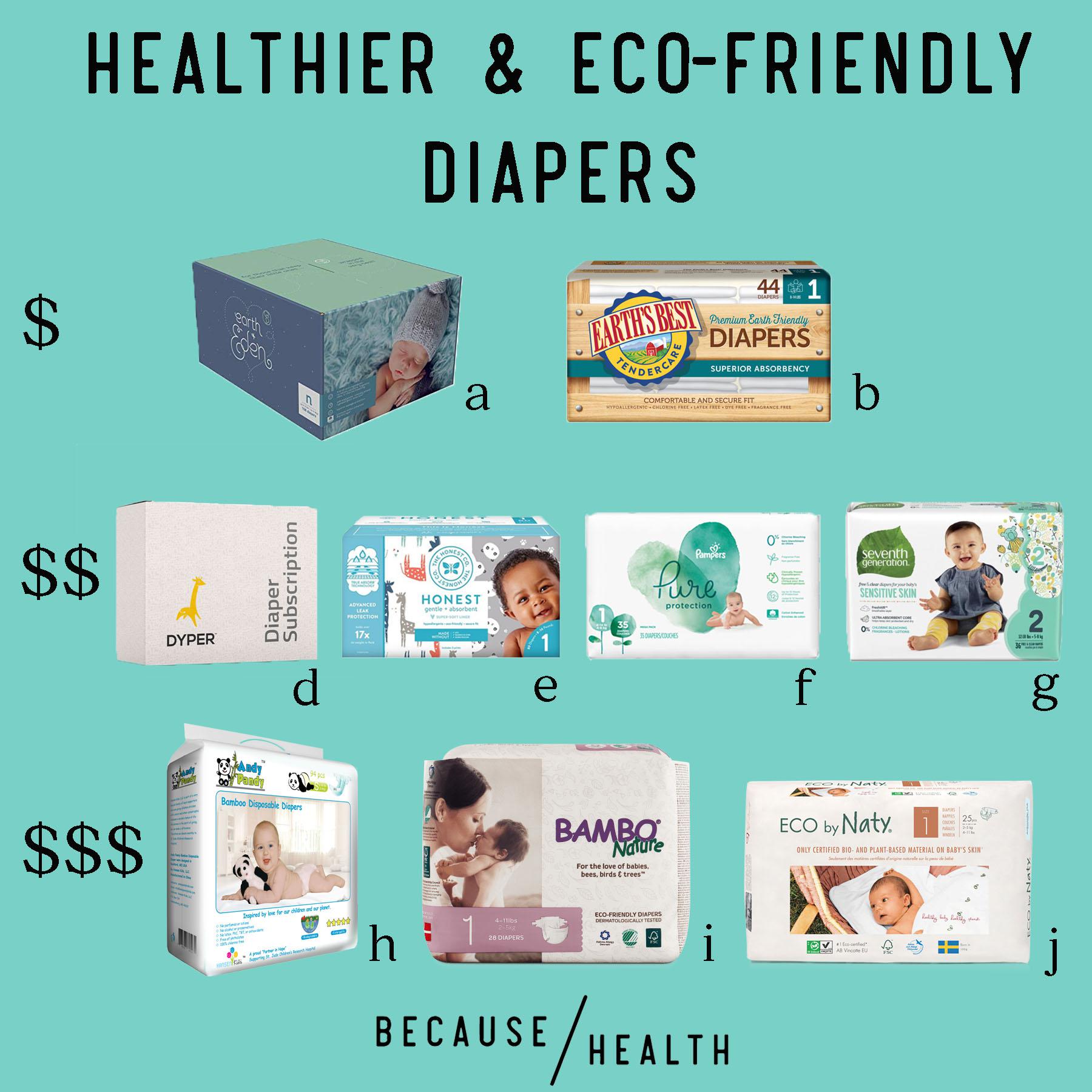
All brands listed below are third-party tested for harmful chemicals, with verified certifications to back their safety claims. We’ve broken them down by budget and use case to make selection easier:
Budget-Friendly Non-Toxic Options
- Seventh Generation Free & Clear: OEKO-TEX Standard 100 certified, chlorine-free, fragrance-free, and free from lotions and parabens. At ~$0.28 per diaper, it is widely available at most grocery stores and big-box retailers, and works well for babies with mild skin sensitivity.
- Hello Bello: OEKO-TEX certified, with a plant-based absorbent core and no phthalates, parabens, or fragrances. At ~$0.25 per diaper with a subscription, it is one of the most affordable non-toxic options on the market, with playful, non-toxic prints that kids love.
Premium Organic Options
- Bambo Nature: GOTS certified, made with 70%+ bamboo and organic cotton, and fully biodegradable in industrial composting facilities. At ~$0.45 per diaper, it is formulated specifically for babies with severe eczema or extremely sensitive skin, though it is less absorbent for heavy overnight wetters, so you may need to size up for nighttime use.
- Honest Company Diapers: OEKO-TEX certified, made with plant-based materials and free from chlorine, fragrances, lotions, and latex. At ~$0.32 per diaper, it has a wide range of gender-neutral prints and reliable leak protection for daytime use, with a fit that works well for average-sized babies.
Subscription Eco-Friendly Picks
- Dyper: USDA Certified Biobased, made with sustainably harvested bamboo, with carbon-neutral shipping and optional compostable diaper recycling in select U.S. cities. At ~$0.30 per diaper with a recurring subscription, it eliminates the hassle of running out of diapers last minute, and is a great pick for eco-conscious families. If you love playful printed diapers, rest assured that chevron patterns and other bold prints are safe for your baby’s skin as long as the dyes used are non-toxic and certified, so you don’t have to sacrifice style for safety.
Disposable vs. Reusable Non-Toxic Diapers: Cost and Convenience Tradeoffs
A common myth is that non-toxic diapers are prohibitively expensive, but the actual cost difference is smaller than many parents assume. For an average baby using 8 diapers per day:
- Conventional disposables: ~$0.20 per diaper = ~$48 per month
- Mid-tier non-toxic disposables: ~$0.28 per diaper = ~$67 per month
- Premium organic disposables: ~$0.45 per diaper = ~$108 per month Bulk buying or subscriptions can cut these costs by 15-20% on average, making mid-tier non-toxic options accessible for most family budgets. For reusable cloth diapers, the initial upfront cost is $200-$400 for a full stash of 24-36 diapers, which lasts 2-3 years for one child and can be reused for subsequent children. When paired with energy-efficient laundering, the cost per diaper is ~$0.05, making it the most budget-friendly long-term option. Cloth diapers also eliminate single-use plastic waste, but require more time for washing and drying, and you’ll need to use a fragrance-free, dye-free detergent to avoid irritating your baby’s skin. If you’re considering reusable options, our guide on how many cloth diapers a baby uses annually can help you calculate your total upfront and ongoing costs. Beyond immediate cost, non-toxic diapers offer long-term health benefits: reduced exposure to harmful chemicals is linked to lower rates of diaper rash, contact dermatitis, and chronic eczema in infants, which reduces discomfort and lowers the risk of long-term skin conditions. For parents of early nappers, extra-absorbent non-toxic diapers let you head out without cutting your day short even if your little one’s schedule is tight, since you won’t have to rush home for frequent diaper changes. If your baby has extra sensitive skin during cold months when you’re layering the right number of winter coats, extra gentle diapers can help prevent irritation from friction and moisture buildup.
Actionable Tips for Choosing the Right Non-Toxic Diaper
- Prioritize certifications over marketing claims: Ignore unregulated terms like “natural” or “gentle” — look for OEKO-TEX, GOTS, or USDA Biobased certification on the packaging or brand website to verify safety claims.
- Read full ingredient lists: Avoid diapers that list chlorine, parabens, phthalates, fragrance (parfum), lotion, latex, or synthetic dyes. Brands that are transparent about their full ingredient list are almost always more trustworthy than those that only use vague safety claims.
- Test before committing: Buy a small pack of a new diaper brand and use it for 3-5 days first, including overnight, to check for signs of irritation, redness, or rash. If your baby has sensitive skin, test one diaper at a time to isolate any potential irritants.
- Consult your pediatrician for tailored advice: If your baby has recurrent rashes, eczema, or diagnosed allergies, ask your pediatrician for diaper recommendations — many clinics keep samples of hypoallergenic, non-toxic brands on hand for patients.
- Avoid heat exposure: Don’t store diapers in hot cars, direct sunlight, or near heaters, as heat can increase off-gassing of any residual chemicals and reduce absorbency. If you’re packing for a day out, our guide to folding a Uppababy Vista stroller makes it easy to bring along a supply of your preferred diapers without taking up too much space.
- Match diaper fit to your baby’s needs: A poorly fitting diaper, even if non-toxic, can cause friction, leaks, and irritation. Check the brand’s sizing chart regularly, as babies grow quickly, especially during growth spurts.
Video Resource: How to Identify Non-Toxic Diapers
For a step-by-step visual guide to reading diaper labels and spotting hidden harmful chemicals, watch this child safety tutorial.
Frequently Asked Questions
Which diapers are the least toxic?
The least toxic options are GOTS-certified organic diapers like Bambo Nature, which are tested for over 300 harmful substances and made with 100% organic, sustainably sourced fibers. OEKO-TEX Standard 100 certified diapers are the next best option, offering verified safety at a more affordable price point.
Are Pampers diapers chemical free?
Pampers’ standard disposable diaper line contains added fragrances, lotions, and trace amounts of chemicals used in the manufacturing process. However, their Pampers Pure line is OEKO-TEX Standard 100 certified, fragrance-free, and free from parabens, phthalates, and chlorine, making it a non-toxic option for parents who prefer mainstream brands.
Are Honest diapers actually non-toxic?
Yes, Honest Company diapers are OEKO-TEX Standard 100 certified, meaning they are third-party tested for over 300 harmful substances. They are free from chlorine, parabens, phthalates, fragrances, lotions, and synthetic dyes, and made with plant-based materials that are gentle on sensitive skin.
Do non-toxic diapers leak as much as conventional diapers?
Modern non-toxic diapers use the same superabsorbent polymer core as conventional diapers, so leak performance is comparable for most brands. Some lower-cost eco-friendly brands may have less secure leg cuffs, so check recent reviews if you have a heavy wetter or need overnight protection.
Can I compost non-toxic disposable diapers at home?
Most non-toxic disposable diapers contain small amounts of plastic in the waistbands and leg cuffs, so they cannot be composted in a standard home compost bin. Some brands offer industrial composting programs in select U.S. cities — check the brand’s website for local drop-off or mail-in composting options.
Are cloth diapers more non-toxic than disposable diapers?
Cloth diapers can be more non-toxic if you use fragrance-free, dye-free detergent and avoid fabric softeners, since you have full control over what materials touch your baby’s skin. They also eliminate single-use plastic waste. However, they require more time and energy for laundering, so the “more non-toxic” choice depends on your family’s routine and values.
Conclusion
Choosing non-toxic diapers is a simple, high-impact way to reduce your baby’s exposure to harmful chemicals and support more sustainable manufacturing practices. You don’t have to break the bank to make a safe choice: even mid-tier OEKO-TEX certified disposables offer verified safety at a small premium, while reusable cloth diapers provide long-term savings for committed families. Start by prioritizing third-party certifications over marketing hype, test a small pack first to check for skin compatibility, and pick the option that fits your budget and lifestyle. For more tips on reducing toxins in your baby’s daily routine, check out our guides to choosing a gentle baby hairbrush and palm oil-free baby formula for more small, high-impact swaps.
 Cross-section view of a non-toxic disposable diaper showing plant-based top sheet and absorbent core
Credit: www.ivyandfields.com
Cross-section view of a non-toxic disposable diaper showing plant-based top sheet and absorbent core
Credit: www.ivyandfields.com
 Infant wearing a certified non-toxic diaper with no skin irritation
Credit: ceh.org
Infant wearing a certified non-toxic diaper with no skin irritation
Credit: ceh.org
 Real-life absorbency test comparing non-toxic and conventional disposable diapers
Credit: acleanbake.com
Real-life absorbency test comparing non-toxic and conventional disposable diapers
Credit: acleanbake.com
Additional Frequently Asked Questions
What do Chinese babies wear instead of diapers?
Traditional open-crotch cloth training pants called kaidangku are a common low-waste alternative to disposable diapers in many parts of China, especially in rural households practicing early toilet training. The split-crotch design allows babies to squat to eliminate waste without removing clothing, which encourages potty independence as early as 12 to 18 months for many children. Kaidangku have no absorbent core, so they are only used for daytime at-home training, with most families switching to disposable diapers for outings, travel, or overnight use to avoid leaks. While disposable diaper usage is now widespread in urban Chinese areas, certified non-toxic disposable and reusable cloth options are increasingly available from both domestic and imported brands for parents seeking safer, more sustainable choices.
How often should I change my baby’s non-toxic diaper?
Change disposable non-toxic diapers every 2 to 3 hours, or immediately after a bowel movement, to prevent moisture buildup and diaper rash, even if the diaper feels dry to the touch. The superabsorbent core in non-toxic diapers wicks moisture away from the skin, but prolonged exposure to even small amounts of urine can irritate delicate infant skin over time. For overnight use, choose a non-toxic diaper with a higher absorbency rating and size up if needed to prevent leaks and reduce overnight changes that disrupt sleep.
Are non-toxic diapers safe for newborns with sensitive skin?
Yes, most non-toxic diapers certified to OEKO-TEX Standard 100 are specifically tested for infant skin safety and are safe for newborns, including those with diagnosed eczema or chronic diaper rash. Look for versions labeled “newborn” or “preemie” that have extra-soft top sheets and no elastic leg cuffs to reduce friction on tiny, delicate legs. If your newborn has extremely sensitive skin, opt for a GOTS-certified organic diaper with no synthetic dyes or adhesives, and test a single diaper first to check for irritation before switching to a full box.
Do non-toxic disposable diapers work as well as conventional ones for heavy wetters?
Modern non-toxic disposable diapers use the same superabsorbent polymer core as conventional mainstream brands, so absorbency is comparable for most daytime use. For heavy wetters or overnight use, premium non-toxic brands like Bambo Nature and Dyper offer extra-absorbent versions with higher capacity cores that can hold 12+ hours of urine for older babies. If you have a heavy wetter, check recent parent reviews for leak protection performance, as some budget non-toxic brands may have less secure leg cuffs that can cause overnight leaks.

Emma Grace is a devoted mother and passionate content writer at BestBabyCart.com. With firsthand parenting experience and a love for research, she creates helpful guides and honest reviews to support parents in choosing the best for their babies. Her goal is to make parenthood easier, one article at a time.