
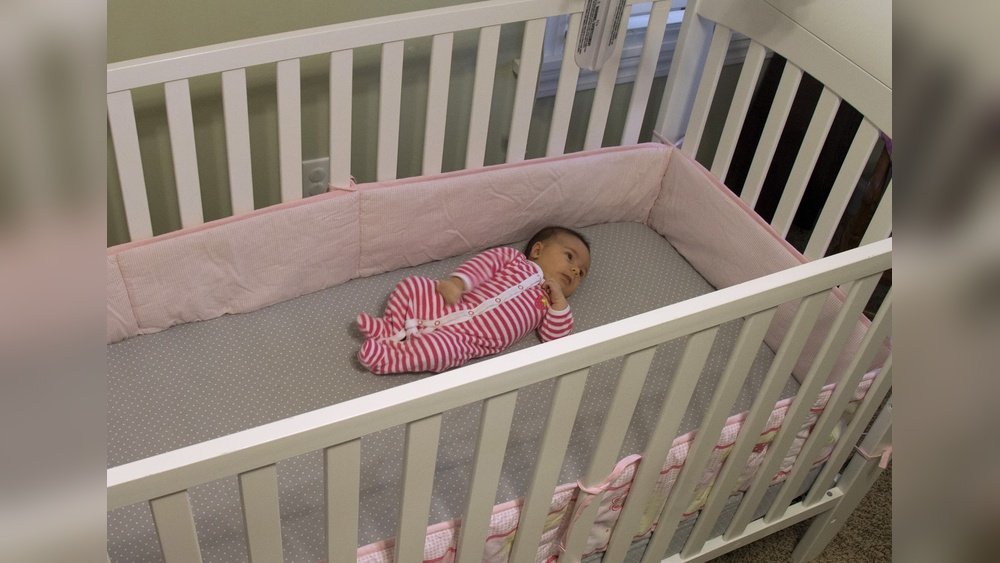
If you’re setting up your baby’s nursery, you’ve likely seen mesh crib liners marketed as breathable, safe alternatives to traditional padded bumpers. But between confusing product claims and varying regional rules, it’s hard to separate fact from fiction when it comes to their legality and safety. As of 2026, official guidance from global infant safety organizations is clearer than ever: while mesh crib liners are not universally banned, they pose confirmed, serious risks that far outweigh any perceived benefits. We’re breaking down the current legal status, verified safety hazards, official standards, and safer alternatives to help you make an informed choice for your baby’s sleep space.
What Are Mesh Crib Liners?
Mesh crib liners are lightweight, perforated fabric barriers designed to wrap around the interior rails of a standard crib. Most are made from 3–4mm thick polyester mesh, with small holes intended to allow airflow while cushioning the crib sides. They are marketed to prevent two common parental concerns: babies bumping their heads on crib rails, and limbs getting stuck between crib slats. Unlike solid padded bumpers, mesh liners are less bulky, leading many parents to assume they are a safer, legally permitted option. You can also read our guide on are halo crib liners safe.
It’s important to note that these products are often sold under alternate names like "breathable crib bumpers" or "ventilated crib liners," which can add to confusion about their safety and regulatory status.
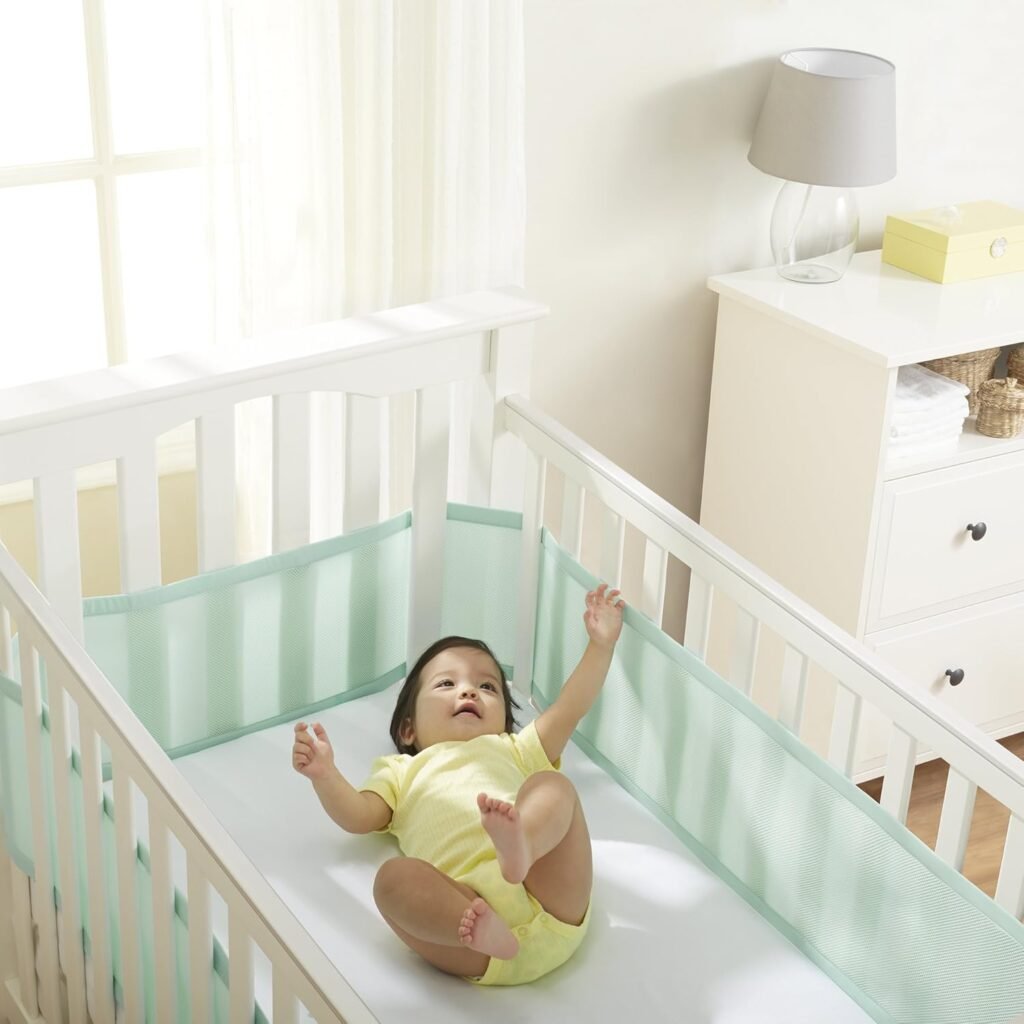 Common wrap-around mesh crib liner, marketed as a breathable alternative to padded bumpers.
Image source: amazon.com
Common wrap-around mesh crib liner, marketed as a breathable alternative to padded bumpers.
Image source: amazon.com
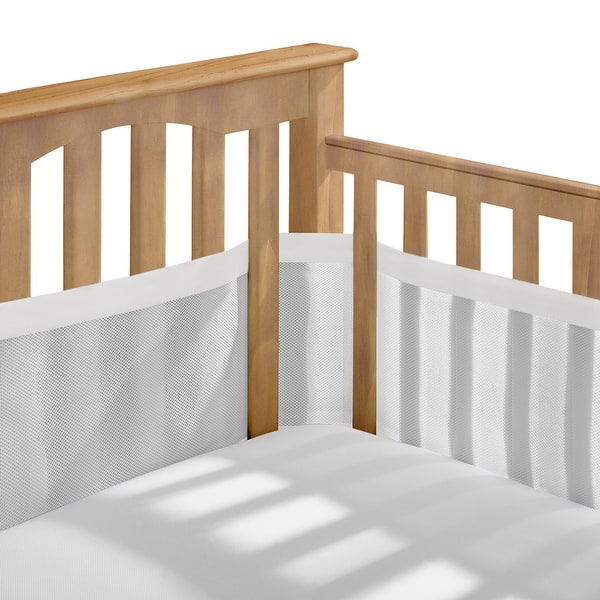 Close-up of 4mm mesh perforations designed to allow airflow, though these can compress against a baby’s face.
Image source: buybuybaby.bedbathandbeyond.com
Close-up of 4mm mesh perforations designed to allow airflow, though these can compress against a baby’s face.
Image source: buybuybaby.bedbathandbeyond.com
2026 Legal Status of Mesh Crib Liners
There is no universal global ban on mesh crib liners, but regulations and official guidance vary widely by region, and many jurisdictions have implemented strict restrictions in recent years. You can also read our guide on mesh crib liners 1024×1024.
U.S. Rules and Guidance
As of 2026, no federal law in the United States bans the sale or use of mesh crib liners, but the Consumer Product Safety Commission (CPSC) and American Academy of Pediatrics (AAP) explicitly advise against their use. The CPSC’s 2026 crib safety guidance explicitly warns that no mesh crib liner has been proven to reduce injury risk without introducing new hazards. In 2024, major U.S. retailers including Target, Walmart, and BuyBuy Baby voluntarily stopped selling all crib liners, including mesh variants, following these warnings. No U.S. state has enacted a full ban on mesh liners as of 2026, but using them against official safety guidance may impact liability in the event of a crib-related injury.
International Regulations
Other regions have implemented stricter rules:
- Canada: Health Canada has enforced a full ban on all crib bumpers, including mesh liners, since 2022. Selling or using these products can result in fines of up to $10,000 CAD.
- United Kingdom: The NHS advises against all crib liners, and products sold in the UK must meet BS EN 16890 nursery bedding standards, which most mesh liners fail due to their classification as soft, loose bedding.
- Australia: The Australian Competition and Consumer Commission (ACCC) banned all crib bumpers, including mesh variants, in 2023 after a review of infant sleep-related injuries.
A common misconception among parents is that a product sold in stores is automatically legal and safe. In practice, retailers may stock items that do not meet official safety guidelines, and legal status does not equal low risk for infants. You can also read our guide on waterproof mattress protector noiseless crib.
Verified Safety Risks of Mesh Crib Liners (Per 2026 Expert Guidance)
Per the CDC's official safe sleep guidelines, any soft, loose item placed in a baby’s crib increases the risk of suffocation and Sudden Infant Death Syndrome (SIDS), even if the item is marketed as breathable. The AAP and CPSC have identified four confirmed, significant risks associated with mesh crib liners, even when they are properly installed and meet basic manufacturing standards:
- Suffocation risk: Even perforated mesh can compress against a baby’s face if they roll into it during sleep, restricting airflow and increasing the risk of suffocation. Infants under 12 months lack the motor skills to reposition themselves if their airway is blocked.
- Entrapment risk: Loose or poorly fitted mesh liners create gaps between the liner and crib rail, where a baby’s arm, leg, or head can become stuck. This can lead to bruising, panic-induced breathing issues, or in rare cases, asphyxiation.
- Strangulation risk: The ties used to secure mesh liners to crib rails can come loose overnight, creating a strangulation hazard if they wrap around a baby’s neck.
- Fall risk: Infants as young as 8 months can use mesh liners as a foothold to climb out of their crib, leading to serious fall injuries.
Many parents turn to mesh liners to address the common limb entrapment concern, but this fix introduces far greater risks than the minor inconvenience it resolves.
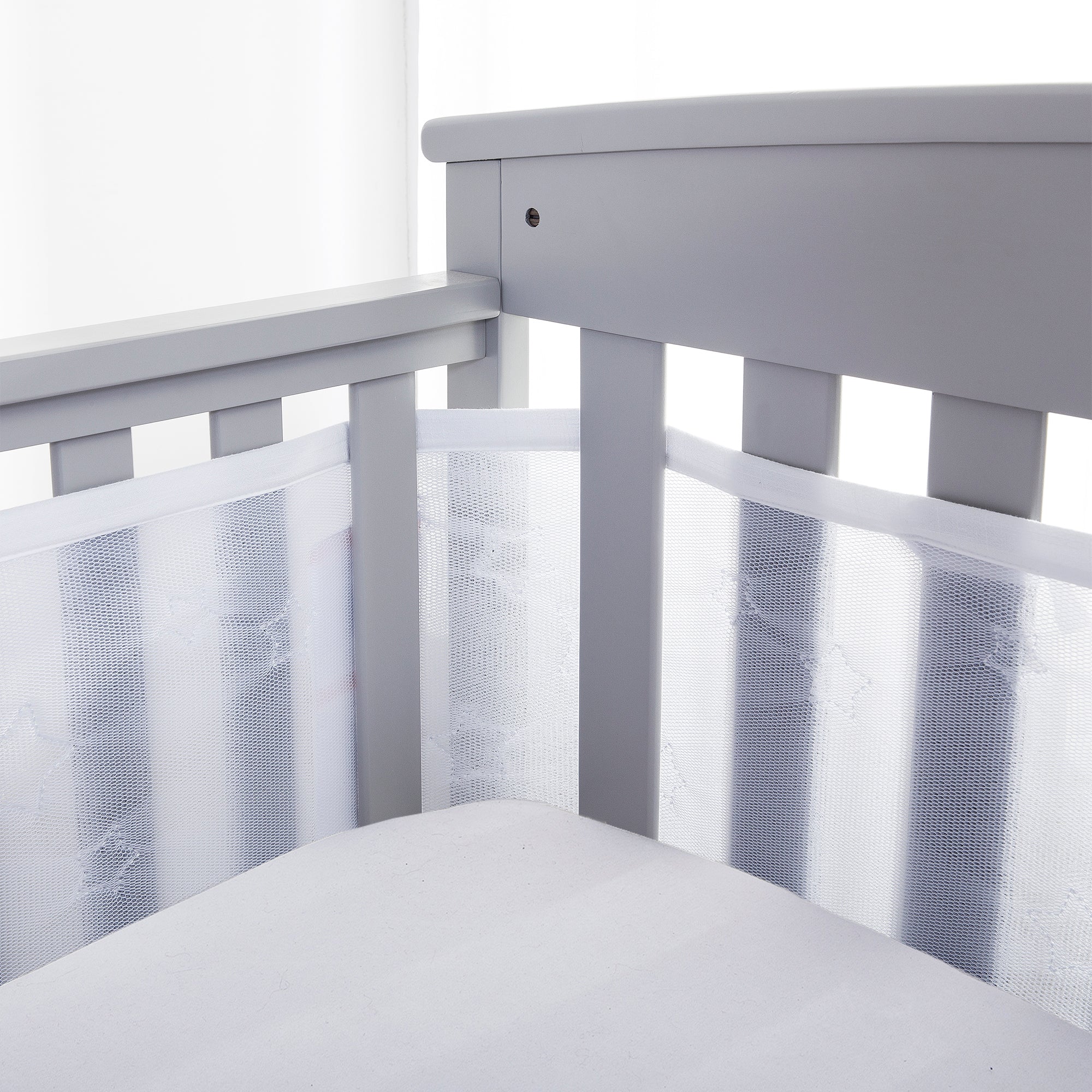 Improperly fitted mesh liner creating a gap between the liner and crib rail, a common entrapment hazard.
Image source: breathablebaby.com
Improperly fitted mesh liner creating a gap between the liner and crib rail, a common entrapment hazard.
Image source: breathablebaby.com
Official Safety Standards and Certifications
If you are still considering a mesh crib liner, it is critical to understand what safety certifications actually mean for infant sleep products:
U.S. Safety Standards
All cribs sold in the U.S. must meet CPSC standards 16 CFR 1219 (full-size cribs) and 16 CFR 1220 (non-full-size cribs), but no mesh crib liner has received CPSC approval for use in infant sleep spaces as of 2026. The Juvenile Products Manufacturers Association (JPMA) does not certify any mesh crib liners, as its safety guidelines align with AAP recommendations that all crib liners pose an unacceptable risk. Products marketed as "CPSC approved" are referring to the crib itself, not any attached liners or bumpers. You can also read our guide on can babys legs get stuck in crib slats.
International Certifications
Products sold in the EU must carry CE marking for nursery bedding, but most mesh liners fail the EN 16890 standard, which prohibits all soft, loose items in a baby’s sleep area to reduce suffocation risk. In the UK, only liners that are permanently fixed to crib rails (not wrap-around) and pass strict breathability testing are permitted for sale, though they are still not recommended by the NHS.
Proven, Legal Alternatives to Mesh Crib Liners
The AAP’s top recommendation for infant sleep safety is a bare crib with no extra bedding, liners, or bumpers of any kind. For parents addressing specific concerns, these low-risk options are fully legal and recommended by global safety organizations:
- For limb entrapment concerns: Choose a crib with slat spacing of 2 3/8 inches (6 cm) or less, the CPSC-mandated width that prevents a baby’s head from slipping between slats, eliminating the need for any liner.
- For head bump concerns: Select a crib with built-in padded, smooth rail edges, which reduce impact injury without adding loose fabric to the sleep space.
- For breathable, safe crib contents: For a full breakdown of approved crib items that meet 2026 safety standards, refer to our guide to safe, minimal crib contents.
- If you want to reduce bump injuries: For vetted safe bumper alternatives that meet official safety guidelines, see our curated list of options that eliminate entrapment and suffocation risks.
 AAP-recommended bare crib setup with only a firm mattress and fitted sheet, no extra bedding.
Image source: parents.com
AAP-recommended bare crib setup with only a firm mattress and fitted sheet, no extra bedding.
Image source: parents.com
Step-by-Step 2026 Crib Safety Setup Guide
Setting up a crib that meets current safety standards eliminates the need for any extra liners or bumpers. Follow these steps to create a safe sleep space:
- Verify crib compliance: Confirm your crib has a CPSC certification label (for U.S. purchases) or meets your region’s national crib safety standard. Avoid secondhand cribs made before 2011, when updated slat spacing rules went into effect.
- Use only a firm, crib-sized mattress: The mattress should fit snugly in the crib frame, with no gaps larger than two fingers between the mattress and crib sides.
- Stick to a fitted sheet only: No loose blankets, pillows, stuffed animals, or liners of any kind belong in the sleep space.
- Position the crib away from hazards: Place the crib at least 2 feet from windows, blinds, cords, and furniture that a baby could climb.
- Inspect regularly: Check for loose screws, broken slats, or sharp edges monthly, and after any moves or bumps to the crib.
For additional safe sleep best practices to reduce SIDS and injury risk, our sleep training guide covers age-appropriate routines and setup tips for every stage of infancy. You can also read our guide on is it safe to put an infant car seat.
Frequently Asked Questions
Are mesh crib liners illegal in the U.S. as of 2026?
No, there is no federal ban on mesh crib liners in the United States as of 2026, but the CPSC and AAP strongly advise against their use due to confirmed suffocation and entrapment risks. Many major U.S. retailers voluntarily stopped selling them in 2024 following safety warnings. You can also read our guide on what is a safe alternative to crib bumpers.
Can I use a mesh crib liner if my baby keeps getting their legs stuck in the crib slats?
No, safety experts do not recommend this. The minor, temporary discomfort of occasional limb entrapment is far less risky than the serious hazards posed by a mesh liner. Instead, ensure your crib has CPSC-compliant slat spacing, or transition to a low toddler bed once your baby is 12 months old and consistently trying to climb. You can also read our guide on what can a month old have in their crib.
What happens if I use a banned mesh crib liner in my region?
In regions where mesh crib liners are fully banned (including Canada, Australia, and parts of the EU), using or selling these products can result in fines of up to $10,000 CAD in Canada, or product seizure by regulators. Even in regions without a full ban, using a liner against official safety guidance may impact insurance claims if a crib-related injury occurs. You can also read our guide on baby sleep training tips.
Are breathable mesh bumpers safer than traditional padded bumpers?
While they pose a lower suffocation risk than padded bumpers, they still carry entrapment, strangulation, and fall risks, and are not recommended by the AAP or any major infant safety organization as of 2026. Many popular breathable liner options are still banned in multiple countries due to these unresolved hazards. You can also read our guide on comfy stuff in baby crib.
Conclusion
Mesh crib liners are not universally illegal as of 2026, but they are strongly discouraged by every major global infant safety organization due to confirmed, serious risks of suffocation, entrapment, and injury. While they are not banned by federal law in the U.S., many major retailers have stopped selling them, and they are fully prohibited in Canada, Australia, and parts of the EU. The small, unproven benefits of mesh liners are far outweighed by the risks they pose to infants, who cannot free themselves if a liner shifts or blocks their airway. You can also read our guide on best natural baby diapers.
The safest, most legal option for your baby’s crib is a bare, compliant setup with only a firm mattress and fitted sheet. By following official CPSC and AAP guidelines, you can eliminate the need for any extra liners or bumpers entirely, and give your baby the safest possible sleep environment. For answers to other common nursery safety questions, browse our full library of evidence-based baby care guides. You can also read our guide on do they still make crib bumper pads.

Emma Grace is a devoted mother and passionate content writer at BestBabyCart.com. With firsthand parenting experience and a love for research, she creates helpful guides and honest reviews to support parents in choosing the best for their babies. Her goal is to make parenthood easier, one article at a time.