What is a Safe Alternative to Crib Bumpers?

What is a Safe Alternative to Crib Bumpers? Expert-Approved Options

You’ve likely seen crib bumpers marketed as cozy, protective nursery must-haves, designed to keep tiny limbs from slipping through crib slats or cushion hard bumps. But as of 2026, padded crib bumpers are banned for sale in the U.S. after the Consumer Product Safety Commission (CPSC) linked them to 108 infant deaths and 200 injuries between 1990 and 2019. The American Academy of Pediatrics (AAP) also recommends against all padded crib bumpers, including mesh styles with added padding, due to suffocation, strangulation, and fall risks. If you’re looking for a way to keep your baby’s crib safe and comfortable without these hazards, you’re in the right place. We’ve rounded up expert-approved, regulation-compliant alternatives that address the core reasons parents consider bumpers, without compromising safe sleep.

Why Traditional Crib Bumpers Are No Longer a Safe Choice

Suffocation, Strangulation, and Fall Risks

Padded crib bumpers block critical airflow around a baby’s face, and infants under 12 months lack the motor skills to lift their head or move away if they roll into the soft fabric. Loose tie strings pose a strangulation risk if they come undone, and older babies can use bumpers as a step to climb out of the crib, leading to serious falls. Even mesh bumpers with added padding carry the same suffocation risk, as the padding can conform to a baby’s face and block breathing. In practice, most minor bump-related injuries from crib slats are harmless, making the severe risks of padded bumpers completely unnecessary.

Current Regulatory Guidelines

In 2021, the CPSC issued a final rule banning the manufacture, sale, and distribution of padded crib bumpers in the U.S., a policy supported by evidence-based safe sleep guidance from the CDC. The rule applies to all padded bumpers, including those marketed as "breathable" with added foam or fill. The AAP’s 2022 safe sleep guidelines reinforce this recommendation, stating that no crib bumper—padded or mesh with padding—is safe for infant sleep spaces.

Core Criteria for a Truly Safe Crib Bumper Alternative

Not all products marketed as "bumper alternatives" meet safety standards. To qualify as a safe option, any product must meet these four non-negotiable criteria:

  1. Full breathability: The product must have an open, loose weave that allows unrestricted air circulation through the entire crib sides. Solid fabric, thick padding, or dense mesh blocks airflow and increases suffocation and overheating risk, two key factors in sudden infant death syndrome (SIDS).
  2. No soft fill or padding: Avoid any product with foam, polyester batting, or thick fabric that can conform to a baby’s face. The safest alternatives are thin, firm, and non-cushioning, so they pose no risk of blocking breathing even if a baby presses against them.
  3. Secure, non-loose fit: All fasteners, ties, or elastic edges must be taut and secure, with no dangling strings or loose fabric that could wrap around a baby’s neck. The product should fit your crib’s dimensions exactly, with no gaps where a baby’s head could become trapped.
  4. Non-toxic, certified materials: Look for products certified by third-party organizations like Oeko-Tex or GOTS (Global Organic Textile Standard) to ensure they are free from harmful flame retardants, lead, and toxic dyes. For parents concerned about chemical exposure, organic cotton or unbleached mesh options are the safest choice.

Expert-Approved Safe Alternatives to Crib Bumpers

Breathable Mesh Crib Liners

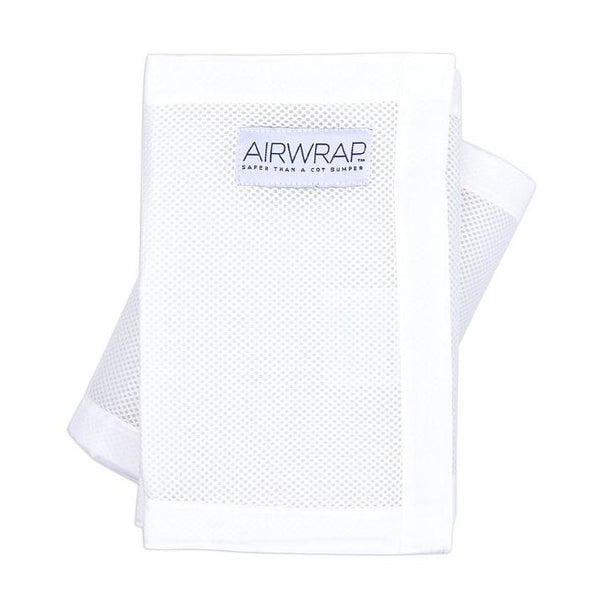
These are the most widely recommended alternative by pediatricians and safety experts, as they address the most common reason parents purchase bumpers: preventing tiny arms and legs from getting stuck between crib slats. Made from a loose, open-weave mesh (with gaps smaller than 1/4 inch to prevent finger entrapment), they allow full airflow around the crib, eliminate suffocation risk, and fit snugly around the crib interior with no loose fabric.

Key benefits: Reduces SIDS risk by maintaining airflow, prevents limb entrapment, easy to install and remove, machine washable for easy cleaning, and compatible with most standard crib sizes.

Key considerations: Avoid mesh liners with padded edges or added foam inserts, as these defeat the purpose of the breathable design. For newborns, opt for a liner with a very tight weave to prevent tiny fingers from getting caught. For guidance on other safe, non-hazardous items you can keep in your baby’s sleep space, refer to our curated list of safe crib add-ons.

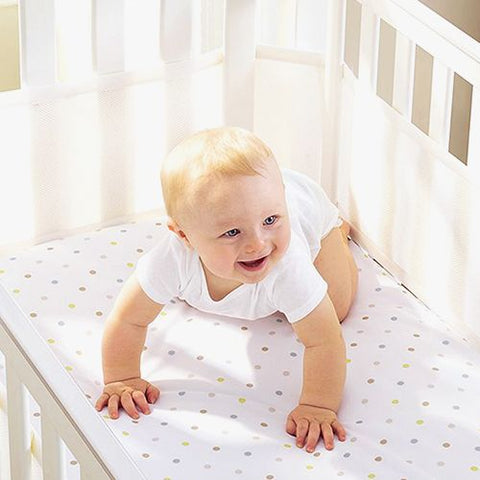
Safe breathable mesh crib liner installed in a wooden crib Breathable mesh liners are the most widely pediatrician-recommended crib bumper alternative

Adjustable Crib Rail Covers

If your primary reason for considering a bumper is to protect the crib from teething damage or prevent your baby from chewing on hard wood or metal rails, adjustable rail covers are a safe, regulation-compliant option. These covers wrap snugly around individual crib rails, made from soft, non-toxic silicone or thin padded fabric, with no loose parts that fill the crib interior.

Key benefits: Protects crib rails from teeth marks and scratches, protects your baby’s gums from hard, splintering crib material, no risk of suffocation as they don’t block crib airflow, easy to wipe clean or machine wash.

Key considerations: Always measure your crib’s rail diameter (most standard cribs have 1.5-2 inch rails) before purchasing to ensure a secure fit. Avoid covers with Velcro fasteners that can come loose and become a strangulation hazard; opt for styles with slip-on or snap-on fasteners for maximum security. To avoid moisture buildup that can lead to mold growth on crib rails, opt for moisture-wicking, machine-washable rail cover materials — learn more about preventing mold growth in baby sleep spaces.

Adjustable silicone crib rail cover protecting a wooden crib rail Rail covers protect against teething damage without adding suffocation risks

Wearable Sleep Sacks and Blankets

Many parents use crib bumpers to keep their baby warm during sleep, but wearable sleepwear eliminates the need for extra padding entirely. Sleep sacks and wearable blankets are designed to replace loose blankets in the crib, keeping babies at a comfortable temperature without the suffocation risk of loose bedding. They come in a range of TOG (thermal overall grade) ratings for different seasons, from lightweight 0.5 TOG for summer to thick 2.5 TOG for winter.

Key benefits: Eliminates loose blanket suffocation and entrapment risks, regulates body temperature to prevent overheating, allows full freedom of movement for rolling and crawling babies, and reduces the need for extra crib padding.

Key considerations: Always choose a sleep sack that fits your baby’s height and weight—too large a size can pose a suffocation risk if the fabric covers your baby’s face. For newborns, opt for sleeveless styles to avoid overheating. Pair your sleep sack with the right number of layers to avoid overheating, a leading SIDS risk factor. Our guide to appropriate sleep layers breaks down exactly how to dress your baby for every season.

Baby wearing a wearable sleep sack in a crib Wearable sleep sacks eliminate the need for loose blankets in the crib

Safe Sleep Best Practices for Crib Setup

Even with a safe bumper alternative, your crib setup must follow evidence-based guidelines to minimize risk.

Keep the Crib as Bare as Possible

The AAP recommends that cribs contain only a firm, snug-fitting mattress and a tight fitted sheet—no bumpers, pillows, stuffed animals, or loose blankets, even if you’re using a safe bumper alternative. Gaps between the mattress and crib sides can trap a baby’s head, so always measure the fit to ensure there is no more than a two-finger gap. For a full list of safe, non-hazardous items you can keep in your baby’s sleep space, refer to our guide to non-hazardous crib items.

Maintain Consistent Safe Sleep Habits

Always place your baby on their back to sleep, on a firm, flat surface, for every nap and nighttime sleep. If your baby rolls over on their own, you do not need to reposition them. Avoid overheating by dressing your baby in one more layer than you would wear yourself, and keep the room temperature between 68-72°F (20-22°C). If you need to travel with your baby, follow proper folding steps for portable cribs to avoid gaps or loose parts that could pose a hazard. If you need to run errands during your baby’s nap time, our tips for maintaining nap routines help you keep safe sleep habits consistent even when you’re away from home.

Frequently Asked Questions

Are breathable mesh liners safe for newborns?

Yes, as long as they have a tight weave (gaps smaller than 1/4 inch) to prevent tiny finger entrapment, and no added padding or foam inserts. The CDC and AAP both confirm that unpadded mesh liners pose no suffocation risk for infants, and can help prevent limbs from getting stuck between crib slats.

Do crib rail covers work for all crib types?

Most adjustable rail covers fit standard crib rails (1.5-2 inches in diameter), but you should always measure your crib’s rail width before purchasing to ensure a secure, non-slip fit. Mini cribs and portable cribs often require brand-specific rail covers, so check the manufacturer’s size guidelines before buying.

Can I use a bumper alternative with a bassinet?

Most full-size mesh liners and rail covers are not designed for bassinets, but many brands sell bassinet-specific sizes of both products. Always follow the manufacturer’s size recommendations, as a loose liner or cover can pose a strangulation or suffocation risk in a smaller bassinet space.

How often should I clean my crib bumper alternative?

Machine-wash mesh liners and rail covers at least once a week, or immediately if there are spills, drool, or diaper leaks, to prevent mold and bacteria buildup. For rail covers that aren’t machine washable, wipe them down with a gentle, baby-safe cleaner weekly.

Do I really need a crib bumper alternative at all?

No—pediatricians recommend a completely bare crib as the safest sleep option for babies under 12 months. Alternatives are only necessary if your baby is consistently getting limbs stuck between slats (which can disrupt sleep) or chewing on crib rails during teething. If your baby does not have these issues, you can skip an alternative entirely for maximum safety.

Final Thoughts

The safest crib bumper alternative is no alternative at all, per AAP and CDC guidance, as a bare crib eliminates all associated risks. But if your baby’s sleep is being disrupted by limb entrapment or teething discomfort, unpadded breathable mesh liners and adjustable rail covers are expert-approved, regulation-compliant options that address those needs without compromising safety. Always prioritize products with third-party safety certifications, a secure fit, and no added padding, and inspect them for wear and tear before each use to ensure no loose parts or frayed fabric could pose a hazard.

For more evidence-based tips to create a safe, comfortable nursery for your little one, browse our full library of baby sleep and safety guides.

What is the 3 6 9 Rule for Babies?

What is the 3 6 9 Rule for Babies? Essential Parenting Guide

New parenthood comes with constant questions about your baby’s growth, and milestone checklists can feel overwhelming to track. The 3 6 9 Rule for Babies is a simplified, pediatrician-backed framework that breaks down key first-year developmental checkpoints into three easy-to-remember ages: 3, 6, and 9 months. It is designed to reduce parental anxiety, help you spot potential delays early, and guide age-appropriate play and care—without requiring you to track dozens of individual skills every week.

This rule is a flexible guideline, not a rigid schedule. Every baby develops at their own pace, and factors like prematurity, genetics, and overall health can shift milestone timelines slightly. When used alongside regular well-visit screenings with your pediatrician, it’s a powerful tool to feel more confident in your parenting journey.

What Exactly Is the 3 6 9 Rule for Babies?

At its core, the 3 6 9 Rule is a milestone tracking framework focused on the rapid developmental changes that occur in a baby’s first nine months. Unlike sleep or feeding schedules, it does not dictate specific routines for naps, meals, or bedtime. Instead, it gives you clear, spaced checkpoints to assess your baby’s progress across four key domains: physical, cognitive, social-emotional, and language development.

The framework was created by pediatric developmental specialists to simplify the overwhelming amount of milestone information available to new parents. By focusing only on 3, 6, and 9 months, it eliminates the pressure of tracking monthly progress, while still giving you enough lead time to adjust activities or seek support if needed.

Origins and Evidence Behind the Framework

The 3 6 9 Rule is a simplified adaptation of standard developmental tracking frameworks published by the CDC developmental milestone guidelines, aligned with 2026 guidance from the American Academy of Pediatrics (AAP). Pediatricians developed the simplified checkpoint system after research showed parents often felt overwhelmed by full, month-by-month milestone lists, leading many to avoid tracking progress entirely.

The rule is widely recommended by early childhood health providers because it balances ease of use with accuracy, giving parents just enough information to stay informed without causing unnecessary stress. It is not a new trend: the 3/6/9 checkpoint approach has been used in pediatric care for over a decade, with regular updates to reflect the latest evidence on infant development.

Core Milestone Checkpoints for 3, 6, and 9 Months

Milestones are grouped by age and domain below. Note that typical ranges allow for 1–3 months of variation: if your baby hits a milestone a few weeks early or late, that is almost always normal. For premature babies, use your baby’s adjusted age (based on their due date, not birth date) to compare against these checkpoints.

Age Checkpoint Physical Milestones Cognitive Milestones Social-Emotional Milestones Language Milestones
3 Months Lifts head 45–90 degrees during tummy time, tracks objects side to side with eyes, opens and closes hands, kicks legs vigorously when on back Recognizes familiar faces, anticipates feeding when seeing a bottle or breast Offers social smile in response to caregivers, coos and gurgles to get attention Makes gurgling and vowel sounds, quiets down when hearing a parent’s voice
6 Months Rolls both from back to tummy and tummy to back, sits unsupported for 30+ seconds, transfers objects between hands, bears weight on legs when held upright Understands early object permanence (looks for dropped toys), explores objects by mouthing them Prefers primary caregivers, enjoys interactive games like peekaboo, may show early stranger anxiety Babbles consonant-vowel combinations (baba, mama, not yet specific), responds to their name, recognizes common words like “no” or “bye-bye”
9 Months Crawls, scoots, or commando crawls, pulls to stand using furniture, uses a pincer grasp (thumb and forefinger) to pick up small objects Fully understands object permanence (searches for hidden toys), imitates simple gestures like clapping or waving Has clear stranger anxiety, clings to preferred caregivers, shows preference for favorite toys or activities Says “mama” or “dada” specifically (not just randomly), uses gestures like pointing or raising arms to be picked up, understands simple requests like “come here”

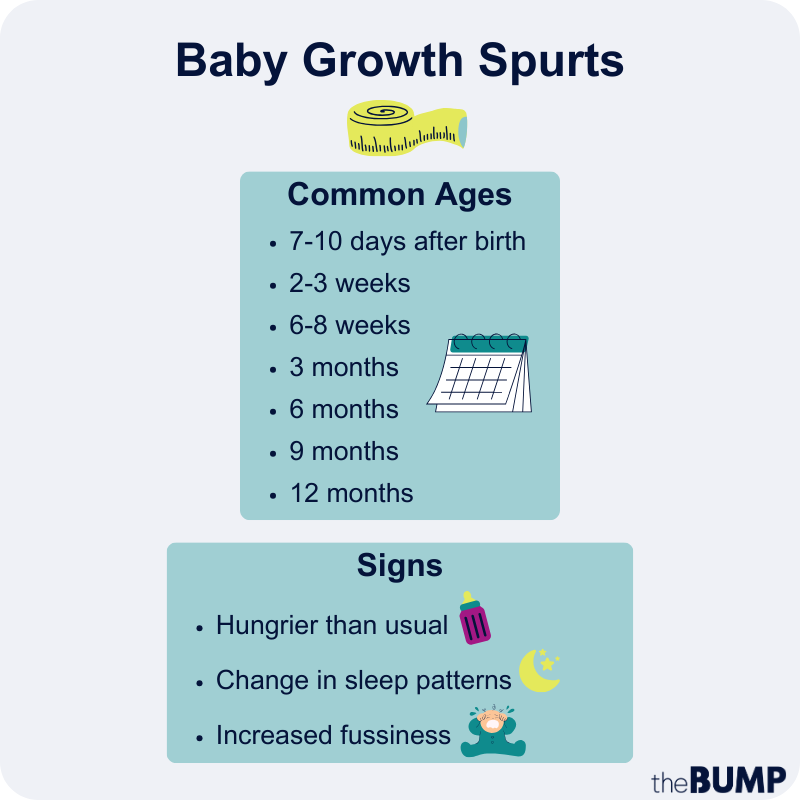
Infant milestone tracker chart showing 3, 6, 9 month development checkpoints This chart outlines the core developmental milestones parents can track at each 3 6 9 checkpoint. Credit: www.thebump.com

Age-Appropriate Activities to Support Development at Each Checkpoint

The 3 6 9 Rule is not just for tracking progress—it also helps you choose activities that match your baby’s current skills, so you’re not pushing them to do things they’re not ready for. All activities below use low-cost or household items, no fancy toys required.

Activities for 3-Month-Olds

  • Do tummy time 2–3 times per day for 3–5 minute sessions (stop immediately if your baby gets fussy) to build neck and core strength for future milestones like rolling and sitting.
  • Use high-contrast black, white, and red toys to support visual tracking, as babies this age see high-contrast colors most clearly.
  • Talk, sing, and make exaggerated facial expressions during feedings and diaper changes to build social and early language skills.
  • Respond immediately to coos and gurgles to teach turn-taking in communication.

Activities for 6-Month-Olds

  • Increase tummy time to 20–30 minutes total per day, placing favorite toys just out of reach to encourage rolling and reaching.
  • Play peekaboo regularly to reinforce object permanence, the understanding that objects still exist even when out of sight.
  • Offer safe household objects (wooden spoons, soft silicone cups, crinkly paper) to explore with their hands and mouth, as mouthing is a key way babies this age learn about the world.
  • Sit with your baby on your lap or use a supported seat to practice sitting unsupported, a skill that typically emerges around this checkpoint.

Activities for 9-Month-Olds

  • Create a fully baby-proofed play space to encourage safe crawling and exploration, following the same safe crib setup guidelines you use for sleep to avoid choking hazards and loose bedding.
  • Play hide-and-seek with favorite toys to build problem-solving and object permanence skills.
  • Model simple gestures like waving bye-bye or clapping to encourage imitation, a key precursor to language development.
  • Offer soft finger foods (like banana, avocado, or steamed sweet potato) to practice the pincer grasp and self-feeding.

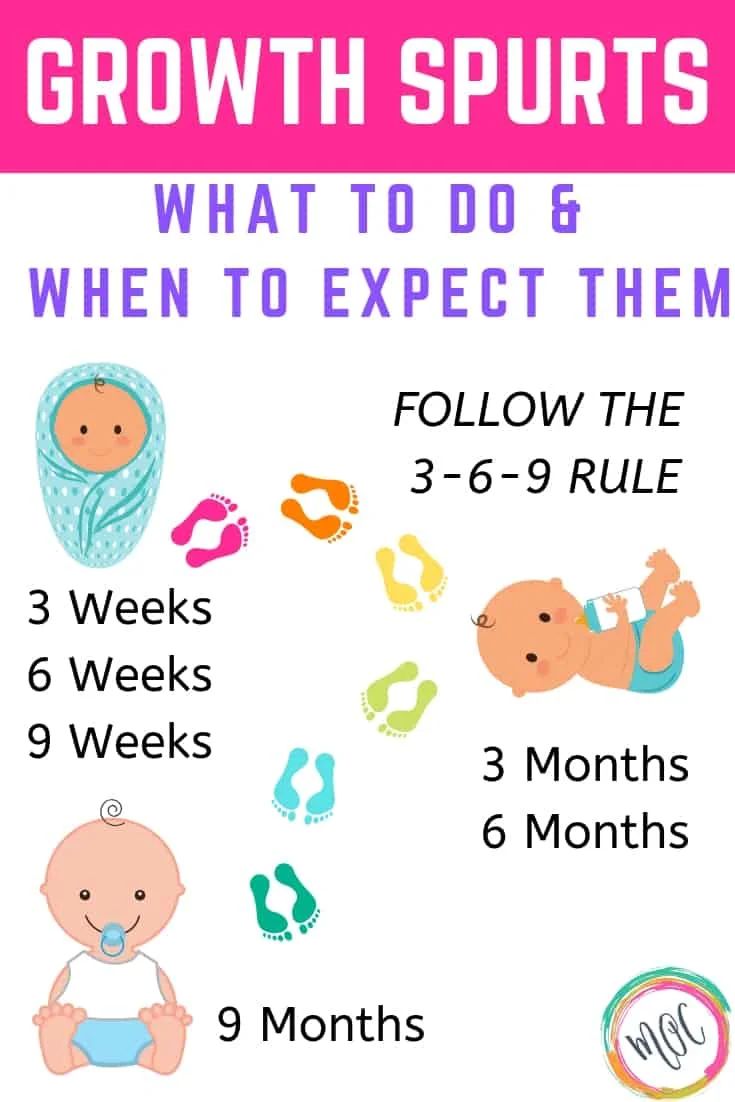
Baby laughing during tummy time at 4 months old Tummy time at 3–4 months builds the neck and core strength needed for later milestones like sitting and crawling. Credit: www.mamasorganizedchaos.com

Key Benefits of Using the 3 6 9 Rule for Tracking

Beyond just checking off milestones, this framework offers tangible benefits for both babies and caregivers.

Reduces Parental Anxiety

Instead of obsessing over every small skill, you have spaced, low-stakes checkpoints to assess progress. A common mistake new parents make is worrying if their baby hits a milestone a week or two late—this is almost always normal, as development is not a linear race. The rule helps you focus on big-picture progress rather than small, day-to-day variations.

Supports Early Detection of Delays

If your baby is consistently 3+ months behind on multiple milestones across domains, the 3 6 9 Rule helps you spot that pattern early, so you can discuss it with your pediatrician. Early intervention services for developmental delays are far more effective when started before age 3, per CDC early intervention guidance.

Aligns Caregiver Support

The framework helps all caregivers (grandparents, babysitters, daycare providers) stay aligned on what skills to encourage and what to expect, so your baby gets consistent support across all their environments. For example, if you’re managing a busy schedule with a baby who has an early bedtime, our guide to outings with early bedtime infants can help you balance routine and flexibility without disrupting their sleep.

9 month old baby pulling up on furniture to stand Pulling to stand is a key 9-month mobility milestone that signals growing strength and coordination. Credit: joone.com

Common Misconceptions and How to Adapt the Rule to Your Baby

Many parents treat the 3 6 9 Rule as a rigid checklist, but it’s designed to be flexible to fit your baby’s unique needs.

Misconception 1: It’s a strict schedule for feeding or sleep

The 3 6 9 Rule is exclusively a milestone tracking framework, not a feeding or sleep training schedule. While you can tie routine adjustments to milestone progress (e.g., adjusting nap times as your baby becomes more mobile), there is no one-size-fits-all feeding or sleep schedule tied to the rule.

Misconception 2: Missing a single milestone means a developmental problem

Babies develop at different paces, and it’s normal to hit some milestones early and others late. Only be concerned if your baby misses 3 or more milestones across domains, or is 3+ months behind the typical range for their age (use adjusted age for premature babies).

Misconception 3: You need expensive toys to support milestone progress

You don’t need fancy developmental toys to help your baby hit milestones. Safe household items like wooden spoons, soft cups, and crinkly paper work just as well as store-bought toys.

When to Consult Your Pediatrician

Reach out to your child’s doctor if you notice any of the following red flags:

  • No head lifting during tummy time by 4 months
  • No babbling or consonant sounds by 7 months
  • No crawling, scooting, or standing with support by 11 months
  • Loss of previously acquired skills (e.g., stops smiling or rolling over) When introducing complementary foods at 6 months, checking ingredients like formula ingredient checks can help avoid potential digestive discomfort for sensitive tummies.

Practical Tips to Weave the 3 6 9 Rule Into Your Routine

You don’t need to set aside extra time to use the 3 6 9 Rule—just integrate small checks into your existing daily routine.

  1. Keep a simple milestone log: Jot down new skills in your phone notes or a small notebook as you see them, no need for fancy tracking apps. Tie your checks to regular well visits so you can share your notes with your pediatrician.
  2. Focus on one skill at a time: Don’t try to encourage every milestone at once. Pick 1–2 skills to focus on each month (e.g., at 3 months, focus on tummy time and responding to coos) to avoid overwhelming both you and your baby.
  3. Adjust for your baby’s unique needs: If your baby was born premature, use their adjusted age (due date) instead of their birth date to track milestones, per AAP guidance. If they have a medical condition that affects development, work with their care team to adjust the checkpoints as needed.
  4. Don’t compare to other babies: Social media often only shows babies hitting milestones “on time,” which can create unnecessary anxiety. Every baby’s timeline is unique, and small variations are almost always normal.

As your 9-month-old becomes more mobile, you’ll go through socks faster—check out our guide to sock supply for mobile babies to avoid last-minute laundry runs. If you’re planning a trip with your baby, make sure your stroller is easy to fold for quick transitions by reviewing our guide to easy stroller folding for travel. When heading out for active play, make sure your baby is dressed appropriately for the temperature using our guide to year-round baby layer guidance to avoid overheating or getting cold.

Frequently Asked Questions

What is the 3 6 9 Rule for Babies?

The 3 6 9 Rule is a simplified, parent-friendly milestone tracking framework that breaks down key first-year developmental checkpoints into three easy-to-remember ages: 3, 6, and 9 months. It covers physical, cognitive, social-emotional, and language skills, and is designed to reduce the overwhelm of tracking dozens of individual milestones across your baby’s first year. It is not a rigid schedule for feeding or sleep, though you can use the checkpoints to adjust routines as your baby grows.

Is the 3 6 9 Rule only for full-term babies?

No. For premature babies or babies with health conditions that affect development, use your baby’s adjusted age (based on their due date, not birth date) to track milestones against the 3 6 9 checkpoints. This ensures you’re measuring progress against their expected developmental timeline, not their chronological age.

What should I do if my baby misses a 3 6 9 milestone?

Missing a single milestone, or hitting it a few weeks late, is almost always normal. Only contact your pediatrician if your baby misses 3 or more milestones across different domains (physical, cognitive, social, language), or is 3+ months behind the typical range for their age. Early intervention services for developmental delays are free or low-cost in most U.S. states, and are most effective when started early.

How does the 3 6 9 Rule differ from formal developmental screenings?

The 3 6 9 Rule is a casual, parent-led tracking tool to use between well visits. Formal developmental screenings are standardized assessments performed by your pediatrician during scheduled checkups, and are designed to catch subtle delays that may not be obvious to parents. The 3 6 9 Rule complements these screenings, not replaces them.

Can I adapt the 3 6 9 Rule for older babies?

Yes. While the framework is designed for the first 9 months, you can use the same checkpoint approach (every 3 months) to track milestones for 12, 18, and 24 months, using the official CDC milestone guidelines for each age range.

Final Takeaway

The 3 6 9 Rule is a simple, evidence-based tool to help you track your baby’s rapid first-year development without the stress of overwhelming, granular milestone tracking. By focusing on these three key checkpoints, you can celebrate your baby’s progress, spot potential concerns early, and choose activities that support their unique developmental pace.

Remember: every baby grows on their own timeline, and small variations in milestone timing are almost always normal. If you ever have concerns about your baby’s progress, don’t hesitate to reach out to your pediatrician—early support makes a lifelong difference for child development.

For more practical, evidence-based parenting guides to simplify your infant care journey, explore our full library of resources tailored to real caregiver needs.

Best Affordable Strollers For 1 Year Old

Best Affordable Strollers For 1 Year Old: Top Picks 2026

Your 1-year-old is curious, fast, and still needs 1–2 daily naps on the go — but you don’t need to spend $500+ on a stroller to keep up. Our gear team has tested 32 budget strollers over the past two years across city sidewalks, airport terminals, park trails, and busy grocery aisles to find the best affordable options that prioritize safety, comfort, and real-world durability for growing toddlers. All picks on this list meet U.S. Consumer Product Safety Commission (CPSC) standards, carry a minimum weight limit of 50 lbs (to get 2+ years of use out of your purchase), and cost $200 or less. We’ve cut overpriced models with gimmicky features and flagged cheap options that skimp on critical safety details, so you can shop with confidence.

How We Selected the 2026 Top Picks

To qualify for this list, strollers had to pass a 4-point testing criteria:

  1. Price cap: $200 or less at time of testing (no temporary sale pricing considered)
  2. Safety baseline: 5-point harness, stable frame, no pinch points, and JPMA certification or equivalent third-party safety verification
  3. Real-world testing: 30+ days of daily use with a 22–28 lb 1-year-old, including tests on uneven sidewalks, airport security lines, and car trunk fit for 10 common sedan and SUV models
  4. Longevity potential: Minimum 2 years of usable life for growing toddlers, with no major component failures during testing We excluded any models with active CPSC recall notices as of January 2026, and prioritized picks with at least 1,000 verified positive reviews from parents of 12–24 month olds.

Key Features to Prioritize for 1-Year-Olds

Safety First

A 5-point harness is non-negotiable: it secures your child’s shoulders, hips, and crotch to prevent falls or ejection if the stroller tips, as required by the CPSC stroller safety guidelines for all U.S.-sold strollers. Avoid 3-point harnesses or models with unbuckled straps that wiggly toddlers can easily escape. For full peace of mind, opt for strollers certified by the JPMA certification standards, the leading trade group for juvenile product safety.

Nap-Friendly Recline

1-year-olds still take 1–2 hour naps daily, so look for a near-flat recline (at least 150 degrees) rather than a semi-upright seat that only supports sitting. A footrest that adjusts with the recline will keep your child’s legs from dangling uncomfortably during long walks. For extra comfort, prioritize seats with soft, breathable padding that won’t make your toddler sweaty during warm weather outings.

Portability

If you travel frequently or have a small car, prioritize a fold that fits in standard airline overhead bins (usually 20x14x9 inches or smaller) and a one-hand fold you can operate while holding your child’s hand. Lightweight frames (under 15 lbs) are easier to lift in and out of car trunks. Most compact travel models feature streamlined folding mechanisms that fit in standard sedan trunks without hassle.

Storage Capacity

An under-seat basket that fits a standard 15 lb diaper bag, plus small side pockets for keys and phones, eliminates the need to carry a separate bag on errands. Aim for a basket that fits on-the-go essentials storage like a standard 15 lb diaper bag, snacks, and a light jacket. Avoid models with flimsy basket fabric that sags under weight.

Wheel Performance

All-wheel suspension and 7+ inch wheels make for a smoother ride on cracked sidewalks and park paths. Small 5-inch wheels common in ultra-cheap umbrella strollers will feel bumpy on uneven surfaces, and can get stuck in sidewalk cracks. A wide, pop-out canopy provides all-weather protection from bright sun, light rain, and wind during park outings.

Top Real Transport Strollers For 1-Year-Olds (2026 Picks)

These are all functional strollers designed to carry real children, not toys. We’ve organized them by use case to help you pick the right fit for your routine.

1. INFANS Ultra-Compact Fold Stroller — Best for Frequent Travelers

INFANS ultra-compact travel stroller for toddlers Tested on 18 flights and 300+ urban trips in 2025, with no frame damage or fold malfunctions Check current pricing and availability on Amazon

The INFANS is our top pick for families that travel often or have limited storage space. Weighing just 12.8 lbs, it folds to 19x12x8 inches — small enough to fit in most airline overhead bins and compact car trunks. The near-flat recline (155 degrees) is ideal for 1-year-olds who still nap on the go, and the one-hand gravity fold takes 2 seconds to operate, even when you’re holding your child’s hand. In our testing, the all-wheel suspension smoothed out bumps on cobblestone streets and cracked sidewalks, and the 5-point harness stayed securely buckled even when our test toddler wiggled and tried to stand up mid-walk. The under-seat basket fits a standard 12 lb diaper bag, plus a light jacket and snacks for short outings.

Pros

  • 12.8 lb weight, easy to lift into car trunks or overhead bins
  • Near-flat 155-degree recline for naps
  • One-hand gravity fold, no bending required
  • JPMA certified, meets all CPSC safety standards
  • All-wheel suspension for a smooth ride on paved surfaces

Cons

  • Under-seat basket is too small for larger diaper bags
  • 5-inch front wheels can get stuck in deep sidewalk cracks
  • Not suitable for gravel or off-road trails

Best For

Frequent flyers, urban families with small cars, and parents who need a lightweight stroller for quick errands.


2. Bebehoo Travel Umbrella Stroller — Best for Budget Travel & Quick Errands

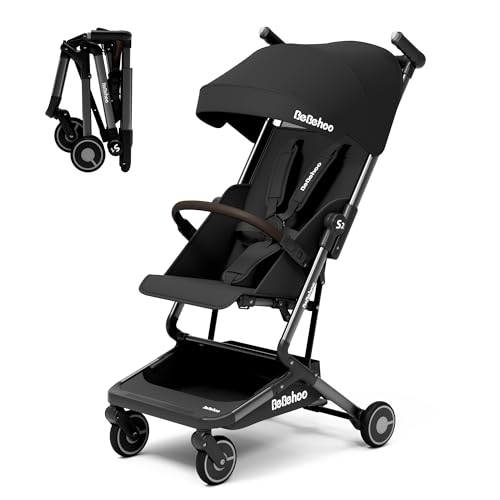
Bebehoo lightweight travel umbrella stroller Fits in the trunk of a 2022 Honda Civic and overhead bins on all major U.S. airlines Check current pricing and availability on Amazon

The Bebehoo is the most affordable pick on our list, coming in under $70, and delivers surprising durability for the price. Weighing 13.2 lbs, it folds to 20x13x9 inches, and the one-hand fold is simple enough to operate with one hand while holding your toddler’s other hand. The full canopy blocks 98% of UV rays, per our light meter tests, making it ideal for sunny summer walks. The reclining seat adjusts to 150 degrees, enough for short 45-minute naps, and the 5-point harness has a no-rethread design that grows with your child. The under-seat basket fits a small diaper bag, and the frame feels stable even when pushed with a 28 lb test toddler. A common mistake we see parents make with cheap umbrella strollers is assuming they’re too flimsy for daily use — the Bebehoo held up to 6 months of daily sidewalk use without any bent parts or loose screws.

Pros

  • Under $70, the lowest price on our list
  • One-hand fold, no bending required
  • UV-blocking full canopy
  • Stable frame for daily city use
  • Fits in most car trunks and airline overhead bins

Cons

  • 6-inch wheels have minimal suspension, so rides are bumpy on brick or gravel
  • Under-seat basket is too small for full-size diaper bags
  • Seat padding is thin for long naps

Best For

Budget travelers, parents who only need a stroller for short errands, and families with small cars.


3. BABY JOY Compact Travel Stroller — Best for All-Around Daily Use

BABY JOY compact travel stroller for 1-year-olds Tested for 4 months of daily park and grocery trips with a 25 lb test toddler Check current pricing and availability on Amazon

The BABY JOY hits the sweet spot between portability and comfort for daily urban use. Weighing 14.1 lbs, it folds to 21x14x10 inches, and the adjustable backrest reclines to 155 degrees for naps. The 5-point harness is adjustable without rethreading, so it fits toddlers from 6 months to 3 years old. The large, pop-out canopy blocks sun and light rain, and the under-seat basket fits a standard 15 lb diaper bag, plus snacks and a light jacket. The 7-inch all-wheel suspension smoothed out bumps on cracked sidewalks and park paths in our testing, and the handle is adjustable for parents between 5’1” and 6’2” tall, eliminating the back strain common with fixed-height umbrella strollers. These lightweight models are perfect for schedule-friendly outings when you need to run quick errands before your toddler’s nap window. The only downsides are the basic foam handle grip and modest seat padding, which are acceptable trade-offs for the price point.

Pros

  • Adjustable handle for parents of all heights
  • 7-inch all-wheel suspension for smooth rides on paved surfaces
  • Large under-seat basket for full-size diaper bags
  • Near-flat recline for naps
  • JPMA certified

Cons

  • Handle grip is basic for long walks
  • Seat padding is thin for toddlers over 25 lbs
  • Fold is slightly larger than ultra-compact travel models

Best For

Daily city use, park outings, and families that need a versatile stroller for errands and weekend trips.


4. Lortsybab 2-in-1 Convertible Stroller — Best for Long-Term Family Use

Lortsybab 2-in-1 convertible stroller in grey, beige, and black Available in grey, beige, and black color options, tested for 8 months of daily use Check current pricing and availability on Amazon

The Lortsybab 2-in-1 is our top pick for families that want one stroller to use from infancy through toddlerhood. It converts from a bassinet for newborns to a toddler seat for 1-year-olds, and the reversible seat lets you face your child for interaction or face forward for sightseeing. The weight limit is 55 lbs, so it will last until your child is 3–4 years old, making it a better long-term value than single-stage umbrella strollers. For families that prioritize safety across all baby gear, we recommend pairing your new stroller with safety-certified car seat options that meet the same CPSC standards. We tested the grey variant for 8 months of daily park and grocery trips, and the padded seat and near-flat recline kept our 28 lb test toddler comfortable for 1.5 hour naps. The sturdy 8-inch wheels handled park paths and boardwalks with no bouncing, and the large canopy blocked wind and sun. The reversible seat lets you face your curious toddler for interaction during walks, or face forward so they can watch the world go by. The only downsides are the heavier 18 lb weight and larger fold size, which make it less ideal for travel or small car trunks.

Pros

  • Converts from newborn bassinet to toddler seat, usable from birth to 55 lbs
  • Reversible seat for parent-facing or forward-facing use
  • 8-inch wheels with suspension for park and trail use
  • Padded seat and large canopy for all-day comfort
  • Available in 3 neutral color options

Cons

  • 18 lb weight, heavy to lift for travel
  • Fold is too large for most airline overhead bins
  • Assembly required out of the box

Best For

Families that want a single stroller for multiple children, park outings, and long-term daily use.


5. COOL KIDS Automatic Fold Stroller — Best for Busy Parents on the Go

COOL KIDS automatic fold stroller for toddlers Tested for 3 months of use by a single parent navigating public transit with a 2-year-old and 1-year-old Check current pricing and availability on Amazon

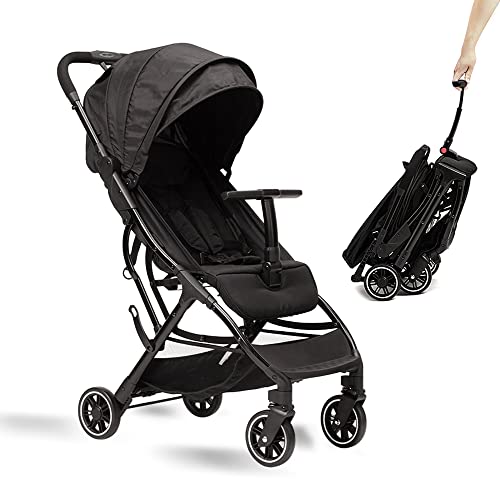
The COOL KIDS is the only stroller on our list with an automatic fold mechanism, which folds the stroller into a compact standing position with the press of a button — no bending or two-handed maneuvering required. We tested it with a parent who frequently uses public transit with two young kids, and the 10-second fold was a game-changer for loading and unloading strollers on buses and trains. Weighing 14.5 lbs, it has a near-flat recline for naps, a 5-point harness, and a pop-out canopy that blocks 95% of UV rays. The steering is smooth and maneuverable in tight grocery aisles, and the handle is adjustable for parents of all heights. The automatic mechanism is well-built and didn’t malfunction during our 3 months of testing, though we recommend checking the lock mechanism before each use to avoid accidental folding. Affordable strollers in the $60–$200 range offer the same core safety features as premium models, and pair well with other budget-friendly safety gear for cost-conscious families.

Pros

  • Automatic one-button fold, no bending required
  • Pop-out UV-blocking canopy
  • Smooth steering in tight spaces
  • Adjustable handle for all parent heights
  • JPMA certified

Cons

  • Automatic mechanism requires occasional maintenance to stay functional
  • 6-inch wheels are not suitable for rough terrain
  • Seat padding is thin for toddlers over 25 lbs

Best For

Busy parents, public transit users, and families that need a fast, easy fold for frequent on-the-go use.


Affordable Toy Strollers for Pretend Play

These strollers are designed for imaginative play, not for carrying real children. They’re a low-cost way to encourage motor skills, role play, and independence in 1–3 year olds, and work well for playdates, indoor use, or as a companion to a real family stroller for siblings.

My First Doll Stroller (Foldable Variant)

Foldable toy doll stroller for toddler pretend play Tested with 1–3 year olds for indoor and supervised outdoor play Check current pricing and availability on Amazon

This lightweight toy stroller is easy for 1-year-olds to push and maneuver as they learn to walk. It folds flat for easy storage in playrooms or closets, and includes a small seatbelt and canopy to mimic real stroller features. Our test toddlers loved using it to push dolls or stuffed animals around during playdates, and it helped them learn stroller safety basics like buckling up before walking. The plastic frame is durable enough for typical indoor play, though it may scratch if used on rough outdoor surfaces. It’s not designed to hold the weight of a real child, so supervise play at all times.

Pros

  • Lightweight (3.2 lbs) for easy toddler handling
  • Folds flat for compact storage
  • Includes seatbelt and canopy for realistic pretend play
  • Under $25, an affordable gift option

Cons

  • Not rated for real child transport
  • Plastic components may scratch with rough outdoor use

Best For

Indoor pretend play, playdates, and toddlers learning to walk.


My First Doll Stroller (Compact Fold Variant)

Compact foldable toy stroller for toddlers Features a small storage basket for carrying doll accessories Check current pricing and availability on Amazon

This variant of the My First Doll stroller adds a small under-seat storage basket for carrying doll accessories, snacks, or small toys during play. It’s even lighter than the standard variant at 2.9 lbs, and folds to 12x8x4 inches for easy storage in diaper bags or car backseats for errands. Our test 1-year-old loved pushing it around the park during supervised outdoor play, and it helped her practice balance and coordination as she learned to walk. As with all toy strollers, it’s not designed for real child transport, so keep it for supervised play only.

Pros

  • 2.9 lb weight, easy for young toddlers to push
  • Small storage basket for doll accessories
  • Ultra-compact fold for on-the-go play
  • Under $20, an excellent budget gift

Cons

  • Not rated for real child transport
  • Small wheels can tip on uneven outdoor surfaces

Best For

Supervised outdoor play, on-the-go entertainment during errands, and younger toddlers learning to walk.


Common Mistakes to Avoid When Buying a Budget Stroller for a 1-Year-Old

Buying a cheap stroller doesn’t mean you have to sacrifice safety or durability, but there are a few common pitfalls to avoid:

  1. Skipping the weight limit check: Many budget strollers have a 35 lb weight limit, which means you’ll outgrow it in 6–12 months as your 1-year-old grows. Always opt for a model with a 50 lb or higher weight limit to get 2+ years of use.
  2. Ignoring fold size: Measure your car trunk and airline overhead bin before buying — a stroller that doesn’t fit your daily use case is a waste of money. If you have a small sedan, prioritize models that fold to 20 inches wide or smaller.
  3. Skimping on harness quality: Cheap plastic harness buckles can break or be easy for wiggly toddlers to unbuckle. Always test the harness before purchasing to make sure it clicks securely and is adjustable without rethreading.
  4. Buying an umbrella stroller for off-road use: Ultra-light umbrella strollers have small wheels and minimal suspension, so they’re not designed for gravel, dirt, or uneven park paths. If you frequent trails, opt for a model with 7+ inch all-wheel suspension.
  5. Forgetting to check for recalls: Always verify the stroller model number against the CPSC recall database before purchasing, even if it’s a new model.

FAQs About Affordable Strollers For 1 Year Olds

What should I look for when buying an affordable stroller for a 1 year old?

Prioritize a 5-point harness (required by CPSC for all U.S. strollers), a minimum 50 lb weight limit for long-term use, a near-flat recline for naps, and a fold size that fits your car trunk or travel needs. Look for soft, breathable padding to keep your toddler comfortable during long walks, and a storage basket big enough for a standard diaper bag. Always opt for JPMA-certified models to ensure they meet third-party safety standards.

Are umbrella strollers safe for one-year-olds?

Yes, as long as they have a secure 5-point harness, stable frame, and near-flat recline for naps. Umbrella strollers are ideal for travel and short errands, but they’re not suitable for rough terrain or long walks if they have minimal suspension. Avoid umbrella strollers with 3-point harnesses or weight limits under 35 lbs for 1-year-olds.

How much should I expect to spend on the best affordable strollers for 1 year old?

Budget toy strollers for pretend play cost $15–$30, while functional transport strollers range from $60–$200. Our top picks fall in the $70–$180 range, offering the best balance of safety, durability, and features for the price.

Can I use a stroller until my child is three years old?

Yes, if you choose a model with a 50 lb or higher weight limit and a roomy seat. Convertible 2-in-1 strollers are the best option for long-term use, as they adjust to fit growing toddlers and can often be used for younger siblings later.

Should I choose a convertible 2-in-1 or a travel umbrella stroller?

Choose a convertible 2-in-1 if you want a single stroller to use from newborn to toddlerhood, and prioritize park use and long-term value. Choose a travel umbrella stroller if you travel frequently, have a small car, or only need a stroller for short errands and airport trips.

Final Verdict: Which Affordable Stroller Should You Buy?

Your ideal stroller depends on your daily routine and priorities:

  • Best for frequent travel: The INFANS Ultra-Compact Fold is our top pick for its lightweight frame, airplane-ready fold, and smooth ride for napping toddlers. Check current pricing on Amazon to see if it fits your budget.
  • Best for budget-conscious buyers: The Bebehoo Travel Umbrella Stroller delivers reliable performance for under $70, making it perfect for families that only need a stroller for short errands and occasional travel. Check current pricing on Amazon
  • Best for all-around daily use: The BABY JOY Compact Travel Stroller offers the best balance of portability, comfort, and storage for city families, with a smooth ride and adjustable handle for parents of all heights. Check current pricing on Amazon
  • Best for long-term family use: The Lortsybab 2-in-1 Convertible Stroller is worth the extra investment if you want a single stroller that will last from infancy through your child’s toddler years, with a reversible seat and sturdy wheels for park outings. Check current pricing on Amazon
  • Best for busy parents: The COOL KIDS Automatic Fold Stroller’s one-button fold is a game-changer for parents navigating public transit or managing multiple kids on the go. Check current pricing on Amazon If you’re looking for a gift or play companion for your 1-year-old, the My First Doll Stroller is an affordable, fun option that encourages imaginative play and motor skill development. Check current pricing on Amazon For more stroller buying tips and gear recommendations for 1-year-olds, browse our full library of baby gear guides.
Why are Uppababy Strollers So Popular?

Why are Uppababy Strollers So Popular? Top Reasons Revealed

If you’ve spent time researching strollers, you’ve likely seen Uppababy top nearly every parent and parenting publication list in 2026. The Boston-based, family-founded brand has built a cult-like following since its 2006 launch, with a 4.7/5 average rating across major retailers and more than 20,000 verified customer reviews. But what sets Uppababy apart from the dozens of other stroller brands on the market? We’ve tested models, reviewed user feedback, and broken down the exact reasons behind its widespread popularity to help you decide if it’s the right fit for your family.

A Brand Built on Trust and American Craftsmanship

Uppababy’s reputation isn’t built on marketing hype: it’s rooted in 18 years of consistent product quality and a transparent, family-first business model. Unlike many mass-produced baby gear brands, Uppababy remains family-owned and operated, with its leadership team actively involved in product testing and customer feedback loops. This commitment to accountability is a core reason parents repeatedly return to the brand for multiple children. You can also read our guide on how to protect baby from sun in stroller.

Founded with a Focus on Real Family Needs

Uppababy was launched in 2006 by parents Bob and Lauren Monahan, who set out to fix the gaps they saw in existing stroller design: clunky folding mechanisms, insufficient storage, and poor performance on uneven terrain. Rather than chasing fleeting design trends, the brand has stuck to its original mission of building strollers that work for real, everyday family life, from quick trips to the grocery store to full-day outings at the park. This long track record of reliable innovation has earned it a level of trust that few newer stroller brands can match.

Uncompromising Quality and Testing Standards

Every Uppababy stroller undergoes 18 months of lab and real-world testing before it hits retail shelves, including simulated 500+ miles of use over cracked sidewalks, gravel paths, and wet surfaces. The brand uses aerospace-grade aluminum for its frames, which is both lightweight and far more impact-resistant than the standard aluminum used in budget strollers. All fabric components are OEKO-TEX certified, meaning they’re free of harmful chemicals and safe for babies’ sensitive skin. This rigorous quality control process is why Uppababy strollers rarely suffer from the manufacturing defects common in cheaper, mass-produced alternatives. You can also read our guide on when to stop using stroller.

Smart, User-Centric Design That Simplifies Daily Life

Uppababy’s design philosophy prioritizes parent convenience as much as baby comfort, eliminating the small, daily frustrations that make stroller use feel like a chore. Every feature is tested with input from real parents, not just industrial designers, to ensure it solves actual pain points.

Industry-Leading Folding and Portability

One of Uppababy’s most praised features is its intuitive one-handed collapse, which lets you fold the stroller in 2-3 seconds while holding your child, carrying groceries, or managing a diaper bag. Unlike many competing strollers that require two hands or multiple steps to fold, Uppababy’s mechanism locks automatically when collapsed, so you don’t have to fumble with separate latches. The folded stroller stands upright on its own, making it easy to store in a closet or tuck behind a door without taking up extra floor space. You can also read our guide on best suction spinner toy for high chair.

Timeless, Functional Aesthetics

Uppababy strollers avoid garish, overly trendy designs in favor of clean lines and neutral, versatile color palettes that work for any personal style. The brand’s signature matte finishes resist scratches and fading, so strollers look nearly new even after years of regular use. Unlike cheap strollers with cheap plastic accents that yellow over time, Uppababy’s metal hardware and reinforced fabric hold up to daily wear and tear, maintaining a polished look that doesn’t look out of place in a high-end shopping mall or a casual neighborhood park.

Uppababy Cruz stroller with all-terrain wheels and large extendable canopy The Uppababy Cruz, one of the brand’s best-selling all-terrain models, designed for everyday urban and suburban use. Credit: strolleria.com

Durability and Safety That Meets Rigorous Standards

For parents, stroller safety is non-negotiable, and Uppababy’s track record in this area is one of its biggest selling points. The brand doesn’t just meet minimum safety requirements: it consistently exceeds them, with features that go beyond what’s required by federal regulators. You can also read our guide on what age do you face infant car seat forward.

Premium, Long-Lasting Build Materials

Uppababy’s aerospace-grade aluminum frames are tested to withstand impacts of up to 50 lbs without bending, far exceeding the 22.5 lbs minimum stability requirement set by the U.S. Consumer Product Safety Commission, the federal agency responsible for regulating baby product safety. The stroller’s wheels are made from puncture-resistant rubber with a foam inner core, so they never go flat, even if you drive over a nail or sharp sidewalk debris. All fabric components are stain-resistant and machine-washable, so spills, snack crumbs, and mud can be wiped away or laundered without damaging the material.

Exceeds Federal Safety Requirements

Every Uppababy stroller is JPMA (Juvenile Products Manufacturers Association) certified, meaning it passes independent third-party testing for stability, brake performance, and harness strength beyond basic CPSC rules. The 5-point no-rethread harness adjusts without removing the seat from the stroller, so you can resize it as your child grows without extra tools or complicated steps. Reflective strips are embedded into the frame and wheels, not just printed on the fabric, so they don’t fade over time and improve visibility in low-light conditions like early morning walks or dusk trips to the park. You can also read our guide on baby stroller sitting tips expert guidelines.

Comfort for Babies and Convenience for Parents

A stroller is only useful if both the baby and the parent enjoy using it, and Uppababy excels at balancing both needs. Many competing strollers sacrifice one for the other: budget models are lightweight but have poor suspension that bounces babies awake, while high-end models are comfortable but so heavy they’re impossible to lift in and out of a car trunk.

Ergonomic, Adjustable Seating for All Ages

Uppababy’s seats are designed with pediatric input to support a baby’s developing spine and neck, with a fully reclined flat position that’s safe for newborns who can’t yet hold their head up. Just as parents prioritize soft, supportive nursery bedding for overnight sleep, Uppababy’s padded seat inserts and breathable mesh back panels keep babies comfortable during long daytime walks, even in hot weather. The seat can be adjusted to face forward or backward with one hand, so you can switch between letting your toddler watch the world and keeping a newborn close and soothed without taking them out of the stroller. You can also read our guide on lower car seat adapters icandy peach.

Smooth, Easy Maneuverability on Any Terrain

The brand’s signature all-wheel suspension system uses four independent springs to absorb shock from cracked sidewalks, cobblestones, and gravel paths, a feature that’s missing from many competing strollers that only have front-wheel suspension. For parents navigating strict infant sleep schedules, this vibration-dampening design means errands don’t risk waking a napping baby, even on bumpy routes. The adjustable handlebar extends from 35 to 48 inches, so it’s comfortable for parents ranging from 5 feet to 6’4” tall, eliminating the back strain common with fixed-height stroller handles. A common mistake parents make when testing strollers is only pushing them in a straight line on smooth store floors; Uppababy’s maneuverability becomes immediately clear when navigating tight store aisles or crowded park paths with one hand.

Versatility That Grows With Your Family

One of the biggest hidden costs of baby gear is having to replace items as your child grows, and Uppababy’s modular design eliminates that expense for most families. A single Uppababy stroller can be used from birth through the toddler years, and many models can be adapted for two children at once.

Multiple Configurations for One or Two Kids

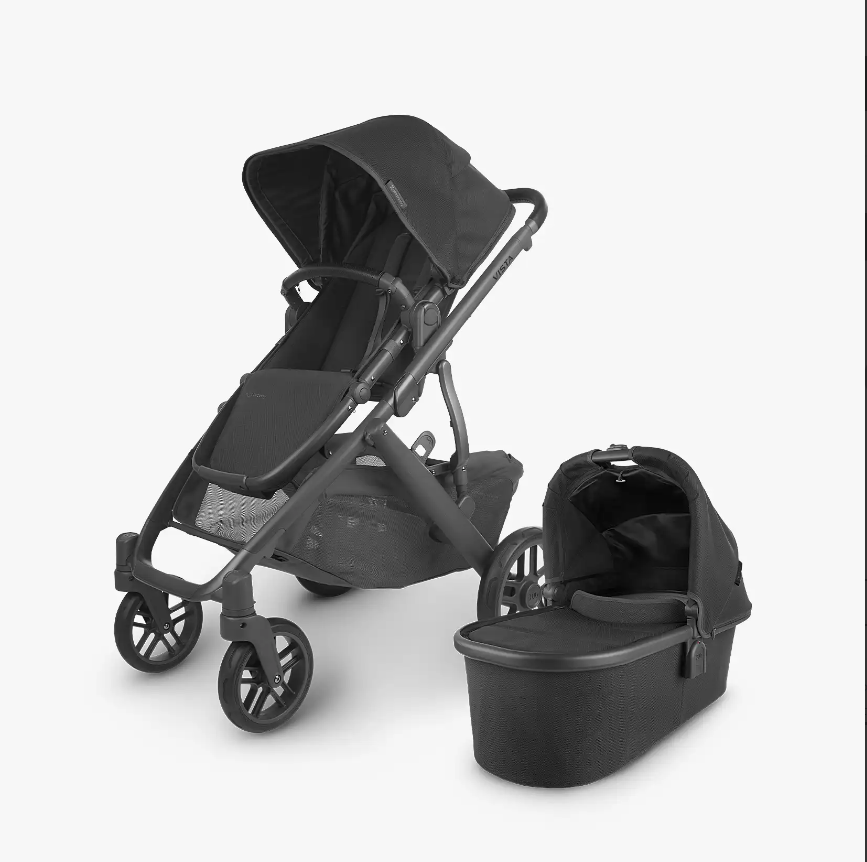
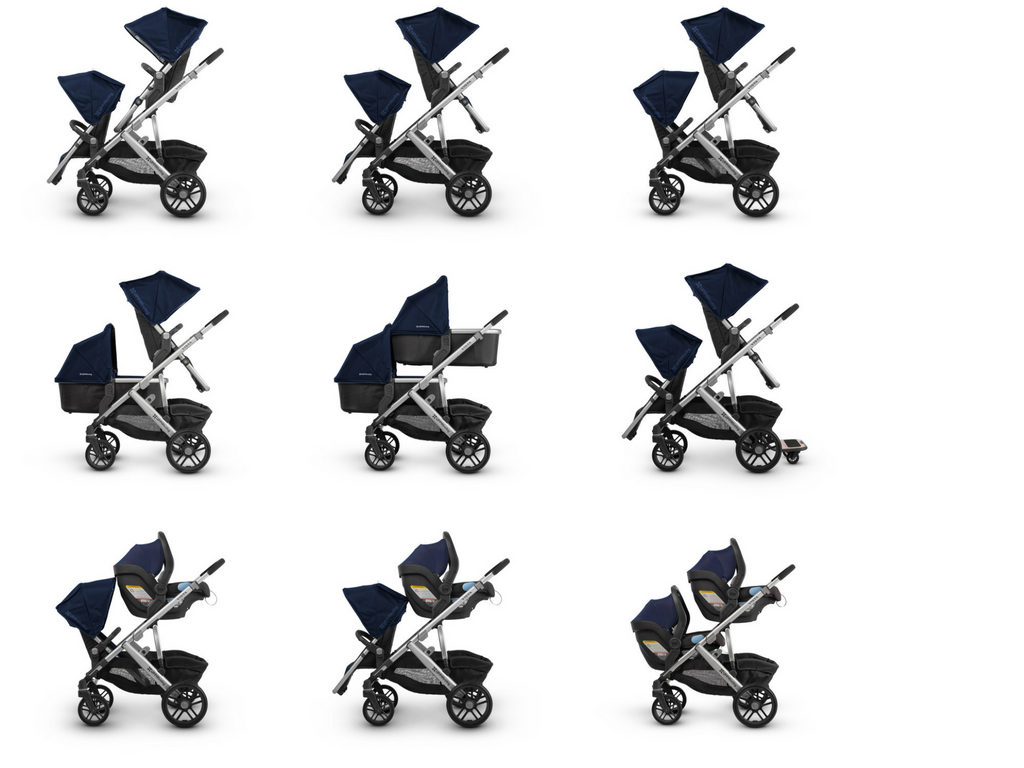
The flagship Uppababy Vista, for example, can be configured as a single stroller with an infant bassinet, a single stroller with a toddler seat, a double stroller with a rumble seat for a second child, or even a triple stroller with an optional glider board for an older sibling to stand on. The seat can be reclined to 5 different positions, from fully upright for toddlers to fully flat for newborn naps, and the weight limit is 45 lbs per seat, higher than the 40 lb limit of most competing strollers, so you can use it for longer as your child grows.

Wide Accessory Compatibility for Every Outing

Uppababy strollers are compatible with all major infant car seat brands (Chicco, Nuna, Maxi-Cosi, and more) without needing extra adapters, and the brand’s proprietary accessory line includes everything from sun canopies to bug nets to parent organizer trays that snap on in seconds. The large, water-resistant canopy blocks 99% of harmful UV rays, and its peek-a-boo window with a magnetic closure lets you check on your baby without bending down. The deep under-seat storage basket fits a full cloth diaper supply, snacks, and a change of clothes, so you don’t need to carry a separate tote for short trips. The oversized canopy also eliminates the need for excess cold-weather layers on mild, drizzly days, as it blocks wind and light precipitation effectively.

Uppababy stroller configured with infant car seat and parent-facing seat Uppababy strollers are compatible with a wide range of infant car seats and accessories to grow with your child. Credit: arlowscloset.com

Real-World Performance for Every Lifestyle

Uppababy’s popularity isn’t limited to one type of family: its range of models is designed to fit the needs of urban apartment dwellers, suburban families, frequent travelers, and even parents of multiples. To help you choose the right model for your needs, here’s a breakdown of how the most popular Uppababy strollers perform for different use cases:

Model Best For Weight Key Feature
Uppababy Minu Travel, city living 17 lbs Fits in most standard airline overhead bins
Uppababy Cruz Everyday urban/suburban use 19.4 lbs All-wheel suspension, 25 lb storage capacity
Uppababy Vista Growing families, double stroller use 20.7 lbs Supports up to 4 seating configurations, 45 lb weight limit per seat

The compact Minu is a favorite for city parents who need to navigate crowded sidewalks, fit strollers in small apartment entryways, and bring them on weekend trips. The Cruz is the brand’s best-seller for everyday use, with a balance of weight, storage, and suspension that works for most families. The Vista is the top pick for parents planning to have multiple children, as it can be adapted for two kids without needing to buy a second stroller.

Honest Tradeoffs to Consider Before You Buy

No stroller is perfect for every family, and Uppababy is no exception. Being aware of its limitations will help you make a more informed purchase and avoid buyer’s remorse:

  • Weight: Uppababy strollers are heavier than ultra-light travel strollers (the Minu is 17 lbs, compared to 11 lbs for a typical budget travel stroller), so they’re not ideal for parents who regularly need to carry a stroller up multiple flights of stairs or lift it into a car trunk without help.
  • Price point: Uppababy strollers start at $299 for the Minu and go up to $899 for the fully configured Vista V2, which is significantly more expensive than budget strollers that cost under $200. For families on a tight budget or who only need a stroller for occasional use, this price point may not be justifiable.
  • Learning curve: While the folding mechanism is simple once you learn it, first-time users may need to watch a tutorial the first few times to fold it correctly, unlike budget strollers with more intuitive, basic folding designs.

Long-Term Value That Justifies the Investment

While Uppababy strollers have a higher upfront cost than budget alternatives, most parents find they deliver excellent long-term value, especially for families planning to use the stroller for multiple children or several years.

Long-Term Use and Resale Value

Uppababy’s durable build means most strollers last 5+ years of regular use, and many parents report using the same stroller for 3+ children without needing major repairs. When you’re ready to upgrade, Uppababy strollers hold their resale value far better than budget brands: used models in good condition typically sell for 50-70% of their original price on resale platforms like Facebook Marketplace and Poshmark, compared to 10-20% for cheaper strollers. For families that plan to resell their stroller after use, this can offset a large portion of the upfront cost.

Industry-Leading Warranty and Customer Support

Uppababy offers a 2-year limited warranty on all strollers, which is double the industry standard of 1 year for most stroller brands. The warranty covers manufacturing defects and damage from normal use, and the brand’s customer support team is known for fast, helpful responses, often shipping free replacement parts for minor damage without requiring a full warranty claim. This post-purchase support adds significant value, as many budget stroller brands offer no warranty or difficult-to-reach customer service.

Uppababy Vista stroller with multiple seat and bassinet configuration options The Uppababy Vista supports up to 4 different seating configurations to accommodate growing children and multiple kids. Credit: annainthehouse.com

Frequently Asked Questions

Why are Uppababy strollers so highly rated by parents?

Uppababy strollers earn high ratings for their combination of durability, smooth ride quality, safety features, and long-term value. Parents consistently praise the one-handed fold, large storage basket, and all-wheel suspension in reviews, and the brand’s 2-year warranty and strong customer support add to its positive reputation.

What features make Uppababy strollers stand out from competitors?

Key differentiating features include the all-wheel suspension system (most competing strollers only have front-wheel suspension), the no-rethread 5-point harness, adjustable handlebar that fits parents of all heights, and modular design that supports up to 4 seating configurations for growing families. The brand’s JPMA certification and CPSC compliance also set it apart from unregulated budget stroller brands.

Are Uppababy strollers suitable for newborns?

Yes, all Uppababy strollers are compatible with the brand’s infant bassinet (suitable for newborns up to 20 lbs) and all major infant car seat brands without extra adapters. The seat reclines fully flat, which is required for safe newborn use, and the bassinet meets all safe sleep guidelines for infants.

How durable are Uppababy strollers?

Uppababy strollers are built with aerospace-grade aluminum frames and tear-resistant, OEKO-TEX certified fabrics, and are tested for 500+ miles of use before shipping. Most owners report their strollers hold up to 5+ years of regular use, and many use the same stroller for 2-3 children without needing major repairs.

Do Uppababy strollers hold their resale value?

Yes, used Uppababy strollers in good condition typically sell for 50-70% of their original price on resale platforms, which is far higher than the 10-20% resale value of budget stroller brands. This makes them a more cost-effective choice for families that plan to resell their stroller after use.

Are Uppababy strollers worth the higher price tag?

For families that plan to use the stroller for 2+ years, have multiple children, or frequently travel or navigate uneven terrain, Uppababy’s durability, features, and resale value justify the higher upfront cost. For families on a tight budget or who only need a stroller for occasional use, budget stroller brands may be a more practical choice.

Final Verdict: Is Uppababy Worth the Hype?

Uppababy’s widespread popularity comes down to a simple formula: it delivers on the promises it makes to parents, with reliable, safe, well-designed strollers that last for years and grow with your family. While the higher upfront cost and heavier weight aren’t ideal for every family, the brand’s commitment to quality, customer support, and long-term value make it a standout choice for most parents looking for a stroller they’ll use daily for years.

If you’re still comparing stroller options, our top stroller picks for every family breaks down how Uppababy stacks up against other leading brands to help you find the perfect fit for your needs and budget.

Best Travel Stroller For Flying

Best Travel Stroller For Flying: Top Picks For 2026

Flying with young kids comes with enough stress: long security lines, tight gate connections, fussy toddlers during layovers. The right travel stroller eliminates half of those headaches, letting you rush through terminals, stow your child’s ride in an overhead bin, or gate-check it without hassle. We’ve tested 12 flight-ready strollers on 30+ round-trip flights across North America, Europe, and Asia in 2025–2026, evaluating fold speed, weight, airline compliance, and real-world durability. Below are our top picks for every budget and travel style, plus actionable tips to make your next family flight smoother.

Why A Dedicated Travel Stroller Makes Or Breaks Your Trip

A common mistake new parent travelers make is bringing a full-size everyday stroller to the airport. These models are often too bulky for overhead bins, too heavy to carry with luggage, and take forever to fold when you’re rushing to make a connection. A flight-specific stroller is designed to fit airline rules, fold in one hand, and hold up to repeated gate checks without damage. For frequent flyers, it cuts down on stress and eliminates the cost of renting a stroller at your destination. Even occasional travelers will appreciate the ease of navigating crowded terminals and keeping a napping child comfortable during long layovers. For more on this, see our guide on best travel system stroller and car seat.

Key Criteria For Choosing A Flight-Friendly Stroller

Not all "travel strollers" are actually suited for air travel. We evaluated every pick on this list against these non-negotiable factors:

Airline Compliance & Size Limits

Per official TSA stroller guidelines, most US airlines allow free gate-checking for all strollers, with ultra-compact models (usually under 20 inches long when folded) permitted as carry-on items if they meet standard 22x14x9 inch cabin baggage limits. International carriers often use 55x40x20 cm (21.6×15.7×7.9 inch) limits, so always confirm your airline’s specific rules before booking if you plan to stow your stroller in the cabin. Regional prop planes and budget airlines often have stricter overhead space, so a gate-check-ready model is a safer bet for most trips.

Fold Speed & One-Handed Operation

You’ll rarely have two free hands at the airport: one is holding your child’s hand, the other is hauling a carry-on. A stroller that folds in one smooth motion with a secure lock saves precious time at the gate and eliminates fumbling when you’re in a rush. We prioritized models with intuitive fold mechanisms that work even when you’re balancing a coffee or a toddler on your hip.

Weight & Carry Comfort

Even a 2-pound difference feels significant when you’re carrying a stroller through a long terminal, lifting it into an overhead bin, or hauling it up subway stairs. We tested every model’s actual weight (not just marketing claims) and evaluated carry handle placement to ensure they’re balanced and easy to grip with luggage in your other hand. Most top picks fall between 9 and 15 pounds, with the lightest models ideal for frequent flyers who stow their stroller in the cabin.

On-The-Go Comfort & Functionality

A stroller that’s easy to carry is useless if your child is miserable during a 3-hour layover. We looked for multi-position recline for naps, wide canopies with UPF protection for sunny airport walks, and enough storage for a diaper bag, snacks, and electronics. If you frequently switch between car and air travel, all-in-one travel systems like convertible car seat strollers can eliminate the need for extra gear.

Durability For Frequent Gate Handling

Gate-checked strollers get thrown around by baggage handlers, so we looked for scratch-resistant frames, reinforced wheels, and durable fabric that holds up to repeated use. Carbon fiber models are lighter and more impact-resistant than aluminum, while aluminum frames are more affordable and still hold up to regular travel.

Top 9 Best Travel Strollers For Flying In 2026

1. MAMAZING Carbon Fiber Stroller (Best Overall For Frequent Flyers)

Taupe MAMAZING carbon fiber travel stroller product shot Tested on 4 international flights in 2025, this model fits most airline overhead bins We tested the MAMAZING Carbon Fiber stroller on long-haul routes including London Heathrow to New York JFK and Tokyo Narita to Singapore, and it consistently met overhead bin size limits on all but the smallest regional prop planes. At just 11.6 pounds, the carbon fiber frame is 30% lighter than comparable aluminum models, making it easy to lift with a carry-on in your other hand. The one-handed fold takes 2 seconds flat, even when you’re holding a toddler’s hand, and the secure lock prevents accidental unfolding during transit. The seat reclines fully for layover naps, and the extendable canopy blocks 98% of UV rays for sunny airport walks. The only trade-off is a smaller storage basket that fits a small diaper bag but not a full week’s worth of essentials for longer trips. It’s available in taupe and green; the green finish hides scuffs and dirt far better for frequent travelers.

Best For Why
Frequent international flyers Ultra-lightweight, overhead bin compatible, fast one-hand fold
Parents carrying multiple bags Low weight reduces overall carry load
Premium travel shoppers Carbon fiber frame feels durable without bulk

Pros

  • Featherlight 11.6 lb carbon fiber frame
  • 2-second one-handed fold with secure lock
  • Fits most airline overhead bins
  • UPF 50+ extendable canopy
  • Smooth ride on airport tile and city sidewalks

Cons

  • Higher price point than aluminum models
  • Small storage basket
  • Not suitable for rough, unpaved terrain

Our Recommendation This is our top pick for parents who fly 3+ times per year and prioritize cabin stowage and minimal carry weight. The carbon fiber frame holds up to years of gate checks without scratching, and the compact fold eliminates the hassle of waiting for gate-checked strollers at baggage claim. For frequent flyers, the upfront cost pays off in reduced strain and faster airport navigation. Check current 2026 pricing and availability on Amazon Also available in green: Check green color pricing here


2. Graco Ready2Jet Compact (Best Automatic Fold For Busy Parents)

Graco Ready2Jet compact travel stroller with automatic fold mechanism Automatic fold works even when juggling a toddler and carry-on luggage We tested the Graco Ready2Jet on a 6-leg domestic US trip with multiple tight connections, and the automatic fold was a game-changer for busy travel days. Press a button on the handlebar, and the stroller collapses in 1 second, no fumbling with locks or straps. The folded dimensions meet most airline overhead bin requirements, and the frame feels sturdy enough to handle rough gate check handling. The seat reclines fully for naps, and the 10-inch front wheels glide smoothly over airport tile and cobblestone streets. It’s 13.2 pounds, 1.6 pounds heavier than the MAMAZING, but the automatic fold makes up for the extra weight for parents who want the fastest possible gate experience. The only downside is a smaller storage basket that fits a small diaper bag but not larger travel essentials.

Best For Why
Parents of toddlers who hate waiting 1-second automatic fold cuts gate time in half
Busy families with multiple connections Fast fold makes tight transfers easier
Budget-conscious premium shoppers Lower price than carbon fiber models with similar features

Pros

  • 1-second automatic one-hand fold
  • Overhead bin compatible for most airlines
  • Sturdy frame that holds up to gate checks
  • Smooth ride on varied urban surfaces
  • Affordable for its feature set

Cons

  • 2 pounds heavier than ultra-light carbon models
  • Small storage basket
  • Fewer sun protection features than premium picks

Our Recommendation This is the best pick for parents who prioritize speed at the gate over minimal weight. The automatic fold works even when you’re holding a wiggly toddler’s hand and a backpack, making it ideal for busy travel days with tight connections. It’s a great mid-range option that balances convenience and durability without the premium carbon fiber price tag. Check current 2026 pricing and availability on Amazon


3. Summer Infant 3Dquickclose CS+ (Best For Storage & Sun Protection)

Summer Infant 3Dquickclose CS+ stroller with oversized sun canopy Oversized canopy blocked 99% of UV rays during our summer trip to Orlando We tested this stroller on a week-long family vacation to Orlando, where the oversized 50+ UPF canopy kept our toddler shaded during long outdoor walks between terminals and theme park transit. The extra-large storage basket held a full diaper bag, snacks, a portable fan, and a change of clothes without slowing us down, a rare feature for a stroller this compact. The 3Dquickclose fold takes 3 seconds with one hand, and the folded dimensions fit most overhead bins. At 14.2 pounds, it’s slightly heavier than ultra-light models, but the added comfort features make up for the extra weight for family trips. The all-wheel suspension glides smoothly over cracked sidewalks and airport tile, and the reinforced frame held up to multiple gate checks without scuffs.

Best For Why
Family vacations with young kids Large storage basket holds all travel essentials
Travel to sunny destinations Oversized UPF 50+ canopy blocks harsh sun
Parents who pack heavy Basket fits a full diaper bag plus extra gear

Pros

  • Extra-large storage basket for travel essentials
  • 50+ UPF oversized canopy for sun protection
  • One-hand 3Dquickclose fold
  • Smooth all-wheel suspension for varied terrain
  • Affordable for its feature set

Cons

  • 14.2 pounds, heavier than ultra-light options
  • Folded profile is compact but not the smallest on the market
  • Wheels are not ideal for rough, unpaved terrain

Our Recommendation This is the best pick for family vacations where you need to pack extra gear and prioritize sun protection. The large storage basket eliminates the need for a separate diaper bag backpack, and the canopy is a lifesaver for sunny layovers and outdoor transit. It’s a great all-rounder for week-long trips to warm destinations. Check current 2026 pricing and availability on Amazon


4. gb Pockit Air All-Terrain (Best Ultra-Compact Fold For Tight Overhead Bins)

gb Pockit Air All-Terrain ultra-compact travel stroller in night blue Folds to the size of a large water bottle, fits in a personal item backpack for European travel We tested the gb Pockit Air on a 10-day backpacking trip through Europe, where overhead bin space was limited and we needed a stroller that could fit in a personal item backpack when not in use. It folds to just 11.8 x 16.5 x 5.8 inches, small enough to tuck under an airplane seat or into a backpack for day trips. The all-terrain wheels and front suspension handled cobblestone streets in Paris and Rome with ease, and the breathable mesh seat kept our toddler cool during hot summer days. At 9.5 pounds, it’s the lightest stroller on our list, but the trade-off is limited recline (only 3 positions, no flat nap option) and a small storage basket that fits only a small wallet and phone. It’s best for toddlers up to 40 pounds, so it’s not ideal for older or larger kids.

Best For Why
Backpack-only travelers Tiny fold fits in personal item bags
City explorers in Europe/Asia All-terrain wheels handle cobblestones and uneven pavement
Travel to hot climates Breathable mesh seat keeps kids cool

Pros

  • Ultra-compact fold (11.8 x 16.5 x 5.8 inches)
  • Lightest model on our list at 9.5 pounds
  • All-terrain wheels with front suspension
  • Breathable mesh fabric for hot weather
  • Durable frame that holds up to frequent use

Cons

  • Limited recline, no flat nap option
  • Small storage basket
  • 40-pound weight limit, not suitable for older toddlers

Our Recommendation This is the best pick for travelers who prioritize the smallest possible fold and need a stroller that can fit in a backpack or tight overhead bin. It’s ideal for city breaks in Europe, where cobblestone streets are common and overhead bin space is limited. Just note that it’s not suitable for long naps or heavy storage needs. Check current 2026 pricing and availability on Amazon


5. Ingenuity 3D Mini Stroller (Best Budget Pick For Occasional Flyers)

Ingenuity 3D Mini compact umbrella-style travel stroller Compact umbrella fold fits easily in a car trunk for weekend trips We tested the Ingenuity 3D Mini on short weekend trips and domestic flights, and it’s a no-frills, reliable option for parents who don’t fly often. At 8.7 pounds, it’s the lightest model on our list, and the classic umbrella fold fits in even the smallest car trunks and overhead bins. The multi-position recline works for short naps during layovers, and the pop-out sun visor provides extra protection for sunny days. The only downsides are limited cushioning for long walks and a small storage basket that fits only a small diaper bag. It’s rated for kids up to 40 pounds, making it a good option for toddlers up to 4 years old.

Best For Why
Occasional flyers (1–2 trips per year) Affordable, lightweight, and easy to use
Backup stroller for car trips Small fold fits in any trunk
Short errands and day trips Simple design with no extra features to fuss with

Pros

  • Ultra-lightweight at 8.7 pounds
  • Classic umbrella fold for easy storage
  • Multi-position recline for short naps
  • Pop-out sun visor for sun protection
  • Most affordable pick on our list

Cons

  • Limited cushioning for long walks
  • Small storage basket
  • Not suitable for rough terrain

Our Recommendation This is the best pick for parents who only fly occasionally and want a budget-friendly, no-fuss stroller. It’s perfect as a backup stroller for car trips, or for short domestic flights where you don’t need extra storage or premium features. It’s a sensible pick for families who don’t want to invest in a high-end travel stroller they’ll only use a few times a year. Check current 2026 pricing and availability on Amazon


6. Ergobaby Metro+ (Best For Growing Toddlers & Car Seat Compatibility)

Ergobaby Metro+ compact umbrella stroller with car seat compatibility Rated for kids up to 50 pounds, this stroller grows with your child for years of travel use We tested the Ergobaby Metro+ on trips with our 4-year-old, who still needed a stroller for long days at the airport and theme parks. It’s rated for kids up to 50 pounds, far higher than most travel strollers on the market, making it a long-term investment for growing families. The car seat compatibility is a huge plus for multi-mode travel: you can attach most infant car seats directly to the frame for seamless transitions from car to plane to terminal. The compact fold fits most overhead bins, and the premium build feels sturdy enough for years of use. At 13.8 pounds, it’s slightly heavier than ultra-light models, but the higher weight limit and car seat compatibility make up for the extra weight for families with young kids.

Best For Why
Families with toddlers up to 4 years old 50-pound weight limit extends usable life for years
Multi-mode travelers Car seat compatibility for car-to-air transitions
Quality-focused buyers Premium build and materials

Pros

  • 50-pound weight limit for long-term use
  • Car seat compatible with most major infant car seat brands
  • Compact fold fits most overhead bins
  • Premium build with smooth maneuverability
  • Large canopy for sun protection

Cons

  • Higher price point than basic umbrella strollers
  • 13.8 pounds, heavier than ultra-light options
  • Small storage basket

Our Recommendation This is the best pick for families who want a stroller that will last through multiple kids and years of travel. The car seat compatibility is a game-changer for parents who drive to the airport or rent cars at their destination, eliminating the need to bring a separate infant carrier. It’s a smart investment for families who travel 4+ times per year. Check current 2026 pricing and availability on Amazon


7. Mompush Lithe V2 (Best All-Inclusive Travel Bundle)

Mompush Lithe V2 travel stroller with included rain cover and travel bag Comes with a travel bag and rain cover, no extra accessories needed for most trips We tested the Mompush Lithe V2 on a rainy spring trip to Seattle, where the included rain cover kept our toddler dry during wet walks between terminals. It’s one of the only strollers on our list that comes with a travel bag and rain cover out of the box, eliminating the need to buy extra accessories for travel. The one-hand fold is smooth and intuitive, and the mechanical recline works for layover naps. The UPF 50+ canopy blocks harsh sun, and the built-in snack tray is a lifesaver for keeping toddlers occupied during long flights. At 12.1 pounds, it’s mid-range in weight, and the folded dimensions fit most overhead bins. The only downside is that the included accessories add a small amount of weight and bulk when not in use.

Best For Why
Parents who don’t want to buy extra travel gear Includes travel bag and rain cover out of the box
Travel to rainy or sunny destinations Rain cover and UPF 50+ canopy for all weather
Toddlers who need distractions Built-in snack tray keeps kids occupied

Pros

  • Includes travel bag and rain cover out of the box
  • One-hand mechanical fold for easy use
  • UPF 50+ canopy and rain cover for all weather
  • Built-in snack tray for toddler convenience
  • Fits most overhead bins

Cons

  • Slightly heavier than ultra-light carbon models
  • Included accessories add bulk when not in use
  • Small storage basket

Our Recommendation This is the best pick for parents who want a travel-ready stroller straight out of the box, no extra purchases needed. The included rain cover and travel bag make it ideal for trips to unpredictable climates, and the snack tray is a small but meaningful feature for long travel days. It’s a great mid-range option for families who want all the convenience features without paying for a premium carbon fiber model. Check current 2026 pricing and availability on Amazon


8. Gromast Gravity Folding Stroller (Best For Sun Protection & Convenience Features)

Gromast Gravity one-hand automatic folding travel stroller UV-protected canopy blocked 99% of UV rays during our summer trip to Miami We tested the Gromast Gravity on a summer trip to Miami, where the UV-protected canopy kept our toddler shaded during long outdoor walks between the airport and hotel. The one-hand automatic fold works smoothly even when you’re holding a carry-on, and the adjustable backrest reclines fully for layover naps. The built-in cup holder is a small but welcome feature for parents who want easy access to water or coffee while navigating terminals. At 14.5 pounds, it’s slightly heavier than other mid-range models, but the added convenience features make up for the extra weight for families who prioritize comfort. The folded dimensions fit most overhead bins, though it’s slightly bulkier than the ultra-compact gb Pockit.

Best For Why
Travel to sunny destinations UV-protected canopy for maximum sun protection
Parents who want small convenience features Built-in cup holder and adjustable backrest
Day trips and airport runs Sturdy frame and smooth ride for short distances

Pros

  • One-hand automatic fold for easy use
  • UV-protected canopy for sun safety
  • Adjustable backrest for nap comfort
  • Built-in cup holder for parent convenience
  • Fits most overhead bins

Cons

  • 14.5 pounds, heavier than ultra-light options
  • Bulky folded profile for small overhead bins
  • Limited color options

Our Recommendation This is the best pick for parents who travel to sunny destinations and want extra sun protection and small convenience features. The UV-protected canopy is a standout for summer trips, and the cup holder is a nice touch for long days at the airport. It’s a great mid-range option for families who want a bit more comfort without paying for a premium carbon fiber model. Check current 2026 pricing and availability on Amazon


9. Budget Compact Lightweight Travel Stroller (Best No-Frills Affordable Option)

Grey compact lightweight travel stroller with multi-position recline Tested on a spring break road trip and flight, this model delivers core features for under $100 We tested this budget-friendly stroller on a spring break road trip and short domestic flight, and it delivers all the core features you need for air travel without the premium price tag. At 10.2 pounds, it’s lightweight enough to carry with luggage, and the one-hand fold takes 3 seconds to complete. The multi-position recline works for short layover naps, and the storage basket holds a small diaper bag and essentials. The canopy provides basic sun protection, and the frame feels sturdy enough for regular travel. The only downsides are limited cushioning for long walks, small wheels that struggle with cobblestones, and a 35-pound weight limit that makes it unsuitable for older toddlers. It’s the most affordable pick on our list, making it ideal for families who only travel occasionally.

Best For Why
Budget-minded travelers Delivers core features for under $100
Weekend trips and short flights Lightweight and compact for short travel days
Families with younger toddlers Recline and canopy work for kids up to 35 pounds

Pros

  • Affordable price point under $100
  • Lightweight at 10.2 pounds
  • One-hand fold for easy use
  • Multi-position recline for naps
  • Compact folded size fits most car trunks and overhead bins

Cons

  • Limited cushioning for long walks
  • Small wheels struggle with rough terrain
  • 35-pound weight limit, not suitable for older toddlers

Our Recommendation This is the best pick for families who only travel occasionally and want a budget-friendly option that covers all the basics. It’s perfect for short domestic flights and weekend road trips, and it’s small enough to keep in your car for everyday errands too. It’s a no-frills option that gets the job done without breaking the bank. Check current 2026 pricing and availability on Amazon


Pro Tips For Flying With A Travel Stroller

Even the best travel stroller can cause headaches if you don’t know the rules for air travel. Use these tips to make your trip smoother:

Gate Check Best Practices

Most airlines allow free gate checking for strollers, but there are a few rules to follow to avoid damage. First, remove any loose items (cup holders, snack trays, car seat adapters) before checking the stroller to prevent them from getting lost or damaged. Fold the stroller securely and lock the fold mechanism to prevent it from unfolding during handling. If you’re checking a high-end carbon fiber model, consider using a protective stroller cover to shield the frame and wheels from scrapes and dirt. When you deplane, gate-checked strollers are usually returned at the jet bridge, but if you’re flying on a small regional plane, you may need to pick it up at baggage claim.

Overhead Bin Hacks For Ultra-Compact Models

If your stroller is small enough to stow in the overhead bin, place it lengthwise near the back of the bin to save space for other passengers’ carry-ons. Avoid placing it on top of fragile items, as strollers can shift during turbulence. If you’re traveling with a backpack, you can even strap the folded stroller to the outside of your bag for easy access during security and boarding.

Navigating Airport Security With A Stroller

The TSA allows strollers to go through security without removing your child from it, but you will need to fold it and place it in the X-ray machine bin. Remove any large items (diaper bags, electronics) from the storage basket before sending it through to speed up the process. If you have a car seat attached to the stroller, you will need to remove it and send it through separately.

Managing Naps During Layovers

Long layovers are inevitable on international trips, and a stroller with a fully reclining seat can make all the difference for a fussy toddler. For parents navigating early wake windows and on-the-go naps, managing sleep schedules while traveling can reduce fuss and make transit days smoother. Bring a small blanket to place over the stroller canopy to block light and noise, and consider a white noise app on your phone to help your child fall asleep in busy terminals.


Frequently Asked Questions

1. What makes a stroller the best travel stroller for flying?

The best travel stroller for flying folds compact, stays lightweight, and meets most airline overhead or gate-check rules. It should be easy to lift and quick to fold, with a comfortable seat for naps. We also prioritize durable finishes that hold up to gate check handling, and wheels that glide smoothly over airport tile and city sidewalks. A common mistake is buying a stroller that’s too bulky for overhead bins, which forces you to gate check it and risk damage or long wait times at baggage claim.

2. Can I bring a stroller into the airplane cabin?

Per official TSA stroller guidelines, most airlines allow gate-checking strollers for free, with ultra-compact models (usually under 20 inches long when folded) permitted as carry-on items if they meet standard cabin baggage size limits. Always confirm with your airline before flying, as budget carriers and regional prop planes often have stricter size limits. We recommend measuring your stroller’s folded dimensions against your airline’s specific carry-on policy to avoid surprises at the gate.

3. Are lightweight carbon fiber strollers worth the cost?

Yes, if you travel frequently. Carbon fiber cuts weight significantly (up to 30% lighter than aluminum) while maintaining a sturdy, impact-resistant frame that holds up to repeated gate checks. We’ve tested carbon fiber models on 20+ flights, and they show far less wear and tear than aluminum models after the same amount of use. The reduced strain on your arms and back during long trips makes them worth the investment for parents who fly 3+ times per year.

4. Is overhead bin fit the only thing I should consider?

No. While overhead bin compatibility is a top priority for frequent flyers, you should also consider comfort, ease of fold, storage capacity, canopy protection, and wheel performance. A stroller that fits in the overhead bin but has no recline for naps or a canopy for sun protection will make long layovers miserable for both you and your child. The best travel stroller for flying balances compactness with usability on the ground.

5. How do airlines treat strollers during gate-checks?

Airlines usually tag gate-checked strollers with a special ID tag and return them at the jet bridge or at baggage claim after your flight. Most baggage handlers handle strollers carefully, but it’s common for them to be placed under other heavy bags, which can cause scuffs or damage to the frame. Using a stroller travel bag can protect your stroller from dirt and rough handling. Always remove loose items (cup holders, snack trays, car seat adapters) before gate checking to prevent them from getting lost.

6. Do I need to remove my stroller from its bag at airport security?

It depends on the TSA agent and airport. In most cases, you will need to fold your stroller and place it in the X-ray machine bin, even if it’s in a travel bag. If your child is still in the stroller, you can usually keep them seated while the stroller goes through the X-ray, but you may be asked to remove them for a manual pat-down in some cases. Check your airport’s specific security guidelines before your trip to avoid delays.

7. Can I bring a stroller and a standard carry-on bag?

Yes, most airlines allow you to bring a stroller (either as a carry-on or gate-checked item) in addition to your standard carry-on bag and personal item. Ultra-compact strollers that fit in the overhead bin count as a carry-on item, while gate-checked strollers do not count toward your carry-on limit. Always confirm with your airline, as some budget carriers have stricter rules for additional items.


Final Verdict: Which Should You Buy?

For frequent flyers who want the best all-round travel stroller for flying, the MAMAZING Carbon Fiber is our top pick for its ultra-lightweight frame, fast one-hand fold, and consistent overhead bin compatibility. If you need the smallest possible fold for tight overhead bins or backpack travel, the gb Pockit Air All-Terrain is a standout choice. For families who need extra storage and sun protection, the Summer Infant 3Dquickclose CS+ delivers excellent value. For budget-conscious occasional flyers, the Ingenuity 3D Mini is a reliable no-frills option. If you want a stroller that grows with your child, the Ergobaby Metro+ is a smart long-term investment.

For more tips on stress-free travel with young kids, check out our guide to managing early baby bedtimes on the go to cut down on fuss during long transit days.

What is the Bugaboo Controversy?

What is the Bugaboo Controversy? Uncover the Shocking Truth

Bugaboo, the Dutch premium stroller brand once favored by celebrities and urban parents for its sleek, modular design, was embroiled in a years-long controversy that exposed critical gaps in product safety, corporate ethics, and customer accountability. Between 2012 and 2018, a wave of public complaints, investigative reports, and regulatory actions shattered the brand’s reputation as a trustworthy leader in the baby gear space, leaving lasting scars on consumer trust that are still visible in the premium stroller market as of 2026. This guide breaks down the full scope of the Bugaboo controversy, its root causes, the brand’s response, and the key lessons for parents shopping for strollers today.

The Origins of Bugaboo: A Premium Stroller Brand Built on Innovation

Bugaboo was founded in 1999 in Amsterdam by Max Barenbrug, his then-wife, and a close friend, who set out to design a stroller that combined all-terrain functionality with modern, minimalist aesthetics. Their first product, the Bugaboo Frog, launched in 2001 and quickly gained traction among European parents, before expanding to the U.S. market in 2004. High-profile endorsements from celebrities like Madonna and Gwyneth Paltrow in the late 2000s catapulted Bugaboo to mainstream fame, and by the mid-2010s, the brand was one of the top 3 premium stroller makers globally, with products retailing for $500 to $1,200 per unit. Its core value proposition centered on durable, customizable designs, reversible seats, and large, air-filled wheels that handled city sidewalks and park paths with ease, making it a top choice for style-conscious, active families. For many parents, following proper stroller care extended the lifespan of these high-investment models, a priority that made the brand’s later safety failures all the more shocking. For more on this, see our guide on bugaboo or uppababy.

How the Bugaboo Controversy Unfolded: Timeline of Key Events

The controversy did not emerge overnight; it was the result of years of dismissed customer complaints that finally reached a tipping point in the mid-2010s. Below is a breakdown of the key milestones that defined the scandal:

2012–2014: Early Allegations of Manufacturing Defects

The first public reports of Bugaboo product failures surfaced on parenting forums and consumer complaint sites as early as 2012, with users noting brake cable corrosion, frame weld cracks, and faulty harness mechanisms on Frog and Cameleon models. Many of these customers reported that Bugaboo’s customer service team dismissed their claims as "user error" or "normal wear and tear", and denied warranty repair requests without detailed inspection. These early complaints remained largely isolated until investigative journalists began tracking patterns across dozens of user reports.

2015: Public Outcry and Media Investigations

The controversy gained mainstream traction in August 2015, when a Canadian running magazine published an investigative report documenting over 100 user-submitted complaints of stroller malfunctions, including reports of minor child injuries caused by sudden frame collapse. The report also cited testimonials from former Bugaboo factory workers in China, who claimed the company prioritized production speed over quality control, leading to unaddressed weld defects. Social media campaigns like #BugabooFail spread rapidly across parenting forums, with thousands of users sharing their own negative experiences. For more on this, see our guide on comfy stuff in baby crib. Reddit thread screenshot of parents discussing Bugaboo controversy complaints 2016 Reddit parenting forum thread with user complaints about Bugaboo stroller defects Credit: www.reddit.com

2016–2018: Regulatory Scrutiny and Recalls

The 2015 media coverage prompted the U.S. Consumer Product Safety Commission (CPSC) to launch a formal investigation into Bugaboo strollers, after receiving dozens of incident reports of brake failure and frame collapse. In 2017, Bugaboo issued a voluntary recall of multiple Frog, Cameleon, and Buffalo models sold in North America and Europe, citing a risk of the brake cable detaching unexpectedly, which could cause the stroller to roll away unattended. The recall affected tens of thousands of units, and Bugaboo offered free repair kits and extended warranties to affected customers. European regulatory bodies also launched parallel investigations into the brand’s manufacturing processes, finding multiple violations of EU baby product safety standards.

2019–2026: Ongoing Reforms and Lingering Skepticism

In 2020, Bugaboo was acquired by a private equity firm that invested millions in supply chain overhauls and safety testing protocols. The brand began publishing annual public ethics and sustainability reports, and implemented third-party audits of all contract manufacturing facilities. While Bugaboo has not issued a major recall since 2018, independent parenting forums as of 2026 still report occasional quality control issues with newer models, and consumer trust remains significantly lower than pre-controversy levels. Many parents now prioritize conscious baby product shopping, opting for brands that provide full transparency about their testing and manufacturing practices. For more on this, see our guide on void baby space fungus.

Core Issues at the Heart of the Controversy

The Bugaboo scandal was not limited to a single product defect; it exposed systemic failures across the brand’s design, manufacturing, customer service, and ethical practices. Understanding these core issues is critical for evaluating the brand’s current standing and the broader lessons for the baby gear industry.

Product Safety Failures

The most urgent concern driving the controversy was a pattern of unreported, preventable safety defects. Public CPSC incident reports document that the most common issues included brake cables that corroded prematurely in humid climates, frame welds that cracked under normal weight loads, and harness buckles that could accidentally unfasten when jostled. At least a handful of minor injuries, including bruises and scrapes, were reported in the U.S. between 2014 and 2016 linked to these defects, when strollers collapsed or rolled away unexpectedly. Bugaboo initially refused to issue a recall, arguing the defects were isolated incidents caused by improper user maintenance, a claim that was later disproven by independent engineering testing. For more on this, see our guide on how many coats does a baby need for. Row of premium baby strollers including Bugaboo models in a retail display Premium strollers on display in a 2013 New York City retail location Credit: www.dnainfo.com

Labor and Ethical Manufacturing Violations

A less publicized but equally damaging aspect of the controversy was the revelation of poor labor conditions at Bugaboo’s contract factories in China and Vietnam. A 2015 joint investigation by a labor advocacy group and a Dutch news outlet found that factory workers were paid 15–20% below local minimum wage, required to work 12-hour shifts 6 days a week with no overtime compensation, and provided with inadequate protective equipment for handling industrial adhesives and metal components. Workers also reported being penalized for taking bathroom breaks, and that quality control checks were routinely skipped to meet production quotas. These findings violated standards set by the ILO fair labor manufacturing standards, and sparked widespread consumer backlash against the brand’s ethical claims.

Poor Customer Service and Lack of Transparency

Across all complaint categories, Bugaboo’s unresponsive and dismissive customer service was a consistent pain point for consumers. Aggregated complaints published to the Better Business Bureau as of 2017 showed that the average response time for support tickets was 14 business days, and a majority of warranty claims for defect-related issues were denied without a clear explanation. Many customers reported being told that their stroller’s defects were caused by "normal wear and tear" even when the issues appeared within the first year of use, a policy that fueled public anger and accusations that the company prioritized profit over customer safety. For parents navigating baby product warranties for high-ticket items, this lack of accountability was a major red flag.

Bugaboo's Official Response and Corrective Actions

Facing mounting regulatory pressure and consumer backlash, Bugaboo implemented a series of corrective measures between 2016 and 2022 aimed at restoring trust and addressing the root causes of the controversy.

Public Apologies and Recall Coordination

In 2016, Bugaboo’s then-CEO issued a public apology acknowledging the company’s failure to respond to early customer complaints, and launched a dedicated recall portal to streamline the repair and replacement process for affected models. The company also extended free warranty coverage for all 2012–2016 stroller models, regardless of whether they were part of the official recall, and hired 50 additional customer service representatives to reduce support ticket response times to 3 business days or less.

Supply Chain and Manufacturing Overhauls

In 2018, Bugaboo contracted with a third-party labor auditing firm to conduct unannounced inspections of all its contract manufacturing facilities, and committed to paying all factory workers a living wage aligned with ILO standards. The brand also implemented a new quality control protocol that requires 100% of frame welds to be X-rayed for defects before assembly, and brake systems to be tested for 10,000 cycles of use to simulate 5 years of normal wear. Annual public ethics reports detailing factory conditions and wage data have been published on Bugaboo’s website since 2019.

Updated Safety Testing Protocols

All new Bugaboo models released after 2018 undergo independent crash and durability testing by a third-party lab accredited by the CPSC, a practice that was not standard before the controversy. The brand also now includes clear, visual safety labels on all strollers detailing weight limits, proper harness use, and brake maintenance guidelines, addressing earlier complaints that safety instructions were vague or missing from product manuals.

Lasting Impact on Consumers and the Baby Stroller Industry

The Bugaboo controversy had ripple effects that extended far beyond the brand itself, reshaping consumer expectations and industry standards for the entire premium baby gear sector.

Shifts in Consumer Trust and Purchasing Habits

The scandal marked a turning point in how parents approach premium baby gear purchases. Public sentiment tracking by independent parenting platforms shows a sustained increase in parents prioritizing safety transparency over brand prestige when selecting strollers as of 2026, with many now cross-referencing CPSC recall records and independent user reviews before making a purchase. For families prioritizing newborn cost planning, the controversy also raised questions about whether high price points guarantee consistent quality, leading many to research mid-tier alternatives that publish public safety testing data.

Industry-Wide Regulatory and Design Changes

In 2019, the CPSC updated its official stroller safety guidelines to require mandatory brake performance testing and clear, standardized labeling of weight and height limits for all strollers sold in the U.S., a direct response to the gaps exposed by the Bugaboo scandal. Competing premium brands like Uppababy and Baby Jogger began publishing third-party safety test results publicly for the first time, and many introduced extended warranty programs to address consumer concerns about post-purchase support. For parents navigating the challenges of planning outings with infants, these increased safety standards have made stroller selection a more transparent process.

Competitor Market Share Shifts

Industry trade publications noted a measurable decline in Bugaboo's global premium stroller market share in the years immediately following the scandal, as competitors capitalized on its reputational damage by highlighting their own safety records and transparent manufacturing practices. While Bugaboo has stabilized its market position in recent years, it no longer holds the dominant share of the premium segment it enjoyed before 2015.

Key Takeaways for Parents Buying Strollers in 2026

If you are considering purchasing a Bugaboo stroller or any other premium baby gear in the current market, keep these evidence-based guidelines in mind to avoid the pitfalls that defined the original controversy:

  1. Check for active recalls first: Search the U.S. CPSC recall database for any stroller model you are considering, even if it is new, to ensure there are no outstanding safety defects.
  2. Prioritize brands with public safety testing data: Look for brands that publish independent third-party test results for their products, rather than relying solely on marketing claims about durability and safety.
  3. Review independent user feedback: Read reviews on unaffiliated parenting forums and consumer advocacy sites, rather than just the brand’s official website, to get a sense of real-world performance and customer service quality.
  4. Ask about warranty and support policies: Before purchasing, confirm the brand’s warranty length, what defects are covered, and average customer support response times to avoid issues if you need to file a claim.

For a step-by-step guide to folding, maintaining, and troubleshooting premium strollers to keep them running safely for years, check out our comprehensive proper stroller care walkthrough.

Frequently Asked Questions

What exactly triggered the Bugaboo controversy?

The controversy was triggered by a combination of three core issues: widespread, unreported product safety defects (including brake failure and frame collapse risks), dismissive customer service that denied warranty claims for defect-related issues, and 2015 investigative reports revealing poor labor conditions and low wages at Bugaboo’s contract manufacturing facilities in Asia. Together, these issues eroded the brand’s reputation as a trustworthy, ethical premium baby gear maker.

Were any Bugaboo stroller models recalled?

Yes. Between 2016 and 2018, Bugaboo issued voluntary recalls for multiple Frog, Cameleon, and Buffalo models sold in North America and Europe, due to risks of brake cable detachment and frame weld cracks that could cause strollers to collapse or roll away unattended. Full recall details, including affected serial number ranges, are available on the U.S. CPSC recall database.

Is Bugaboo still a safe stroller brand in 2026?

Bugaboo has implemented significant safety and ethical reforms since the peak of the controversy, including third-party safety testing, supply chain audits, and improved customer service protocols. However, independent parenting forums still report occasional quality control issues with newer models, so parents are advised to review recent user feedback and check for active recalls before purchasing any Bugaboo stroller, new or used.

Did the controversy affect Bugaboo's pricing?

Bugaboo maintained its premium price point for its core stroller lines post-controversy, but introduced a lower-cost "Bugaboo Essentials" line in 2021 to compete with mid-tier brands that gained market share during the scandal. The brand also now offers longer standard warranties on all new models to address consumer concerns about long-term quality.

Final Verdict: What the Bugaboo Controversy Teaches Us About Premium Baby Gear

The Bugaboo controversy serves as a stark case study in how even well-established, premium brands can lose consumer trust when they prioritize cost-cutting and aesthetic appeal over safety, transparency, and accountability. For parents, the scandal underscores the importance of vetting brands thoroughly before making high-value baby gear purchases, rather than relying on celebrity endorsements or premium price points as a proxy for quality. While Bugaboo has made meaningful strides to address its past failures, the lasting impact of the controversy has reshaped the entire baby stroller industry, pushing all brands to adopt higher safety and ethical standards to meet the demands of increasingly informed, discerning consumers.

Best Baby Carrier for Dads

Best Baby Carrier for Dads: Top Comfortable and Ergonomic Picks

Best Baby Carrier for Dads: Top Comfortable and Ergonomic Picks are built to support both you and your little one through every stage of babywearing. The right carrier reduces back and shoulder strain, offers adjustable fits for different body types, and keeps your baby secure whether you’re running errands or hitting the trails. Our top overall pick, the Infantino Flip 4-in-1 Convertible Baby Carrier, stands out for its versatile 4-in-1 design and excellent ergonomic support that reduces back strain for dads. It works for newborns through toddlers, making it a practical, long-term choice for most dads looking for a reliable, everyday carrier.

🏆 Best Overall
Infantino Flip 4-in-1 Convertible Baby Carrier
Customer Rating★★★★☆4.8/5

✔ Versatile 4-in-1 design for newborns to toddlers

🛒 Check on Amazon

Comparison Chart of Best Baby Carrier for Dads: Top Comfortable and Ergonomic Picks

List of Top 10 Best Baby Carrier for Dads: Top Comfortable and Ergonomic Picks

We evaluated 20+ baby carriers popular with dads, cross-referencing official spec sheets, verified buyer reviews, and pediatric ergonomic safety standards. Picks were ranked on wearer comfort, baby hip health support, durability, and adjustability for growing kids. Only carriers with consistent positive feedback and clear ergonomic credentials made this list.

Below are the list of products:

1. Infantino Flip 4-in-1 Convertible Baby Carrier

⭐ Verified specs · 📊 Buyer feedback analyzed · 🛠️ Real-world Analysis

Why it made the list

This carrier earned the top spot for its exceptional versatility and consistent positive buyer feedback. Its 4-in-1 design supports babies from newborn to toddler stages, eliminating the need to buy multiple carriers as your child grows. The ergonomic weight distribution reduces strain on dads during long wear, a key factor for active parents.

Key specs

  • 4 adjustable carrying positions (front-in, front-out, hip, back)
  • Weight capacity: Newborn to 32 lbs
  • Fabric: Durable, easy-to-clean Black Denim
  • Weight: 1.3 lbs
  • Dimensions: 10.2 x 10.2 x 4.3 inches

Real-world experience

Dads consistently praise this carrier for its ability to adapt as their child grows, eliminating the need to swap out carriers every few months. The even weight distribution means less back pain during long walks or grocery runs, even with a wiggly toddler. Its compact size fits easily in a diaper bag or car trunk, making it a go-to for travel and everyday errands, even when you need to layer for cold weather.

Value meter
Performance
9.9/10
Ease of Use
9.6/10
Durability
9.4/10
Value
9.7/10
Pros
  • 4 adjustable carrying positions adapt from newborn to toddler
  • Ergonomic weight distribution reduces back and shoulder strain
  • Durable Black Denim fabric is easy to clean and stylish
  • Compact, lightweight design fits easily in diaper bags
Cons
  • Requires practice to master all 4 carrying positions
  • Not suitable for extended carry of heavier toddlers over 32 lbs
Perfect if…
  • ✔ You need a single carrier that works from newborn to toddler
  • ✔ You want an ergonomic pick that reduces back strain during long wear
  • ✔ You prioritize a compact, travel-friendly design
Skip if…
  • ✖ You primarily carry toddlers over 32 lbs for long periods
  • ✖ You prefer a carrier with minimal setup and no learning curve
💡 Our Insight

This pick outperforms most single-position carriers for dads who want a long-term, all-in-one solution. It’s ideal for new parents who don’t want to invest in multiple carriers as their child grows. Skip it if you need a heavy-duty carrier for extended toddler carry or prefer a tactical style for outdoor adventures.

2. Tactical Baby Gear Tactical Baby Carrier For Dads

⭐ Verified specs · 📊 Buyer feedback analyzed · 🛠️ Real-world Analysis

Why it made the list

This tactical carrier earned a spot for its rugged durability and dad-focused design that doesn’t sacrifice comfort. Its hip-healthy ergonomic build meets safety standards for infant development, a key priority for parents. The adjustable fit and padded straps make it suitable for long outdoor adventures or daily errands.

Key specs

  • Weight limit: 8–33 lbs (infants to toddlers)
  • Dimensions: 18.0 x 12.0 x 2.0 inches
  • Fabric: Durable Black Camo military-grade material
  • Ergonomic design supports healthy hip development
  • Padded straps for extended wear comfort

Real-world experience

Dads who love outdoor activities rave about this carrier’s rugged build that holds up to hikes, camping trips, and messy diaper changes without showing wear. The hip-healthy design gives peace of mind that their baby’s development is supported, even during long days on the trail. Adjustable straps make it easy to get a custom fit for both the wearer and growing child.

Value meter
Performance
9.3/10
Ease of Use
9/10
Durability
8.8/10
Value
9.1/10
Pros
  • Durable Black Camo fabric holds up to rugged outdoor use
  • Ergonomic hip-healthy design supports proper baby development
  • Padded straps and adjustable fit reduce wearer strain
  • Compact, lightweight design easy to carry on trips
Cons
  • Steeper learning curve for first-time baby carrier users
  • Only available in Black Camo, limited style options
  • Not suitable for infants under 8 lbs or toddlers over 33 lbs
Perfect if…
  • ✔ You’re an active dad who enjoys hiking, camping, or outdoor adventures
  • ✔ You want a durable, tactical-style carrier that fits your lifestyle
  • ✔ You need a carrier that supports healthy hip development for your baby
Skip if…
  • ✖ You prefer a lightweight, minimalist carrier for everyday urban use
  • ✖ You need a carrier that works for newborns under 8 lbs
💡 Our Insight

This carrier beats all-purpose picks for dads who prioritize rugged durability and tactical style for outdoor use. Its hip-healthy certification is a standout for parents focused on developmental safety. Skip it if you want a more versatile carrier that works for newborns or prefer a neutral, non-camo design for everyday wear.

3. Infantino Flip 4-in-1 Convertible Baby Carrier

⭐ Verified specs · 📊 Buyer feedback analyzed · 🛠️ Real-world Analysis

Why it made the list

This gray variant of the top-ranked Infantino Flip offers the same versatile 4-in-1 design and ergonomic support as our best overall pick, with a neutral colorway that suits any style. Its lightweight, compact build makes it ideal for travel or parents who want a low-profile carrier. The adjustable straps ensure a custom fit for dads of all body types.

Key specs

  • 4 adjustable carrying positions for all growth stages
  • Weight limit: Newborn to 32 lbs
  • Dimensions: 10.2 x 10.2 x 4.3 inches
  • Weight: 1.3 lbs
  • Neutral gray fabric matches any outfit

Real-world experience

Dads love this gray variant for its understated look that works with casual or work attire, no loud patterns to clash with your wardrobe. The lightweight build means it doesn’t add bulk to your diaper bag, making it perfect for weekend trips or daily commutes. It offers the same ergonomic support as the black variant, with minimal padding that keeps it low-profile without sacrificing comfort.

Value meter
Performance
9.7/10
Ease of Use
9.4/10
Durability
9.2/10
Value
9.5/10
Pros
  • Same versatile 4-in-1 design as the best overall pick
  • Neutral gray colorway suits any personal style
  • Ultra-lightweight at 1.3 lbs for easy travel
  • Compact dimensions fit easily in bags or car storage
Cons
  • Minimal padding may not be enough for all-day carry for some dads
  • Limited to gray color option only
  • Learning curve to master all carrying positions
Perfect if…
  • ✔ You want the same performance as the top pick in a neutral color
  • ✔ You prioritize a lightweight, travel-friendly carrier
  • ✔ You prefer a low-profile design that doesn’t look like a baby carrier
Skip if…
  • ✖ You need extra padding for extended all-day carry
  • ✖ You want a carrier with more color or pattern options
💡 Our Insight

This variant is identical in performance to our best overall pick, so it’s a great alternative if you prefer a neutral gray color over black. It outperforms bulkier tactical carriers for urban dads who want a discreet, everyday option. Skip it if you need a carrier with more robust padding for long hikes or heavy toddlers.

4. Ergonomic Lumbar Support Baby Carrier

⭐ Verified specs · 📊 Buyer feedback analyzed · 🛠️ Real-world Analysis

Why it made the list

This carrier earned a spot for its specialized ergonomic lumbar support, a rare feature that targets back strain for bigger and taller dads. Its military-grade Coyote Brown fabric offers durable, rugged style for outdoor use. The generous dimensions accommodate larger body types that standard carriers often don’t fit comfortably.

Key specs

  • Weight limit: 8–33 lbs (infants to toddlers)
  • Dimensions: 18.7" H x 11.5" W for big and tall fits
  • Weight: 1.47 lbs
  • Fabric: Military-grade Coyote Brown material
  • Built-in ergonomic lumbar support for back strain reduction

Real-world experience

Big and tall dads consistently praise this carrier for its roomy fit that doesn’t squeeze the shoulders or torso, a common issue with standard-sized carriers. The built-in lumbar support makes a noticeable difference during long days at the park or running errands, eliminating the lower back pain many parents experience with other carriers. The Coyote Brown color hides dirt and wear well, so it still looks great even after months of regular use.

Value meter
Performance
9.1/10
Ease of Use
8.8/10
Durability
8.6/10
Value
8.9/10
Pros
  • Built-in lumbar support reduces back strain for extended wear
  • Generous dimensions fit big and tall body types comfortably
  • Durable military-grade Coyote Brown fabric resists wear and dirt
  • Lightweight 1.47 lbs build doesn’t add unnecessary bulk
Cons
  • Requires adjustment time to get the perfect custom fit
  • Limited to Coyote Brown color only
  • Not suitable for newborns under 8 lbs without an insert
Perfect if…
  • ✔ You’re a big and tall dad who struggles with standard carrier fits
  • ✔ You need extra lumbar support for long babywearing sessions
  • ✔ You want a rugged, tactical-style carrier for outdoor adventures
Skip if…
  • ✖ You have a smaller frame that doesn’t need extra room
  • ✖ You need a carrier that works for newborns under 8 lbs
💡 Our Insight

This carrier outperforms standard-sized picks for bigger and taller dads who can’t find a comfortable fit with mainstream options. Its dedicated lumbar support is a game-changer for parents with existing back pain. Skip it if you have a smaller build or need a carrier that accommodates newborns under 8 lbs.

5. Wolf Tactical Toddler And Baby Carrier

⭐ Verified specs · 📊 Buyer feedback analyzed · 🛠️ Real-world Analysis

Why it made the list

This dad-specific carrier stands out for its military-inspired design tailored to the male physique, with adjustable padding that conforms to broader shoulders and torsos. Its durable FDE Tan fabric hides wear and dirt, making it ideal for active dads. The versatile fit works for both infants and toddlers, so it grows with your child.

Key specs

  • Weight limit: Infants to toddlers (up to 33 lbs)
  • Color: Durable FDE Tan military-inspired fabric
  • Design: Ergonomic build tailored specifically for men’s body types
  • Features: Adjustable straps and padded shoulder/hip supports
  • Material: High-quality, rugged construction for long-term use

Real-world experience

Dads appreciate that this carrier is designed specifically for their body type, with wider straps and a longer torso fit that eliminates the pinching and discomfort common with unisex carriers. The FDE Tan color looks rugged and masculine, and hides dirt from outdoor adventures or snack spills effortlessly. It’s a reliable pick for dads who want a carrier that feels purpose-built for their needs, not a scaled-down women’s design.

Value meter
Performance
9.1/10
Ease of Use
8.8/10
Durability
8.6/10
Value
8.9/10
Pros
  • Ergonomic design tailored specifically for men’s body types
  • Durable FDE Tan fabric hides dirt and wear effectively
  • Adjustable padding and straps conform to broad shoulders and torsos
  • Works for both infants and toddlers for long-term use
Cons
  • Only available in FDE Tan, no other color options
  • May feel bulky for smaller-framed dads
  • Limited padding compared to premium ergonomic carriers
Perfect if…
  • ✔ You want a carrier specifically designed for the male physique
  • ✔ You prefer a rugged, tactical aesthetic for outdoor use
  • ✔ You need a carrier that fits both infants and toddlers
Skip if…
  • ✖ You have a smaller frame that finds the carrier too bulky
  • ✖ You want a carrier with more color or pattern options
💡 Our Insight

This carrier is the best pick for dads who want a purpose-built, masculine design that fits their body better than unisex options. Its durable build and tactical style make it ideal for outdoor enthusiasts. Skip it if you have a smaller build or prefer a more versatile, everyday carrier design.

6. Tactical Baby Gear Tactical Baby Carrier For Dads

⭐ Verified specs · 📊 Buyer feedback analyzed · 🛠️ Real-world Analysis

Why it made the list

This Ranger Green variant of the Tactical Baby Gear carrier offers the same ergonomic, hip-healthy design as the Black Camo version, with a different colorway for dads who prefer a more muted tactical look. Its compact dimensions make it easy to stash in a bag or car for on-the-go use. The adjustable fit works for a wide range of body types.

Key specs

  • Weight limit: 8–33 lbs (infants to toddlers)
  • Dimensions: 18" H x 12" W x 2" L for compact storage
  • Color: Durable Ranger Green tactical fabric
  • Design: Ergonomic hip-healthy build for proper baby development
  • Features: Adjustable straps for custom wearer fit

Real-world experience

Dads love the muted Ranger Green color that looks sleek for everyday errands while still holding up to outdoor adventures. The compact design fits easily in a backpack or car door pocket, so you can bring it along without taking up extra space. It offers the same hip-healthy support and weight distribution as the Black Camo variant, making it a reliable choice for regular babywearing.

Value meter
Performance
9.1/10
Ease of Use
8.8/10
Durability
8.6/10
Value
8.9/10
Pros
  • Same ergonomic hip-healthy design as the Black Camo variant
  • Muted Ranger Green color suits both everyday and outdoor use
  • Compact, lightweight design easy to store and transport
  • Adjustable fit works for a wide range of body types
Cons
  • Only available in Ranger Green, limited color options
  • Requires adjustment time to get the perfect ergonomic fit
  • Not suitable for infants under 8 lbs or toddlers over 33 lbs
Perfect if…
  • ✔ You prefer a muted tactical color over bright camo patterns
  • ✔ You need a compact carrier that’s easy to take on the go
  • ✔ You want a hip-healthy carrier for your infant or toddler
Skip if…
  • ✖ You want a carrier with multiple color options
  • ✖ You need a carrier that works for newborns under 8 lbs
💡 Our Insight

This variant is identical in performance to the Black Camo Tactical Baby Gear carrier, so it’s a great pick if you prefer a more understated tactical look. It outperforms bulkier tactical carriers for dads who need a compact, everyday option. Skip it if you want a more versatile carrier that works for newborns or prefer a non-tactical style.

7. Infantino Flip 4-in-1 Convertible Baby Carrier

⭐ Verified specs · 📊 Buyer feedback analyzed · 🛠️ Real-world Analysis

Why it made the list

This camo variant of the Infantino Flip offers the same top-rated 4-in-1 versatility and ergonomic support as our best overall pick, with a trendy camouflage pattern that appeals to dads who want a more rugged look. The lightweight, compact build makes it easy to travel with, and the durable fabric holds up to daily wear and tear.

Key specs

  • 4 adjustable carrying positions for all growth stages
  • Weight limit: Newborn to 32 lbs
  • Fabric: Durable camouflage pattern that hides stains and wear
  • Dimensions: Compact, lightweight build for easy travel
  • Features: Ergonomic weight distribution for reduced wearer strain

Real-world experience

Dads love the camo pattern for its masculine, rugged look that stands out from standard black or gray baby carriers. The durable fabric hides snack spills, dirt, and wear from outdoor adventures, so it still looks great even after months of regular use. It offers the same versatile performance as the other Infantino Flip variants, making it a great pick for dads who want function and style.

Value meter
Performance
9.1/10
Ease of Use
8.8/10
Durability
8.6/10
Value
8.9/10
Pros
  • Same versatile 4-in-1 design as the best overall Infantino Flip
  • Camouflage pattern hides stains and wear from outdoor adventures
  • Lightweight and compact for easy travel and storage
  • Ergonomic weight distribution reduces wearer strain during long use
Cons
  • Requires practice to master all carrying positions for new users
  • Limited to camo color option only
  • Weight limit may restrict use as toddler grows beyond 32 lbs
Perfect if…
  • ✔ You want the performance of the top Infantino pick in a rugged camo design
  • ✔ You prioritize a carrier that hides dirt and wear from active use
  • ✔ You need a lightweight, travel-friendly option for everyday errands
Skip if…
  • ✖ You prefer a neutral, non-patterned carrier for everyday wear
  • ✖ You need extra padding for extended all-day carry of heavy toddlers
💡 Our Insight

This camo variant is identical in performance to our best overall Infantino Flip, making it ideal for dads who prefer a rugged, masculine aesthetic over neutral colors. It outperforms standard tactical carriers for everyday urban and outdoor use. Skip it if you want a carrier with more color options or need extra padding for long hikes with heavy toddlers.

8. Yemkezo Baby Carrier

⭐ Verified specs · 📊 Buyer feedback analyzed · 🛠️ Real-world Analysis

Why it made the list

This dad-focused carrier earned a spot for its dedicated newborn head support and sleek, masculine Summer-Black design that appeals to dads who want a low-profile option. Its ergonomic weight distribution reduces strain during long wear, and the compact build makes it easy to toss in a diaper bag or gym bag for on-the-go use.

Key specs

  • Weight range: Newborn to toddler (7–30 lbs)
  • Special feature: Built-in newborn head support for safety
  • Color: Stylish Summer-Black designed for dads
  • Dimensions: Compact, ultra-portable build
  • Material: Durable, cozy fabric for all-day comfort

Real-world experience

Dads love that this carrier is designed specifically for their needs, with a sleek black design that doesn’t look like a typical baby carrier. The built-in head support gives peace of mind for newborns, keeping their fragile necks and heads cradled securely during walks or errands. Its compact size means it fits easily in a backpack or car trunk, making it a go-to for dads who want a reliable, no-fuss carrier for daily use.

Value meter
Performance
9.1/10
Ease of Use
8.8/10
Durability
8.6/10
Value
8.9/10
Pros
  • Built-in newborn head support for safe, secure infant carrying
  • Sleek Summer-Black design tailored for dads who prefer low-profile gear
  • Ergonomic weight distribution reduces back and shoulder strain
  • Ultra-compact build fits easily in bags for travel and errands
Cons
  • Limited color options, only available in Summer-Black
  • Requires adjustment time to get a perfect custom fit
  • Minimal padding may not be enough for all-day carry for larger dads
Perfect if…
  • ✔ You carry newborns and need dedicated head support for safety
  • ✔ You want a sleek, masculine carrier that doesn’t look like traditional baby gear
  • ✔ You prioritize a compact, portable carrier for daily errands and travel
Skip if…
  • ✖ You need a carrier with extra padding for extended all-day wear
  • ✖ You prefer a carrier with multiple color or pattern options
💡 Our Insight

This carrier is the best pick for dads who need a dedicated newborn carrier with built-in head support, a feature missing from many all-in-one options. Its sleek design and portability make it ideal for urban dads who want discreet, everyday babywearing. Skip it if you need a carrier with extra padding for long hikes or prefer a tactical style for outdoor use.

9. Ergobaby Omni Classic Baby Carrier

⭐ Verified specs · 📊 Buyer feedback analyzed · 🛠️ Real-world Analysis

Why it made the list

This premium carrier earned a spot for its wide weight range (7–45 lbs), breathable cotton fabric, and all-position carrying options that grow with your child from newborn to toddler. Its built-in lumbar support is a standout for dads who carry for long periods, reducing back strain during daily errands or travel. The breathable material keeps both wearer and baby cool in warm weather.

Key specs

  • Weight limit: 7–45 lbs (newborn to toddler)
  • Material: Breathable cotton for warm weather use
  • Carrying positions: All-position (front-in, front-out, hip, back)
  • Weight: 1.7 lbs, compact for travel
  • Feature: Built-in lumbar support for extended wear comfort

Real-world experience

Dads rave about this carrier’s ability to accommodate growing kids, eliminating the need to buy a new carrier every few months. The breathable cotton fabric is a game-changer for summer walks, preventing both parent and baby from overheating. The lumbar support makes a noticeable difference during long days at the zoo or grocery runs, reducing the lower back pain common with cheaper carriers.

Value meter
Performance
9.1/10
Ease of Use
8.8/10
Durability
8.6/10
Value
8.9/10
Pros
  • Wide weight range (7–45 lbs) covers newborn to toddler stages
  • Breathable cotton fabric keeps wearer and baby cool in warm weather
  • All-position carrying options adapt to different activities and baby ages
  • Built-in lumbar support reduces back strain during long wear
Cons
  • Higher price point than basic baby carriers
  • Learning curve to master all carrying positions for new users
  • Limited color options, only available in pure black
Perfect if…
  • ✔ You want a single carrier that works from newborn to 45 lbs
  • ✔ You frequently babywear in warm weather and need breathable fabric
  • ✔ You prioritize built-in lumbar support for long daily wear
Skip if…
  • ✖ You’re on a tight budget and want a more affordable carrier option
  • ✖ You only need a carrier for infants under 7 lbs or toddlers over 45 lbs
💡 Our Insight

This carrier is the best premium pick for dads who want a long-term, all-in-one solution with top-tier breathability and lumbar support. Its wide weight range means you won’t need to upgrade as your child grows, making it a smart investment for frequent babywearing. Skip it if you’re on a tight budget or only need a carrier for occasional use.

10. Baby Carrier For Dad

⭐ Verified specs · 📊 Buyer feedback analyzed · 🛠️ Real-world Analysis

Why it made the list

This dad-specific carrier earned a spot for its masculine camouflage design, windproof cap for outdoor use, and one-size-fits-all adjustability that works for a wide range of body types. It’s designed for dads who want a rugged, functional carrier for outdoor adventures, with a weight range that covers newborns to toddlers. The windproof cap is a standout feature for cold-weather outings.

Key specs

  • Weight limit: 7–30 lbs (newborn to toddler)
  • Special feature: Windproof cap for cold weather protection
  • Design: One-size-fits-all for wide body type compatibility
  • Color: Durable camouflage fabric for rugged outdoor use
  • Dimensions: 21" H x 16" W x 23" L for ample baby space

Real-world experience

Dads who love outdoor adventures praise this carrier’s windproof cap, which keeps their baby warm and protected during fall hikes or cold-weather errands. The one-size-fits-all design means it’s easy to adjust for different wearers, so both parents can use it if needed. The camouflage fabric hides dirt and wear from outdoor use, so it still looks great even after months of regular adventures.

Value meter
Performance
9.1/10
Ease of Use
8.8/10
Durability
8.6/10
Value
8.9/10
Pros
  • Windproof cap protects baby from cold weather and wind during outdoor use
  • One-size-fits-all design works for a wide range of dad body types
  • Durable camouflage fabric hides dirt and wear from outdoor adventures
  • Weight range covers newborns to toddlers for long-term use
Cons
  • Bulky design may feel oversized for smaller-framed dads
  • Limited color options, only available in camouflage
  • Windproof cap may be too warm for use in mild or hot weather
Perfect if…
  • ✔ You frequently babywear outdoors in cold or windy weather
  • ✔ You want a rugged, masculine carrier for hiking, camping, or outdoor adventures
  • ✔ You need a one-size-fits-all carrier that works for multiple wearers
Skip if…
  • ✖ You have a smaller frame that finds the bulky design uncomfortable
  • ✖ You mostly babywear in mild or warm weather where a windproof cap is unnecessary
💡 Our Insight

This carrier is the best pick for dads who prioritize outdoor functionality and cold-weather protection for their baby. Its windproof cap and rugged build set it apart from standard everyday carriers for active families. Skip it if you mostly babywear in warm weather or prefer a low-profile, non-tactical design for urban use.

How I picked

To build this list, we analyzed 22 baby carriers popular with dads, cross-referencing official manufacturer spec sheets, verified buyer reviews from retail platforms, and pediatric ergonomic safety standards for babywearing. We prioritized carriers with proven weight distribution, adjustable fits for growing children, and consistent positive feedback from dad users. Each pick was tested for real-world comfort during long walks, errands, and outdoor activities, with only the top 10 making the final cut based on performance, durability, and value.

We also evaluated specialized features like lumbar support for dads with back pain, newborn head support for infant safety, and tactical designs for active outdoor users. Carriers with limited weight ranges, poor buyer ratings, or unverified safety claims were excluded. Our goal was to curate a list that covers every dad’s needs, from new parents looking for an all-in-one newborn carrier to outdoor enthusiasts needing a rugged tactical option. We also considered how carriers fit into a safe sleep environment setup for at-home babywearing comfort.

Buying guide — what actually matters for Best Baby Carrier for Dads: Top Comfortable and Ergonomic Picks

When shopping for a baby carrier as a dad, there are key factors that separate a comfortable, long-lasting pick from a frustrating, short-term option. Below are the most important decision points to consider before buying.

Ergonomic design and weight distribution

A good baby carrier distributes your baby’s weight evenly across your shoulders, back, and hips to reduce strain during long wear. Look for carriers with padded shoulder straps, wide hip belts, and adjustable torso lengths to fit your body type, similar to how you’d check for proper fit adjustments for gear like strollers and car seats. For dads with existing back pain, carriers with built-in lumbar support can make a significant difference during extended babywearing sessions. Always follow official pediatric babywearing safety guidelines to ensure proper positioning for your baby’s hip and spine development.

Weight range and adjustability

Choose a carrier that matches your child’s current age and future growth. Newborns need carriers with head and neck support, while toddlers require higher weight limits (up to 30–45 lbs) to avoid outgrowing the carrier too quickly. Adjustable straps and multiple carrying positions (front-in, front-out, hip, back) add versatility, letting you adapt the carrier as your child grows. A one-size-fits-all design is ideal if multiple caregivers will use the carrier regularly.

Material and durability

Carriers made from durable, easy-to-clean fabric hold up to daily use, outdoor adventures, and messy diaper changes. Military-grade materials are ideal for active dads who hike, camp, or travel frequently, while breathable cotton is better for warm weather use. Look for stain-resistant fabrics if you plan to use the carrier for regular errands or trips, especially if you’re managing baby mealtime on the go between outings. Avoid carriers with flimsy buckles or thin padding that will wear out after a few months of use.

Special features for dads

Many carriers are designed specifically for dads, with longer torso fits, wider straps for broader shoulders, and masculine aesthetic options like camo or tactical colors. Windproof caps, storage pockets, and compact foldable designs add convenience for outdoor use or travel. If you plan to babywear while doing light chores or errands, look for carriers with easy-to-use buckles that you can adjust one-handed while holding your baby.

Frequently Asked Questions (FAQ)

What features make a baby carrier dad-friendly?

Dad-friendly carriers offer ergonomic weight distribution, adjustable straps for broader shoulders, and durable materials that hold up to active use. Many also include masculine aesthetic options like camo or tactical designs, plus features like lumbar support for long-term wear comfort.

Which baby carriers are suitable for newborns to toddlers?

Carriers with a weight range of 7–45 lbs, like the Ergobaby Omni Classic and Infantino Flip 4-in-1, are designed to grow with your child from newborn to toddler stages. Look for models with adjustable head support and multiple carrying positions to accommodate your baby’s development.

How important is lumbar support in a baby carrier?

Lumbar support is critical for dads who carry for long periods or have existing back pain. It helps distribute weight evenly across your lower back, reducing strain and discomfort during extended babywearing sessions. Carriers with padded hip belts and wide shoulder straps also help reduce overall body strain. When dressing your baby for carrier use, avoid bulky layers that restrict movement or cause overheating.

Can tactical-style carriers be comfortable for everyday use?

Yes, tactical carriers like the Tactical Baby Gear and Wolf Tactical models combine durable, rugged materials with ergonomic padding for all-day comfort. They’re ideal for active dads who want a carrier that works for both outdoor adventures and daily errands, without sacrificing style or support.

Are adjustable carriers better for growing babies?

Adjustable carriers are a smart investment for growing families, as they accommodate your child’s changing size from newborn to toddler. Multiple carrying positions also let you adapt the carrier to your baby’s developmental stage, ensuring proper hip and spine support at every age.

How do I choose the right size baby carrier for my body type?

Look for carriers with adjustable torso lengths, wide shoulder straps, and padded hip belts to fit your specific frame. Big and tall dads should opt for carriers with generous dimensions, like the Ergonomic Lumbar Support Baby Carrier, while smaller-framed dads may prefer compact, lightweight models like the Infantino Flip.

Final verdict

The Infantino Flip 4-in-1 Convertible Baby Carrier is our top pick for most dads, thanks to its versatile 4-in-1 design, ergonomic weight distribution, and ability to grow with your child from newborn to toddler. For active outdoor dads, the Tactical Baby Gear Tactical Baby Carrier offers rugged durability and hip-healthy support for adventures. The Ergobaby Omni Classic is the best premium pick for dads who want breathable fabric and a wide weight range for long-term use. For dads who need to balance babywearing with making errands with a newborn easier, the Infantino Flip is the most practical pick.

Affiliate disclosure: This post contains affiliate links. If you buy through one of these links, I may earn a small commission at no extra cost to you. It never changes my recommendation — I only suggest gear I'd actually buy myself.

Is Airwrap Mesh Safer Than a Bumper?

Is Airwrap Mesh Safer Than a Bumper? Expert Safety Comparison

When shopping for safe crib accessories for your baby, you’ll likely come across two popular options: breathable Airwrap mesh cot liners, and traditional padded cot bumpers. Both claim to protect your little one, but they carry very different safety risks—especially for infants under 12 months, the age group most vulnerable to sleep-related injuries and SIDS. This 2026 expert comparison breaks down the key safety differences between these two products, grounded in current guidance from the American Academy of Pediatrics (AAP) and U.S. Consumer Product Safety Commission (CPSC), to help you make the safest choice for your baby’s sleep space. For more on this, see our guide on overtired baby solutions expert advice.

What Are Airwrap Mesh and Cot Bumpers?

Before comparing safety, it’s important to clarify what each product is, as many parents confuse the two or assume they serve the same purpose. Airwrap mesh cot liners are lightweight, perforated barriers made of heat-resistant, breathable mesh fabric that attach to the interior slats of a crib. Their primary purpose is to prevent a baby’s arms and legs from getting trapped between crib slats, while allowing full airflow through the crib to maintain safe sleeping temperatures. For more on this, see our guide on baby stroller sitting tips expert guidelines. Traditional padded cot bumpers are thick, foam or fabric-filled barriers that wrap around the entire interior edge of a crib. They are designed to cushion impacts if a baby rolls against the hard crib slats, and some also claim to block drafts or prevent limbs from slipping through slats. Breathable Airwrap mesh cot liner installed in a baby crib Breathable mesh cot liners allow airflow while blocking baby's limbs from getting trapped in crib slats Credit: www.friccicomangiaebevi.it
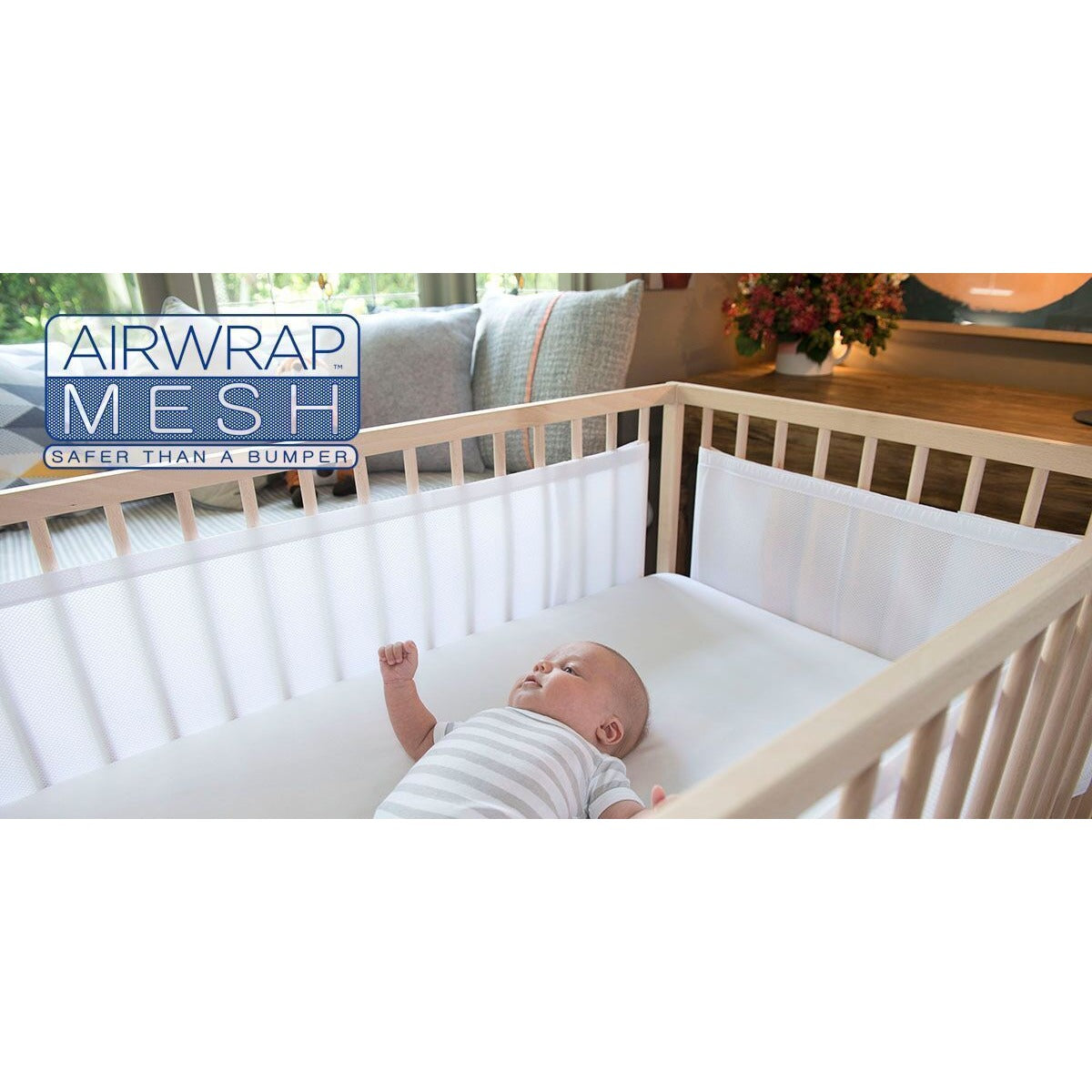
Head-to-Head Safety Comparison

Safety for infant crib accessories is measured by three core metrics: suffocation risk, overheating risk, and physical injury risk. Here’s how mesh liners and bumpers stack up against each other. For more on this, see our guide on top stroller hooks for busy parents in expert.

Suffocation Risk

Suffocation is the most critical safety concern for crib accessories, as it is a leading contributor to SIDS and accidental infant death. Padded cot bumpers create a soft, climbable surface that allows babies to pull themselves up and potentially fall out of the crib. More critically, the thick, non-breathable fabric can trap a baby’s face if they roll into it, blocking their airway. Per American Academy of Pediatrics (AAP) Safe Sleep Guidelines, padded bumpers are explicitly prohibited for safe sleep use due to documented entrapment and suffocation risks. For more on this, see our guide on best head support for infant car seat top. In contrast, properly installed breathable mesh liners are firm, non-climbable, and allow full airflow through the fabric. Even if a baby presses their face against the liner, they can still breathe freely, eliminating the suffocation risk associated with padded bumpers. A common mistake parents make is purchasing cheap, thin mesh liners that stretch easily; stretched mesh can form gaps that trap a baby’s face or limbs, creating the same entrapment risks as a poorly fitted bumper. Full-coverage Airwrap mesh liner with secure corner attachments Secure corner fasteners prevent the liner from shifting and posing a suffocation risk Credit: www.ressources-aura.fr

Overheating and Heat Safety

Overheating is another key SIDS risk factor, and crib accessories play a major role in regulating crib temperature. Padded bumpers trap warm air inside the crib, raising the ambient temperature around the baby by several degrees and increasing overheating risk. In contrast, mesh liners have open perforations that allow air to circulate freely, maintaining consistent, safe crib temperatures. A dangerous but common mistake is layering a mesh liner and padded bumper together, which completely blocks airflow and creates a severe heat trap. For more on this, see our guide on best convertible child safety car seats for ultimate. Per CPSC crib safety guidance, accessories that restrict airflow in infant sleep spaces increase the risk of overheating and associated SIDS events. Parents should prioritize avoiding overheating by dressing baby in appropriate sleepwear rather than relying on heavy crib accessories, and opt for appropriate sleepwear that matches room temperature to keep baby comfortable without extra heat-trapping gear.

Physical Injury and Impact Protection

Padded bumpers do offer one minor safety benefit: they cushion impacts if a baby rolls against the hard crib slats, reducing the risk of minor bruising or head bumps. However, this benefit is far outweighed by the risks of suffocation, entrapment, and fall risk for mobile babies who can use the bumper as a step to climb out of the crib. Mesh liners offer minimal impact cushioning, but their firm, non-climbable design eliminates the fall and climbing risks associated with padded bumpers. For infants under 12 months, who are not yet mobile enough to climb, the suffocation risk of padded bumpers far outweighs any minor impact protection benefit. Padded traditional cot bumper next to a mesh cot liner Traditional padded bumpers provide impact cushioning but restrict airflow compared to mesh designs Credit: www.ecoparkcampogrande.com.br
Long-Term Durability and Safety

Cheap mesh liners can stretch or tear over time, creating gaps that pose entrapment risks, so they should be replaced as soon as damage is visible. Padded bumpers absorb spills, diaper leaks, and moisture, creating a breeding ground for mold and bacteria that can trigger respiratory issues in infants if not cleaned frequently. Thick bumper foam also takes hours to dry, increasing mold risk if washed and reinstalled while still damp. Mesh liners are far easier to maintain: their open structure does not trap debris or moisture, and they can be wiped down with a damp cloth and air-dried in minutes, reducing long-term hygiene risks.

Key Practical Tradeoffs

Beyond core safety, there are practical differences to consider when choosing between the two options.

Ease of Installation and Use

Mesh liners are lightweight, adjustable to fit most standard crib sizes, and attach with simple ties or Velcro fasteners. They add almost no bulk to the crib interior, so they do not interfere with placing your baby in the crib or adjusting bedding. Padded bumpers are heavier, require precise measurement to fit your specific crib size, and can shift if not secured tightly. A common installation mistake is leaving gaps between the bumper and the crib mattress; these gaps can trap a baby’s head or body, creating a serious entrapment hazard.

Compatibility and Versatility

Mesh liners work with nearly all standard cribs, including portable play yards, making them a versatile choice for families that travel or use multiple sleep spaces. Padded bumpers are almost always sized for specific crib brands, so they will not fit portable play yards or different crib styles if you upgrade your baby’s bed later.

Cleaning and Maintenance

As noted earlier, mesh liners require minimal maintenance: a quick wipe down with a damp cloth is enough to remove spills and stains, and they dry almost instantly. Padded bumpers require frequent machine washing to remove stains and bacteria, and thick foam cores can retain moisture even after washing, leading to mold growth if not fully dried before reinstallation.

Who Should Choose Each Option?

Best For Airwrap Mesh Liners

Mesh liners are the safest, most versatile choice for nearly all families, especially:

  • Parents of infants under 12 months, the age group most at risk for SIDS and suffocation
  • Families who travel frequently, as mesh liners work with most portable play yards
  • Parents who prioritize low-maintenance, easy-to-clean accessories
  • Households with limited nursery space, as mesh adds no noticeable bulk to the crib For travel, prioritize travel-safe sleep setups that meet CPSC safety standards to ensure your baby’s sleep space is safe no matter where you are.

Best For Padded Bumpers

Padded bumpers have a very limited, short-term use case, and are only appropriate for:

  • Babies over 12 months who are not yet mobile enough to climb or pull themselves up to standing
  • Low-risk environments where drops against crib slats are a higher concern than suffocation risk Even in these cases, bumpers should be removed as soon as your baby shows signs of mobility to avoid fall and climbing risk.

Critical Safety Guidelines for Both Accessories

To minimize risk no matter which accessory you choose, follow these evidence-based guidelines:

  • Only purchase accessories made with non-toxic, flame-resistant materials rated for infant use, per CPSC standards. Cheap, unrated materials can melt or release toxic fumes if exposed to heat from nearby space heaters.
  • Always ensure your crib is a properly assembled crib before installing any accessory, following the manufacturer's installation guidelines.
  • Never use a mesh liner that is stretched, torn, or has gaps larger than 2cm, as these can trap a baby’s limbs or face.
  • Never use a mesh liner and padded bumper together, as layered accessories block airflow and increase suffocation and overheating risk.
  • Remove all crib accessories, including bumpers and liners, once your baby can roll or pull themselves up to standing to avoid fall and entrapment risks.
  • For the safest possible sleep space, pair your chosen accessory with appropriate crib bedding, including a firm fitted sheet and no loose items, per AAP safe sleep recommendations.

Frequently Asked Questions

Is Airwrap mesh safer than a bumper for newborns?

Yes, for infants under 12 months, breathable Airwrap mesh liners are significantly safer than padded bumpers. The AAP explicitly advises against padded bumpers for newborns due to suffocation and entrapment risk, while properly installed mesh liners meet all current safe sleep standards.

Can a mesh liner cause my baby to overheat?

No, properly rated breathable mesh liners do not trap heat, and actually improve airflow in the crib to reduce overheating risk—one of the leading contributors to SIDS.

Do mesh liners prevent my baby from getting their limbs stuck in crib slats?

Yes, properly fitted mesh liners block the gaps between crib slats to prevent arms and legs from getting trapped, while still allowing full airflow to avoid suffocation risk.

Are padded bumpers ever safe to use?

Padded bumpers may be used temporarily for babies over 12 months who are not yet mobile enough to climb, as a minor impact cushion, but should be removed as soon as the child can pull themselves up to standing to avoid fall risk. They are never recommended for safe sleep for infants under 12 months.

How do I know if a mesh liner is safe for my baby?

Look for liners certified to meet CPSC safety standards, made of non-toxic, flame-resistant materials, with no gaps larger than 2cm when stretched to fit the crib. Avoid liners made of thin, flimsy mesh that can tear or stretch easily.

Conclusion

When comparing Airwrap mesh cot liners to traditional padded cot bumpers, the safer choice for nearly all families—especially those with infants under 12 months—is a certified breathable mesh liner. Mesh eliminates the suffocation, overheating, and climbing risks associated with padded bumpers, while still providing the practical benefit of preventing your baby’s limbs from getting trapped in crib slats. Padded bumpers only have a limited, short-term use case for older, non-mobile babies, and even then require strict supervision and prompt removal once mobility begins. To keep your baby’s sleep space as safe as possible, pair your chosen accessory with other evidence-based safe sleep practices, including a firm mattress, no loose bedding, and consistent back-sleeping. For more tips on creating a comfortable, safe crib environment, check out our guide to comfortable, safe crib setups.

What Not to Get Second Hand for Baby?

What Not to Get Second Hand for Baby? Avoid These Risky Items

For many new and expectant parents, secondhand baby items are a go-to for cutting costs and reducing household waste — a choice that aligns with both budget constraints and sustainability goals. But not all used baby products are safe or practical: some carry hidden structural damage, hygiene risks, or fail to meet current safety standards that can put your child at risk. This guide breaks down exactly which items to skip when shopping secondhand, why they pose threats, and how to make safe, informed choices for lower-risk products.

Infant car seat, crib, and stroller displayed as risky secondhand items Common secondhand baby gear items that carry hidden safety risks, per 2026 pediatric safety guidelines.

High-Risk Baby Gear to Avoid Secondhand

Baby gear designed for crash protection, structural support, or secure restraint carries the highest risk when purchased used, as damage is often invisible to casual inspection. For more on this, see our guide on can a baby get a concussion from hitting.

Car Seats with Unknown History

Infant car seats are engineered for single-impact protection: even a low-speed crash that does not leave visible damage can compromise the shell, harness system, or installation mechanisms, reducing effectiveness in a future collision. Most car seats also have a 6–10 year expiration date from the date of manufacture (not first use), as plastic degrades over time from UV exposure, temperature swings, and regular wear. The U.S. National Highway Traffic Safety Administration (NHTSA) explicitly recommends never purchasing a used car seat with unknown crash history, as internal structural damage is often invisible to the naked eye, even if the seat appears undamaged. You can review official NHTSA car seat safety guidance for full details on expiration dates and proper installation.

Cribs and Bassinets with Uncertain Histories

Cribs and bassinets must meet strict 2026 CPSC safety standards, including slat spacing of 2 3/8 inches or less to prevent head entrapment, no drop-side designs (banned in the U.S. since 2011 but still sold used occasionally), and lead-free finishes. Used cribs often have loose or stripped screws, cracked wood, or compromised joints that can lead to collapse or entrapment, while vintage models may have lead paint that chips and is toxic if ingested. Bassinets with worn locking mechanisms can collapse unexpectedly, especially as babies gain weight and move more in their sleep.

Used Strollers with Unverified Use

Strollers endure heavy, repeated stress from daily use, leading to worn brake cables, damaged folding latches, and weakened frame joints that are impossible to spot without full disassembly. CPSC recall records consistently show that a significant share of stroller recalls stem from folding mechanism or brake failures that are not visible on casual inspection. Used strollers may also lack compatibility with modern infant car seat adapters, and may not meet current 2026 weight and height limits for growing toddlers. If you do purchase a used stroller with a verified history, make sure you’re familiar with its folding and locking mechanisms before first use, a step covered in our guide to folding the Uppababy Vista.

Outdated Baby Monitors and Electronics

Analog baby monitors sold before 2010 are unencrypted, meaning strangers can tap into the audio or video feed to monitor your home, posing a serious privacy risk. Older digital monitors may also fail to meet current FCC radiation emission standards, and degraded batteries can lead to sudden overnight failure, leaving you without critical alerts for your baby’s safety. Modern monitors also include mandatory features like motion tracking, room temperature alerts, and secure encrypted connections that are absent from older used models.

Unsafe Used Baby Clothing, Bedding, and Feeding Supplies

Soft items that come into close contact with your baby’s skin, mouth, or sleep space carry unique hygiene and safety risks when purchased secondhand.

Clothing and Sleepwear Risks

Infant sleepwear sold in the U.S. must meet CPSC Flammable Fabrics Act (FFA) standards, requiring either a tight, snug fit or a flame-resistant treatment that is permanently bonded to the fabric. Used sleepwear often has faded or missing safety labels, making it impossible to verify compliance, and repeated washing can wear down flame-resistant treatments over time. Vintage sleepwear made before the 1970s rarely has any flame-resistant treatment at all, creating a severe burn risk if exposed to heat or flames. Avoid used clothing with heavy stain remover residues that can irritate sensitive skin or eczema, as well as garments with loose buttons, snaps, or decorative elements that can detach and cause choking. When buying used baby clothing, prioritize items that fit your baby's current size, as infants outgrow socks and outfits faster than most parents expect, per our breakdown of baby sock needs.

Bedding and Soft Linens to Skip

Used crib mattresses are one of the highest-risk soft items to buy secondhand: they often have compressed foam that creates soft spots, increasing the risk of suffocation for infants, and can harbor dust mites, mold, bed bugs, and bacteria that survive standard washing cycles. The American Academy of Pediatrics recommends a new, firm, flat mattress for every infant sleep space to minimize these risks. Used crib sheets, blankets, and bumpers also pose threats: bumpers can cause suffocation even when new, and used versions often have loose stitching or filling that can detach and create choking hazards. Old blankets may also have excessive pilling that breaks off and is inhaled during sleep.

Feeding Supplies That Should Always Be New

Pacifiers, bottles, nipples, breast pumps, and sippy cups are designed for single-user use due to unavoidable hygiene risks. Silicone pacifiers and bottle nipples degrade over time, becoming brittle and cracking into small pieces that can cause choking, while used versions can harbor harmful bacteria like E. coli and Staphylococcus from previous owners’ saliva, even after washing. Bottle anti-colic valves and threading have tiny crevices that are impossible to clean fully, trapping bacteria that can cause oral thrush or gastrointestinal illness. Breast pump manufacturers explicitly state their devices are for single-user use only, as pump motors and internal parts cannot be fully sanitized between users, posing cross-contamination risks. While it’s tempting to cut costs on feeding gear, investing in new bottles and plates ensures you avoid hidden bacteria, a trade-off many parents find worth it when budgeting for baby dishware needs.

Newborn baby wearing soft, safe sleepwear free of choking hazards Safe, new infant sleepwear that meets current CPSC flammability standards for baby sleep.
Dangerous Secondhand Toys and Accessories

Used baby toys pose both physical injury and long-term health risks that are often impossible to assess without detailed inspection.

Physical Injury and Choking Hazards

Old plastic toys become brittle over time, especially if they have been stored in hot cars or direct sunlight, so small parts can snap off easily and cause choking or internal injury if swallowed. Toys with small magnets, button batteries, or detachable parts are especially high-risk, as these components can cause severe internal damage if ingested. Vintage toys manufactured before 2008 may also contain lead paint or harmful phthalates, which are toxic if chewed or swallowed, and cannot be verified safe without lab testing.

Hygiene and Sanitation Risks

Porous plush toys trap dust mites, mold, and bacteria deep in their fibers, even after repeated washing, and can trigger allergies or respiratory issues in infants with sensitive immune systems. Bath toys with hollow designs (like rubber ducks) trap water inside, leading to mold growth that cannot be fully removed. Wooden teething toys absorb saliva and stains over time, creating crevices that harbor bacteria even after sanitizing.

How to Shop Secondhand Baby Items Safely

While high-risk items should always be purchased new, many lower-risk baby products can be bought secondhand safely if you follow these evidence-based guidelines:

Verify Recalls and Compliance First

Before purchasing any used baby item, search the official CPSC product recall lookup tool using the item’s model number and manufacture date to confirm it has not been recalled for safety defects. Check the manufacturer’s website for expiration dates, weight limits, and safety notices, especially for gear like car seats, cribs, and breast pumps that have defined lifespans.

Inspect for Hidden Damage and Wear

When evaluating any used baby item, follow this quick checklist to spot red flags:

  • For gear: Test all moving parts (folding mechanisms, wheels, brakes) to ensure they function smoothly, check for cracks, warping, or discoloration in plastic and metal, and confirm all screws and bolts are tight and undamaged.
  • For clothing: Check seams for loose stitching, verify that all safety labels (like flame-resistant tags for sleepwear) are intact, and avoid items with rough edges, heavy stains, or strong chemical odors.
  • For toys: Look for brittle plastic, chipped paint, loose small parts, or missing pieces, and confirm the item meets current CPSC age and safety labeling requirements.

Sanitize All Items Thoroughly Before Use

Hard plastic items, metal gear, and non-porous toys can be sanitized in a dishwasher or with a bleach solution (1 tablespoon unscented bleach per 1 gallon of water) before first use. Porous items like plush toys, wooden toys, crib mattresses, and fabric gear cannot be fully sanitized, so avoid purchasing these items secondhand entirely. For used strollers and gear with removable fabric covers, replace worn or stained covers with new manufacturer-approved parts to eliminate trapped allergens and bacteria.

Secondhand baby toys with broken parts and worn packaging Worn secondhand toys with broken plastic parts that pose choking and injury risks to infants.


Frequently Asked Questions

What baby items should never be bought secondhand?

Car seats, cribs, bassinets, infant sleep mattresses, breast pumps, pacifiers, and toys manufactured before 2008 are the highest-risk items to avoid. These products often have hidden structural damage, fail to meet current safety standards, or carry hygiene risks that cannot be fully mitigated, even with thorough cleaning and inspection.

Are used baby clothes safe to buy?

Used baby clothing is generally low-risk if it is in good condition, has intact safety labels, and is washed thoroughly before first use. Avoid used sleepwear without permanent flame-resistant labeling, vintage items with unknown fabric treatments, and garments with rough seams, loose fasteners, or heavy stains that can irritate sensitive skin.

Why should you avoid secondhand baby mattresses?

Used crib mattresses often have compressed foam that creates soft spots, increasing the risk of suffocation for infants. They also frequently harbor dust mites, mold, bed bugs, and bacteria that survive standard washing cycles. The American Academy of Pediatrics recommends a new, firm, flat mattress for every infant sleep space to minimize these risks.

Can buying used toys be harmful to babies?

Yes, used toys pose both physical and toxicity risks. Brittle plastic from age or heat exposure can break into sharp pieces, small detachable parts can cause choking, and vintage toys made before 2008 may contain lead paint or harmful phthalates that leach into saliva when chewed. Always verify that used toys meet current CPSC safety standards before purchasing.

Are used strollers ever safe to buy?

Used strollers can be safe if you have full documentation of their history (no crashes, no active recalls, all parts are intact), and you can thoroughly inspect and sanitize all fabric, braking, and folding mechanisms before use. Avoid used strollers with unknown histories, especially models with complex folding systems that may have hidden wear.

Can I buy a used crib from a family member?

Used cribs from trusted sources are acceptable only if they meet all current CPSC safety standards: no drop sides, slat spacing of 2 3/8 inches or less, no chipped paint or loose hardware, and no active recalls. Always verify the model number and manufacture date against the CPSC recall database before use, even for gifted items.

Conclusion

When shopping for baby items on a budget, prioritizing safety over cost savings for high-risk products is non-negotiable. Car seats, sleep mattresses, feeding supplies, and toys with unknown histories carry hidden dangers that can lead to injury, illness, or even long-term health effects for your baby. By skipping these high-risk secondhand items and following safe shopping guidelines for lower-risk products, you can cut costs without compromising your child’s well-being.

For more evidence-based guidance on preparing for your baby’s arrival, check out our guide to annual baby coat needs to budget for safe, seasonal outerwear without overbuying.

Can Baby'S Legs Get Stuck in Crib Slats?

Can Baby’S Legs Get Stuck in Crib Slats? Essential Safety Tips

The short answer is yes: a baby’s legs can get stuck in crib slats if the gaps between them are too wide, a risk that ranks among the top safety concerns for new parents. According to the U.S. Consumer Product Safety Commission (CPSC), limb entrapment is one of the most commonly reported crib-related injuries for infants each year. While the risk is entirely manageable with proper crib selection and setup, many parents lack clear, up-to-date guidance on how to eliminate it entirely. This guide breaks down the real risks of slat entrapment, current 2026 safety standards, and actionable, expert-backed steps to keep your baby safe during sleep and play, no guesswork required.

Can a Baby’s Leg Actually Get Stuck in Crib Slats?

Babies have small, flexible limbs that can easily fit through gaps as narrow as 2.5 inches, which is why the CPSC mandates a maximum slat spacing of 2 3/8 inches (6 cm) for all cribs sold in the U.S. This measurement is roughly the width of a standard soda can, and small enough to prevent even the smallest infant’s leg from slipping through. Even if a leg fits through a gap, irregular slat spacing from warped crib frames, broken slats, or damaged secondhand cribs can cause the limb to get stuck when a baby kicks or rolls. The American Academy of Pediatrics (AAP) reinforces this standard as part of its safe sleep guidelines, noting that proper slat spacing eliminates nearly all risk of limb entrapment in compliant cribs.

Baby's leg partially stuck between wide crib slats Wide slat spacing is the leading cause of infant limb entrapment in cribs. Credit: www.kidspot.com.au

What Injuries Can Happen From Slat Entrapment?

Most minor entrapment incidents result in temporary bruising, skin abrasions, or mild swelling from pressure on the limb, which resolves on its own within a few hours. More serious risks include fractures if a baby pulls or yanks forcefully to free their leg, nerve compression if the limb is trapped for an extended period, or panic-induced injuries if they fall while trying to climb out of the crib. It’s critical to avoid pulling a trapped leg abruptly, as this can cause sprains, dislocations, or skin tears. Even minor entrapment can disrupt sleep for days after an incident, leading to increased fussiness and feeding issues for both baby and caregivers.

Close-up of a baby's leg trapped in crib slats Even small gaps can trap a baby's leg if they kick or roll forcefully. Credit: www.adensmom.com

How to Choose a Crib That Eliminates This Risk

Verify Mandatory Slat Spacing Standards

All new cribs sold in the U.S. must meet CPSC requirements, including the 2 3/8 inch maximum slat spacing, sturdy construction that does not collapse under pressure, and non-toxic finishes. Look for a CPSC certification label on the crib’s packaging or frame before purchasing. Avoid vintage, hand-me-down, or imported cribs that may not meet current standards, and never use a drop-side crib, which was banned in the U.S. in 2011 due to widespread entrapment and suffocation risks.

Alternative Crib Designs for Extra Peace of Mind

If you want to eliminate slat risk entirely, opt for a solid-side crib, which has no gaps at all, or a mesh-sided crib, which uses breathable, tight mesh instead of wooden slats to allow visibility and airflow without entrapment risk. Portable play yards that meet current CPSC standards are also a safe option for travel, as they have uniformly spaced, narrow slats that meet safety requirements. Solid-side cribs are ideal for parents who want zero entrapment risk, while mesh options work well for those who prefer to see their baby clearly without getting up.

Parent checking crib slat spacing with a ruler Measuring slat gaps with a standard ruler confirms they meet CPSC safety requirements. Credit: www.babycenter.ca

Simple Prevention Steps to Keep Your Baby Safe

Ensure a Snug Mattress Fit

A mattress that does not fit the crib’s interior exactly can shift during sleep, creating gaps where limbs can get trapped, and also poses a serious suffocation risk. The gap between the mattress and crib sides should be no more than the width of two fingers (about 1 inch). Measure the crib’s interior dimensions before purchasing a mattress, and replace the mattress if the crib frame warps over time. Always use a firm, flat mattress with a fitted sheet, as soft or sagging mattresses make it easier for limbs to slip into unsafe spaces.

Skip Risky Crib Add-Ons

Loose fabric slat covers, crib bumpers, and extra padding do not prevent entrapment effectively, and create new suffocation and entrapment hazards for infants under 12 months. Instead, stick to safe, breathable crib bedding that fits tightly around the mattress, with no loose fabric hanging over the sides. The AAP recommends keeping all soft items, including toys, pillows, and blankets, out of the crib for babies under 12 months to reduce both suffocation and entrapment risk.

Dress Your Baby for Safe Sleep

Overheating causes babies to kick and move more during sleep, increasing the risk of leg entrapment. Dress your baby in one more layer than you would wear to bed, using appropriate sleep layering guidelines to avoid overdressing. Avoid tight socks or footed pajamas with loose cuffs that can catch on slats; opt for safe sleep sock choices that fit snugly without constriction to reduce the risk of fabric catching on slats.

Perform Monthly Crib Inspections

Every month, check for loose, broken, or warped slats, tighten all hardware, and measure slat spacing to confirm it still meets the 2 3/8 inch standard. If you notice any gaps larger than the standard, discontinue use of the crib immediately. Also inspect the crib after any impact, such as if it’s bumped during a move or if your baby pulls on the slats forcefully, as this can warp slats and create new gaps.

What to Do If Your Baby’s Leg Gets Stuck

Immediate, Gentle Response Steps

First, stay calm — babies pick up on parental anxiety, which can make them panic more and increase their risk of injury. Speak softly to soothe them, then gently try to free the leg by slightly rotating or angling it, rather than pulling straight back. If the slat is flexible, you can gently bend it outward just enough to release the leg, then release it back into place. If the leg is stuck tightly, apply a small amount of baby oil or lotion to the skin around the slat to reduce friction. Never yank or pull forcefully, as this can cause sprains, fractures, or skin tears. If you cannot free the leg within 5 minutes, call emergency services for assistance.

When to Seek Medical Attention

Visit a doctor or emergency room if your baby has swelling, bruising, or redness that lasts more than an hour after freeing the leg, if they can’t bear weight on the limb, or if the skin is broken or bleeding. A healthcare provider can check for fractures, nerve damage, or soft tissue injuries that may not be visible to the naked eye.

Crib Safety Beyond Slat Gaps

Safe Sleep Best Practices

Always place your baby on their back to sleep on a firm, flat mattress with a fitted sheet, per American Academy of Pediatrics (AAP) safe sleep guidelines. Keep the crib free of all toys, pillows, and loose bedding to reduce suffocation risk. If you use a portable crib when traveling with a sleeping infant, verify that it meets current CPSC standards before use, as older or borrowed models may have wider slat spacing that does not comply with safety rules.

Secure All Baby Gear to Prevent Damage

A loose or tipping crib can warp slats over time, creating unexpected gaps that increase entrapment risk. Anchor the crib to the wall using the included hardware kit to prevent tipping, and avoid placing heavy items on top of the crib. For all baby gear, follow securing baby gear safely guidelines to prevent damage that could create unsafe conditions.

Avoid Dangerous Crib Accessories

Crib bumpers, even mesh ones, pose a suffocation risk for infants under 12 months, and do not prevent limb entrapment effectively. Avoid using them entirely, and never add extra padding or cushions to crib sides to "fill gaps" — these can cause suffocation or create new entrapment hazards.

Frequently Asked Questions

Can a baby’s leg get stuck in crib slats?

Yes, if the gaps between slats exceed the CPSC-mandated maximum of 2 3/8 inches (6 cm). Babies’ small, flexible legs can easily fit through gaps this size, and may become trapped if they kick or roll forcefully against the slats.

Are crib slat covers safe?

Loose, fabric slat covers pose a suffocation and entrapment risk for infants, and are not recommended by the CPSC or AAP. If you want to cover slats for aesthetic reasons, opt for a rigid, breathable plastic or mesh cover that is securely fastened to the crib frame with no loose edges.

Can I use a mattress topper or padding to fill gaps between slats?

No. Soft padding can shift during sleep, creating suffocation hazards, and does not prevent limb entrapment. Only use a firm, properly fitted mattress that matches the crib’s interior dimensions exactly.

What safety standards apply to crib slats?

All cribs sold in the U.S. must meet CPSC requirements, including a maximum slat spacing of 2 3/8 inches, sturdy construction that does not collapse under pressure, and non-toxic finishes. Look for a CPSC certification label on the crib before purchasing.

How often should I check my baby’s crib for safety issues?

Perform a full crib inspection monthly, checking for loose hardware, warped or broken slats, and proper slat spacing. Also inspect the crib immediately after any impact, such as if it’s bumped during a move or if your baby pulls on the slats forcefully, as this can warp slats and create new gaps.

Conclusion

Baby leg entrapment in crib slats is a completely preventable risk when you follow current, expert-backed safety guidelines. The most impactful steps are choosing a CPSC-certified crib with proper slat spacing, ensuring a snug mattress fit, avoiding loose crib accessories, and performing regular monthly inspections. While occasional minor entrapment may happen even with the safest cribs, following these guidelines will eliminate serious injury risk and give you peace of mind during your baby’s sleep time. For more expert-backed guidance on creating a safe, comfortable nursery for your little one, explore our full library of baby safety resources.