
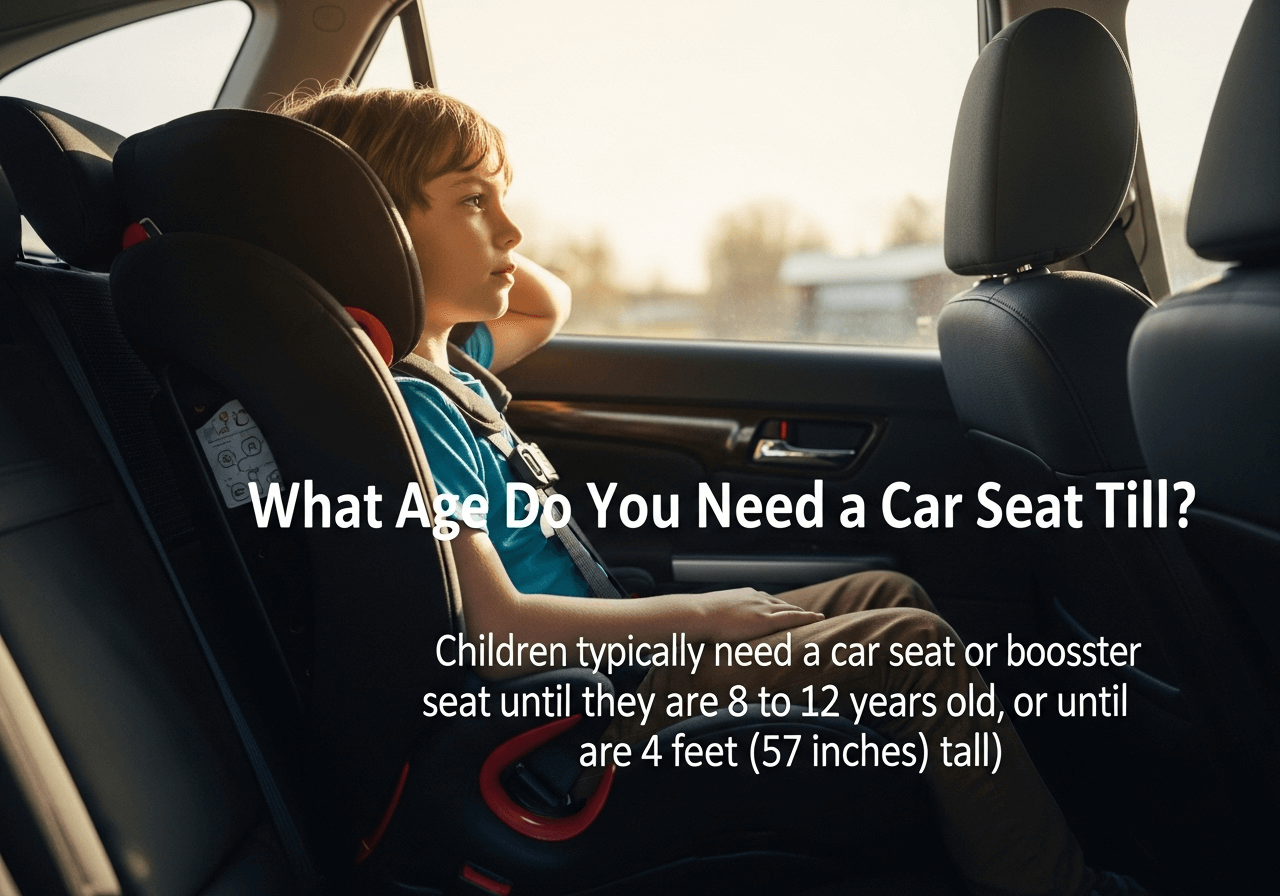
If you’ve ever watched your child outgrow yet another baby gear milestone and wondered, "What age do you need a car seat till?" you’re not alone. The answer is rarely as simple as a single number: while many parents hear the rough guideline of "until age 8," actual requirements depend on your child’s height and weight, your state’s laws, and your vehicle’s seat design – all with the core goal of keeping your child safe in the event of a crash. This 2026 updated essential guide breaks down legal requirements, car seat stage transitions, common safety mistakes, and travel tips to help you make informed, protective choices for your little one.
 A rear-facing infant seat cradles the child's head, neck, and spine during a crash, reducing fatal injury risk by 71% per NHTSA data.
Image source: thecarseatlady.com
A rear-facing infant seat cradles the child's head, neck, and spine during a crash, reducing fatal injury risk by 71% per NHTSA data.
Image source: thecarseatlady.com
Legal Car Seat Requirements: Federal, State, and Global Rules (2026)
Car seat laws in the U.S. are a patchwork of federal safety standards and state-specific enforceable rules, with requirements that have tightened significantly over the last decade to prioritize child protection over arbitrary age cutoffs. You can also read our guide on how to put a car seat on a shopping cart.
Federal Baseline Safety Guidelines
The National Highway Traffic Safety Administration (NHTSA) sets evidence-based safety standards for car seat manufacturers, but does not mandate a universal age requirement for car seat use. Instead, current NHTSA car seat safety guidelines recommend a size-based timeline: keep children rear-facing as long as possible (until they hit their seat’s height or weight limit, usually at least age 2), forward-facing with a 5-point harness until age 5–7, and in a booster seat until age 8–12 or until they are 4 feet 9 inches tall and pass the 5-step seat belt fit test. These guidelines are the global gold standard for child passenger safety, and form the basis for most state laws.
State-Specific U.S. Car Seat Laws
All 50 states and Washington D.C. enforce their own car seat laws, with varying age, height, and weight requirements. For example, California requires rear-facing restraint until age 2, and booster seat use until age 8 or 4'9"; New York mandates booster use until age 8, while Texas sets the minimum at age 7 or 4'9". Many states updated their laws between 2020 and 2025 to replace strict age cutoffs with "proper fit" requirements, meaning children must use a restraint that fits their body, regardless of age. To avoid legal issues and ensure maximum safety, always check your state’s Department of Transportation or highway safety website for the most up-to-date local rules. For context on how these legal rules compare to expert safety recommendations, see our breakdown of legal vs safety minimums. You can also read our guide on can you put seat covers on heated car seats.
Car Seat Stages: Exact Transition Guidelines for Every Age
While age is a helpful rough guideline, the safest timeline for car seat use depends entirely on your child’s growth and your seat’s specific limits. Staying in each stage as long as possible is the single most impactful choice you can make for your child’s crash safety.
Rear-Facing Seats (Birth to 2+ Years, Often Up to Age 4)
Rear-facing seats are the safest option for young children, as they cradle the head, neck, and spine – the most vulnerable parts of a child’s body in a crash – and distribute crash forces across the entire back of the seat. Infant-only car seats usually have a rear-facing weight limit of 20–35 pounds, while convertible seats (which can switch between rear and forward-facing) often support rear-facing use up to 40–50 pounds, meaning many children can stay rear-facing until age 3 or 4, well past the minimum age 2 recommendation. For infants, the correct recline angle is critical to keep their airway open and prevent slumping; you can reference our guide to correct rear-facing recline angle to adjust your seat properly. It’s also essential to install the seat tightly and correctly: our proper infant seat installation and proper newborn positioning in seats guides walk through common installation errors that reduce protection. You can also read our guide on how to install safety first car seat rear facing.
Forward-Facing Seats With Harness (Ages 2 to 5–7)
Once your child outgrows the rear-facing height or weight limit of their current seat, transition to a forward-facing seat with a 5-point harness. Keep your child in this stage until they hit the seat’s forward-facing limit, which is usually 40–65 pounds, corresponding to an average age of 5–7. The 5-point harness secures the child at the shoulders, hips, and between the legs, distributing crash forces across the strongest parts of the body, rather than the neck or abdomen, which are still developing in young children. If you want a seat that will grow with your child through multiple stages, our roundup of long-lasting convertible seat options includes models that cover rear-facing, forward-facing, and booster stages in one unit.
Booster Seats (Ages 4 to 8–12)
Booster seats are not standalone restraint systems: they lift the child so the vehicle’s adult seat belt fits correctly across their body. There are two main types: high-back boosters, which provide extra head and neck support for vehicles with low seat backs or no adjustable headrests, and backless boosters, which work for cars with built-in headrests and higher seat backs. Children need to use a booster until they pass the 5-step seat belt fit test:
- Their knees bend comfortably at the edge of the vehicle seat
- Their back is flat against the vehicle seat back
- The shoulder belt lies across the middle of their chest and shoulder, not their neck
- The lap belt lies across the upper thighs, not their stomach
- They can sit like this for the entire trip without slouching or adjusting the belt Most children pass this test between ages 8 and 12, or when they reach 4'9" tall. Even if your child meets the age requirement for a seat belt, always test the fit every few months as they grow. You can also read our guide on best car seat covers for heated seats comfort meets functionality.
Adult Seat Belt Only (Ages 8–12, Minimum 4'9" Tall)
Once your child passes the 5-step fit test, they can use the adult seat belt alone. Children under 13 should never ride in the front passenger seat, even if they are tall enough for a seat belt: deployed airbags are designed for adult occupants and can cause severe head, neck, or chest injury to children in a crash.
Key Factors That Impact Your Child's Car Seat Timeline
Beyond age, three core factors determine when your child can safely transition to the next restraint stage.
Height and Weight Over Age
Age is a rough guideline, but every child grows at a different rate. A 6-year-old who is tall for their age may pass the 5-step seat belt test, while a 9-year-old who is small may still need a booster for proper fit. Always prioritize your car seat manufacturer’s published height and weight limits over general age recommendations, as these limits are based on crash testing specific to that seat model. You can also read our guide on best convertible child safety car seats for ultimate comfort and protection.
Vehicle Compatibility
Your vehicle’s seat design can impact how quickly your child can transition out of a booster. For example, cars with sloped seat cushions or shallow seat backs may cause the lap belt to ride up on a child’s stomach, even if they are 4'9" tall. In these cases, a high-back booster or a forward-facing seat with a harness may be needed for longer. Narrow back seats (common in trucks and 3-row SUVs) may also require a narrower car seat, which often has lower height and weight limits, affecting transition timing. To protect your vehicle’s interior from car seat wear and tear, check out our guide to protecting your vehicle's upholstery for top-rated seat protector picks. You can also read our guide on best car seat automotive seat protector top picks for ultimate protection.
Car Seat Expiration and Recalls
Car seats have a limited service life of 6–10 years from the manufacturing date, which is printed on a label on the seat’s base or shell. The plastic and components degrade over time due to exposure to heat, cold, and UV light, reducing crash performance even if the seat looks undamaged. Never use an expired car seat, and always check the NHTSA recall lookup tool to ensure your seat has no outstanding safety defects. If a recall is issued, follow the manufacturer’s instructions for repair or replacement immediately. You can also read our guide on can you put a car seat in a shopping cart.
Common Car Seat Safety Mistakes to Avoid
A common mistake observed by certified child safety technicians is rushing to transition children to the next car seat stage before they meet the manufacturer’s size limits, often because parents assume a "bigger" seat is safer or feel pressure from other caregivers. Avoid these additional high-risk errors:
- Loose installation: The car seat should move less than 1 inch side-to-side when pulled at the base; under-tightening the LATCH system or seat belt reduces effectiveness by up to 50% in a crash.
- Using aftermarket accessories: Strap covers, padding, or other add-ons not approved by the car seat manufacturer can interfere with the seat’s crash performance in an accident.
- Using a seat with unknown history: Never use a used car seat that has been in a moderate or severe crash, even if there is no visible damage, as internal structural damage can compromise protection.
- Skipping the 5-step test: Never assume your child is ready for a seat belt just because they hit the age minimum – always test the fit every few months as they grow.
Global Car Seat Requirements for Travel
If you plan to travel abroad with your child, car seat laws vary widely by country, and local requirements may be far less strict than U.S. safety recommendations. For example, the UK requires car seats or boosters until age 12 or 135cm tall, Australia mandates restraints until age 7, and most EU countries require boosters until age 12 or 150cm tall. Even in countries with no enforced car seat laws, safety experts universally recommend using a seat that meets your home country’s safety standards for the best protection. If renting a car, most rental companies offer car seats for an extra fee, but bringing your own is safer, as you know its installation history and condition. You can also read our guide on how long are safety first car seats good for.
 High-back boosters provide head and neck support for children in vehicles with low seat backs or no adjustable headrests.
Image source: dceastleigh.org
High-back boosters provide head and neck support for children in vehicles with low seat backs or no adjustable headrests.
Image source: dceastleigh.org
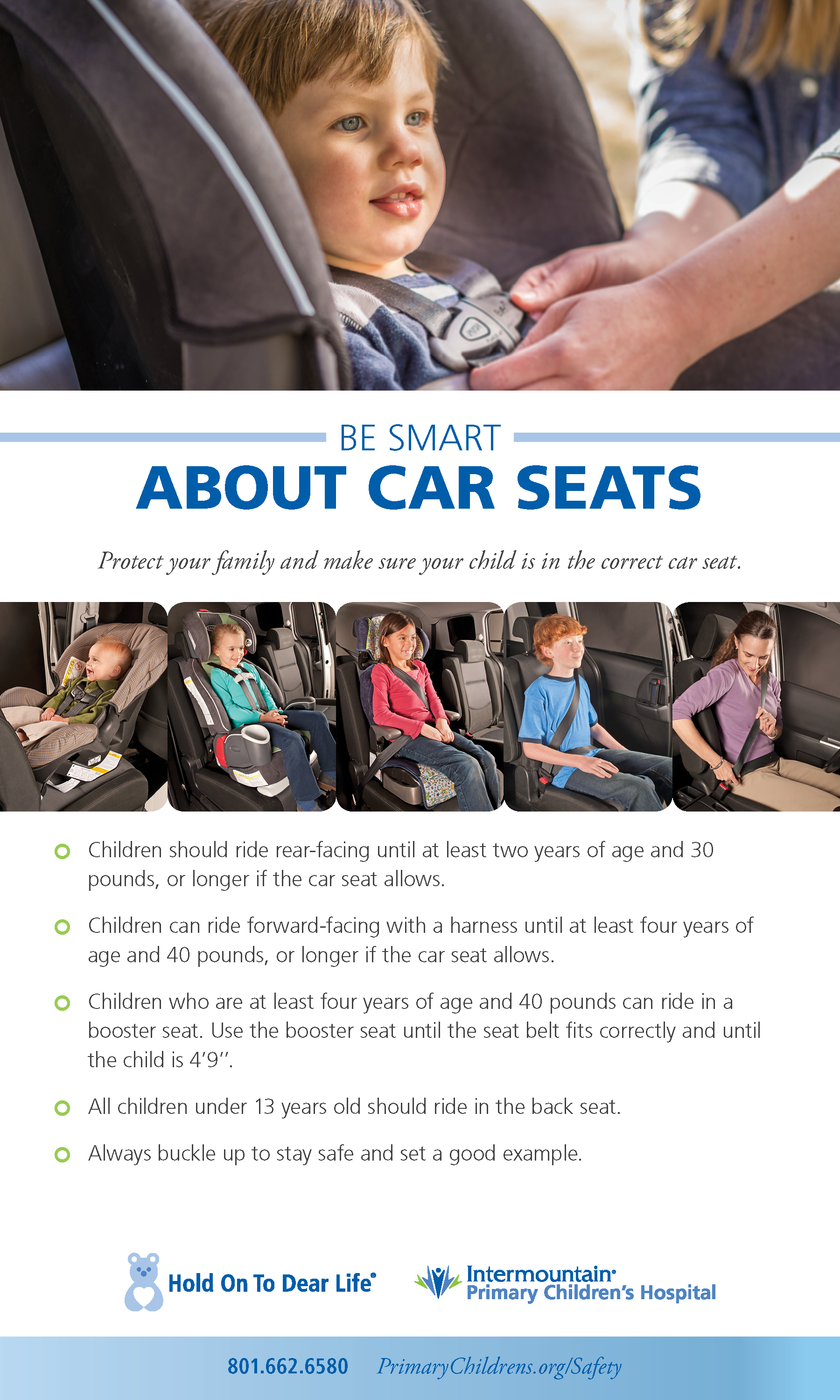 State highway safety agencies often distribute free educational materials and car seat inspection events for parents.
Image source: www.greensafaris.com
State highway safety agencies often distribute free educational materials and car seat inspection events for parents.
Image source: www.greensafaris.com
Frequently Asked Questions
What age do you need a car seat till in the U.S.?
There is no universal federal age requirement; enforceable limits are set by individual states, ranging from 7 to 12 years old depending on location. Safety experts, however, recommend using a car seat or booster until your child is 8–12 years old or 4'9" tall, when they can properly fit an adult seat belt. You can also read our guide on what age do you face infant car seat forward.
Can a 7-year-old use a seat belt without a booster?
Only if they pass the 5-step seat belt fit test. Most 7-year-olds are still too short for an adult seat belt to sit correctly across their chest and hips, so a booster is still recommended for optimal safety. You can also read our guide on best dog car booster seat.
Do car seat laws apply to taxis and rideshares?
In most U.S. states, yes, though enforcement varies. It is always safest to bring your own car seat for rideshare trips, as most companies do not provide them by default, and you can ensure it is installed correctly. You can also read our guide on what age do you switch from infant car seat.
How long are car seats good for?
Most car seats have a service life of 6–10 years from the manufacturing date, which is printed on a label on the seat. Never use an expired car seat, even if it appears undamaged, as the plastic and components can degrade over time and reduce crash protection. You can also read our guide on what age do kids get out of car seats.
Can I use a used car seat?
Only if you have full documentation of its history: it has never been in a moderate or severe crash, has no outstanding recalls, is not expired, has all original parts and labels intact, and fits your child's current height and weight. Never use a used car seat with an unknown history. You can also read our guide on how to install front car seat covers with hooks.
Conclusion
The short answer to "what age do you need a car seat till" is: as long as your child needs it to fit safely in your vehicle. Legal minimums are just the baseline for compliance, but following NHTSA safety best practices – keeping kids rear-facing as long as possible, forward-facing with a harness as long as possible, and in a booster until they pass the 5-step fit test – drastically reduces injury and fatality risk in crashes. Always prioritize your child’s size over their age, check your car seat’s manual for specific limits, and get your seat inspected by a certified technician if you’re unsure about installation. To ensure your car seat is installed correctly for your child's stage, check out our step-by-step guides for infant, convertible, and booster seat installation to reduce injury risk on every trip. You can also read our guide on what age can babies face forward in car seat.

Emma Grace is a devoted mother and passionate content writer at BestBabyCart.com. With firsthand parenting experience and a love for research, she creates helpful guides and honest reviews to support parents in choosing the best for their babies. Her goal is to make parenthood easier, one article at a time.